What a 100L water generator does on site
A 100L atmospheric water generator pulls moisture from the air, condenses it and filters the water for drinking use. It is not a tap connection unit and it does not rely on municipal water pressure, so it can keep producing water where supply is erratic or where you want less dependence on deliveries.
This size is made for higher daily demand than a small domestic unit. In practical terms, it suits staff kitchens, reception areas, small canteens and sites where people want cold water available through the day. Output changes with temperature and humidity, so a hot humid day in Johannesburg will give better yield than a cold dry winter morning.
Where the 100L unit suits best
We supply and fit these units across Johannesburg North, Sandton, Randburg, Midrand, the East Rand and West Rand. They are often installed at offices, schools, estate offices, training centres, light industrial sites and larger homes where several people need drinking water every day.
- Busy offices with 20 to 60 staff
- Reception areas and client waiting rooms
- Workshops and light manufacturing spaces
- Homes with high water use and limited storage
- Coastal or inland sites wanting backup water independence
If your site runs on scheduled loadshedding or has water interruptions, the main question is whether the unit can be kept on long enough to produce enough litres for the day. We can advise on expected output based on the area, season and the room where it will stand.
Sizes, layout options and what comes standard
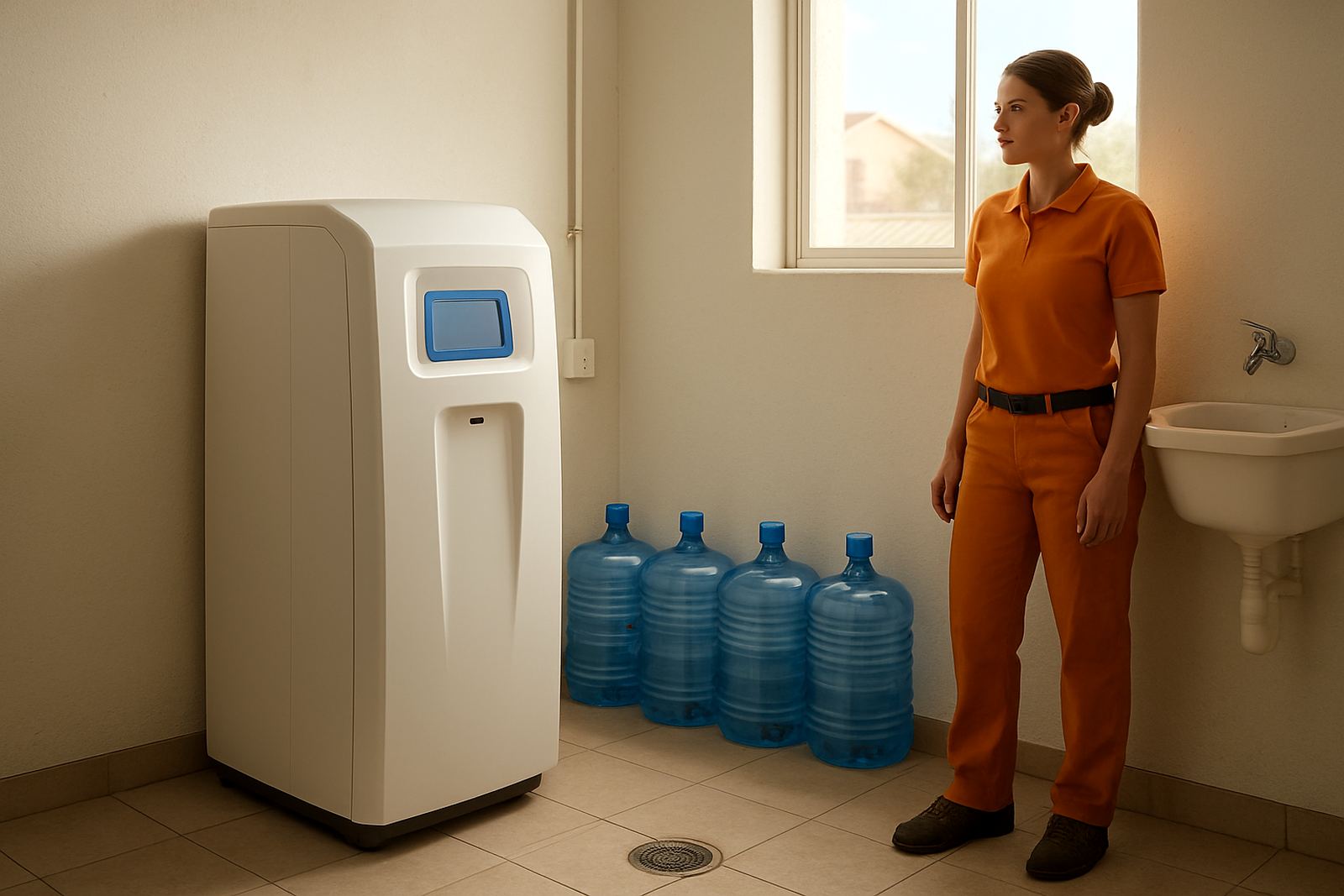
The 100L model is the larger end of the range and is usually supplied as a floor-standing unit with integrated treatment and storage. Depending on the build, you may get cold-only dispensing or hot and cold options, with internal filtration and food-grade water storage as part of the system.
Most installations need enough floor space, clear airflow around the machine and easy access for cleaning. A unit this size should not be pushed into a tight cupboard or against a wall because it needs proper air circulation to work properly. It is also worth checking whether the site needs a plumbed dispenser point or a direct fill setup for bottles and containers.
- Approximate daily output target: up to 100L in suitable conditions
- Storage and dispense setup: integrated tank, tap or bottle fill point
- Water treatment: sediment, carbon and final purification stages
- Display and controls: basic operating screen and status indicators
- Finish: indoor cabinet suitable for offices and clean utility areas
Power, drainage and installation basics
These units need a stable electricity supply and a room with reasonable airflow. We check the plug point, breaker size and whether the site can handle the running load without nuisance trips. For some offices the unit can share an existing power circuit, while busier sites may need a dedicated point fitted by an electrician.
There is usually no gas requirement for a water generator, which keeps the installation simpler than some other hot water systems. A small drain point is often needed for excess condensate and routine flushing. If the room is very dusty or very warm, output can drop and service intervals may need to be shorter than usual.
- Power supply: standard mains electricity, with circuit check before installation
- Drainage: condensate or waste flush route required
- Space: allow service access around the sides and back
- Environment: best in a clean indoor room, away from chemical fumes
Care and servicing that keeps output steady
Like any water treatment equipment, this unit needs routine attention. Filters need changing on schedule, the tank must be cleaned and the intake area should stay free of dust. In Gauteng, dust from roads and construction can build up quicker than people expect, especially in Randburg, Midrand and industrial parts of the East Rand.
We can include a maintenance plan for regular filter changes, inspection of fans and coils, sanitising of the water path and checking that the electrical components are working correctly. If output starts dropping, the cause is often a blocked filter, poor airflow or room conditions that are too dry.
- Clean or replace filters at scheduled intervals
- Sanitise storage and dispense points regularly
- Keep the room cool, clean and well ventilated
- Book a service if output drops or water tastes off
What to check before you order
Before you place an order, we look at daily water use, the number of people on site, where the unit will stand and whether the room has the right power and drainage. It helps to know if you want bottled fill use, a built-in tap or direct staff dispense from the machine.
We also check whether the site has any municipal or building rules around drainage, installer access or electrical work. For offices in managed properties, it is worth confirming where the unit may be positioned and whether a contractor sign-in process applies. That saves time on the day and avoids moving the machine twice.
Our team in Johannesburg North handles sales, site checks, installation and after-sales support. If you are comparing options for a busier office or commercial site, we can help you choose the right size instead of overspecifying a unit that will not be used properly.
Key facts
| Model type | 100L atmospheric water generator |
|---|---|
| Typical use | Busy homes, offices and commercial sites |
| Water source | Moisture extracted from ambient air |
| Power | Mains electricity, circuit check required |
| Output | Up to 100L per day in suitable conditions |
| Support | Supply-and-fit, servicing and maintenance plans |