What a home dehumidifier does in the house
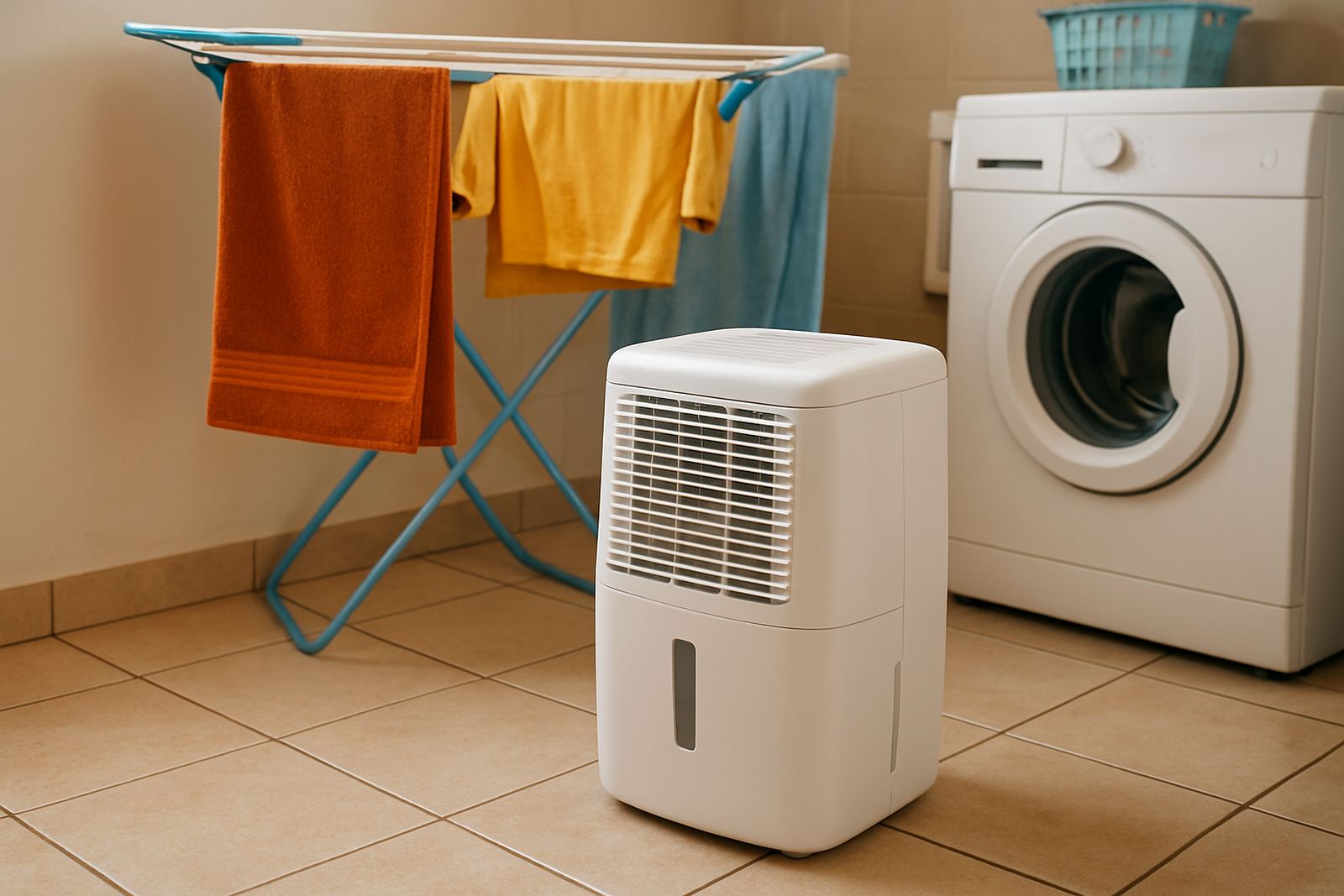
A domestic dehumidifier draws moist air through a cooling coil, removes water from the air and collects it in a tank or sends it away through a drain hose. It is a practical unit for homes in Johannesburg and Gauteng where winter drying, summer rains and closed windows can leave certain rooms feeling sticky or damp. This is not an air conditioner, so it does not cool a room in the same way. Its job is to reduce moisture and help the room feel more comfortable.
Most households use one in a bedroom with condensation, a bathroom with poor ventilation, a laundry room, a storeroom, or a small open plan flat where washing is dried inside. It can also help in offices with damp archives, but this page is focused on the domestic side. If the room has a persistent leak, rising damp or mould on walls, the source still needs fixing. The dehumidifier helps manage the air, but it wont solve a building fault by itself.
Typical sizes and options for South African homes
Home dehumidifiers are usually sized by the amount of moisture they can remove per day, measured in litres per 24 hours. The right size depends on room size, humidity level and how often the space is used. Smaller units suit a single bedroom or cloakroom, while larger units are better for a laundry area, basement room or open plan section.
- 10 to 12 litre units: small rooms, cupboards, compact flats and light seasonal moisture
- 16 to 20 litre units: medium rooms, bathrooms, laundry rooms and general household use
- 20 to 30 litre units: larger living spaces, wet problem areas and heavier winter use
- Continuous drain option: useful where the tank would fill too fast or where daily emptying is inconvenient
Some units have digital humidity control, fan speed settings, timer functions and auto restart after a power cut. In South Africa, that matters when load-shedding interrupts normal use. If you want the unit to run while you are out, look for automatic shut-off when the tank is full and a restart function when power returns.
Where the unit works best in a Gauteng home
The best place for a dehumidifier is in the room where moisture collects most often. Put it where air can move freely around the unit, not right against a wall or behind heavy furniture. In a laundry room, it should sit near the drying area but away from splashes. In a bedroom, place it clear of curtains and soft furnishings so the airflow is not blocked.
Homeowners in Sandton, Randburg, Midrand and the East Rand often ask for units for upstairs rooms that get cold and damp in winter. In older houses around Johannesburg North and the West Rand, north facing rooms can still show condensation on cool mornings. Coastal humidity is not the main issue here, but moisture from showers, cooking and indoor drying still builds up quickly in closed homes.
- Good for: bedrooms, bathrooms, laundry rooms, storerooms and enclosed patios
- Not ideal for: open windows, very large open spaces or rooms with active water leaks
- Best results: doors closed, windows shut and the unit running long enough to pull down humidity
Installation, power use and drain setup
Most domestic units are plug in appliances and do not need a gas line or special refrigerant supply on site. They need a normal electrical outlet and enough clearance around the body for airflow. A unit with a compressor will draw more power than a small fan heater, but it is generally manageable for home use if it is sized correctly. If the unit is oversized, it may cycle too often and use power poorly. If it is too small, it will run flat out and struggle to keep up.
When we supply and fit, we check the room layout, plug point position and whether a drain hose can be routed neatly to a suitable drain or outside point. If continuous drainage is possible, it saves time and avoids the tank filling up during the day. In some properties, especially rental units, a simple portable setup is better because it can be moved without altering the building. For tenants, it is worth checking the landlord rules before drilling or adding a permanent drain line.
Care, cleaning and servicing that keep it working
A dehumidifier needs basic care to stay effective. The water tank should be emptied and cleaned regularly, the filter should be washed or vacuumed according to the unit type, and the air intake should be kept free of fluff and dust. If the filter blocks up, airflow drops and the machine works harder than it should. In homes with pets or a lot of laundry drying, the filter may need attention more often.
If the room smells stale or the unit starts icing up, switch it off and check the filter, room temperature and airflow. Many domestic units work best in moderate indoor temperatures, so placing one in a very cold garage is usually not the answer. During servicing, we can check for poor drainage, noisy fan motors, loose panels and signs of wear on the compressor or controls. Preventive checks are small things, but they keep the machine dependable.
What to check before you place an order
Before ordering, measure the room size in square metres and think about how wet it really gets. A room with light morning condensation needs a different unit from a laundry room where washing dries every day. Also check whether you want a portable model with a tank, or a unit that can drain continuously. If there is no easy drain point, a larger tank may be better.
You should also confirm the plug point location, any power limitations in the home and whether the unit will be moved between rooms. If the space has mould on walls, damaged plaster or a leaking roof, those items must be repaired too. A dehumidifier will help with the indoor moisture, but it should not be used as a stand in for repairs. If you are unsure, our team can advise on the right litre size and the most sensible setup for your room.
- Room size in square metres
- How often the room gets damp or musty
- Whether a tank or continuous drain is better
- Plug point location and power availability
- Any existing leaks, mould or poor ventilation
Supply and support from our Johannesburg North team
Airconditioning Superstore has been working in Johannesburg and Gauteng since 2004, with supply and fit support for homes and offices across Johannesburg North, Sandton, Randburg, Midrand, the East Rand and the West Rand. Our team includes Thabo Mokoena, Naledi Khumalo, Pieter van Rensburg, Ayesha Patel, Sibusiso Dlamini and Lerato Molefe, so you get practical help from people who work with cooling and moisture control every day.
If you need a home dehumidifier for a damp room, a laundry area or a seasonal moisture problem, we can help you choose the right size, arrange installation where needed and advise on servicing. For many homes a small portable unit is enough. For others, especially where washing is dried indoors all winter, a larger continuous drain unit makes more sense. The right choice usually comes down to room size, airflow and how much moisture is actually in the air.
Key facts
| Type | Domestic dehumidifier for home use |
|---|---|
| Moisture removal | 10 to 30 litres per 24 hours, depending on model |
| Power supply | 220 to 240 V single phase electrical outlet |
| Drain options | Removable tank or continuous drain hose |
| Typical coverage | Small to medium rooms, about 15 to 40 m² depending on humidity |
| Controls | Humidity setting, auto shut-off, timer and restart after power return on selected models |