What a workshop cooler does in an industrial space
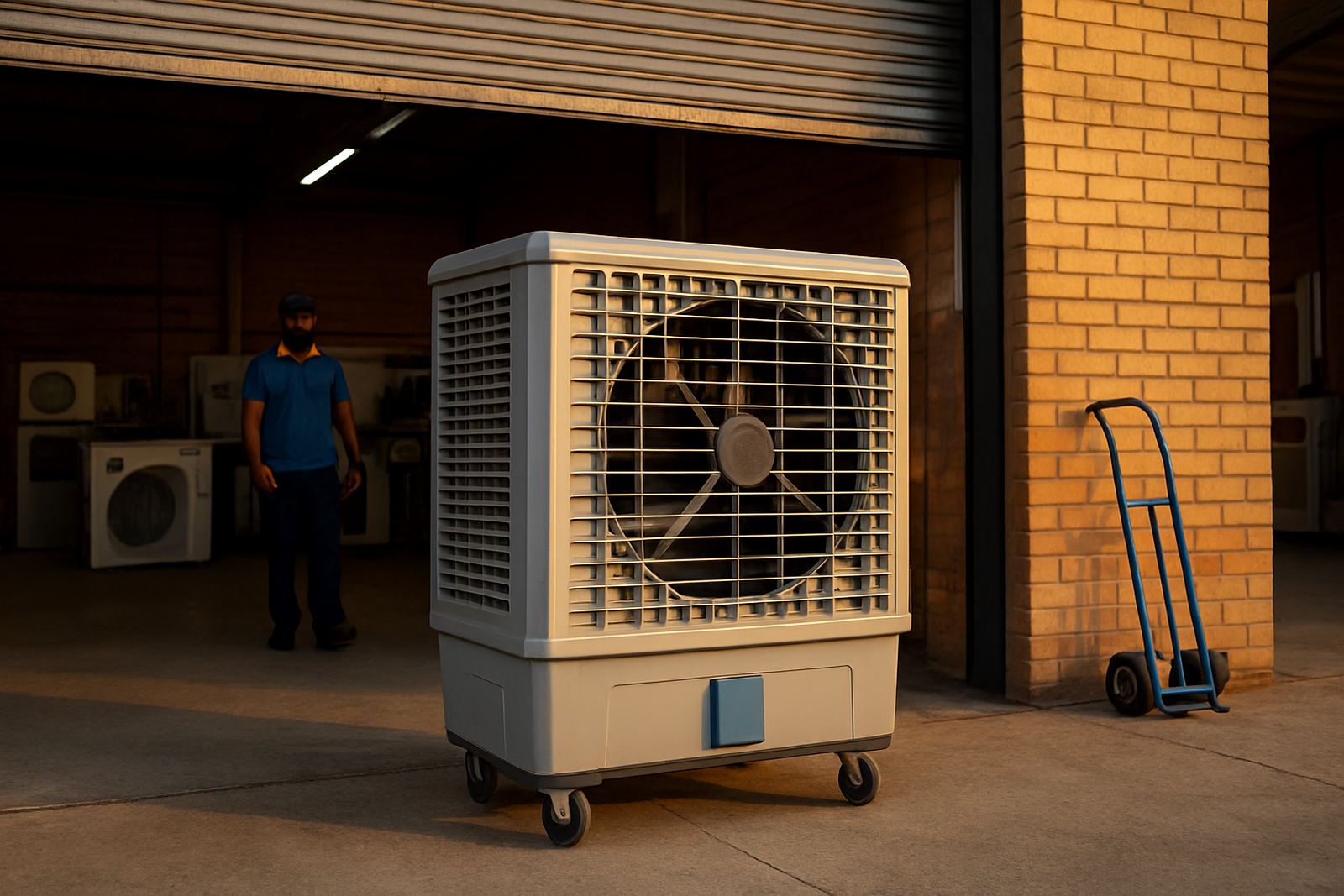
A workshop cooler, sometimes called an evaporative cooler, draws warm air through water soaked pads and sends cooler air back into the room. It works best where there is steady airflow and some natural exhaust, so the cooled air can move through the space instead of sitting in one corner. For many Johannesburg and East Rand workshops, that means better comfort for staff without the high power draw of refrigerated cooling.
These units are not meant to make a sealed room feel like an office with a split unit. They are used where doors open often, welding or assembly happens, and the work area is too large or too airy for standard airconditioning. In the right application, they can take the edge off heat, dust and dryness, especially in high roof sheds and factory bays.
- Uses water and airflow instead of refrigerant gas
- Suitable for open or semi open work areas
- Can help with dry heat in inland Gauteng conditions
- Lower running cost than compressor based cooling
Sizes and options for workshops, depots and sheds
Workshop coolers are selected by airflow, measured in cubic metres per hour, and by tank or water feed arrangement. Smaller units can suit parts rooms, guard rooms and compact repair bays, while larger units are better for production areas, motor workshops and dispatch spaces. The right size depends on floor area, ceiling height, heat load and how open the building is.
We supply a range of options so the unit can match the site, not the other way round. Some models are portable for flexible use. Others are fixed units with ducting or roof mounted discharge. In humid coastal areas they are less effective, but in Johannesburg, Randburg, Midrand and much of Gauteng they can perform well in the dry months.
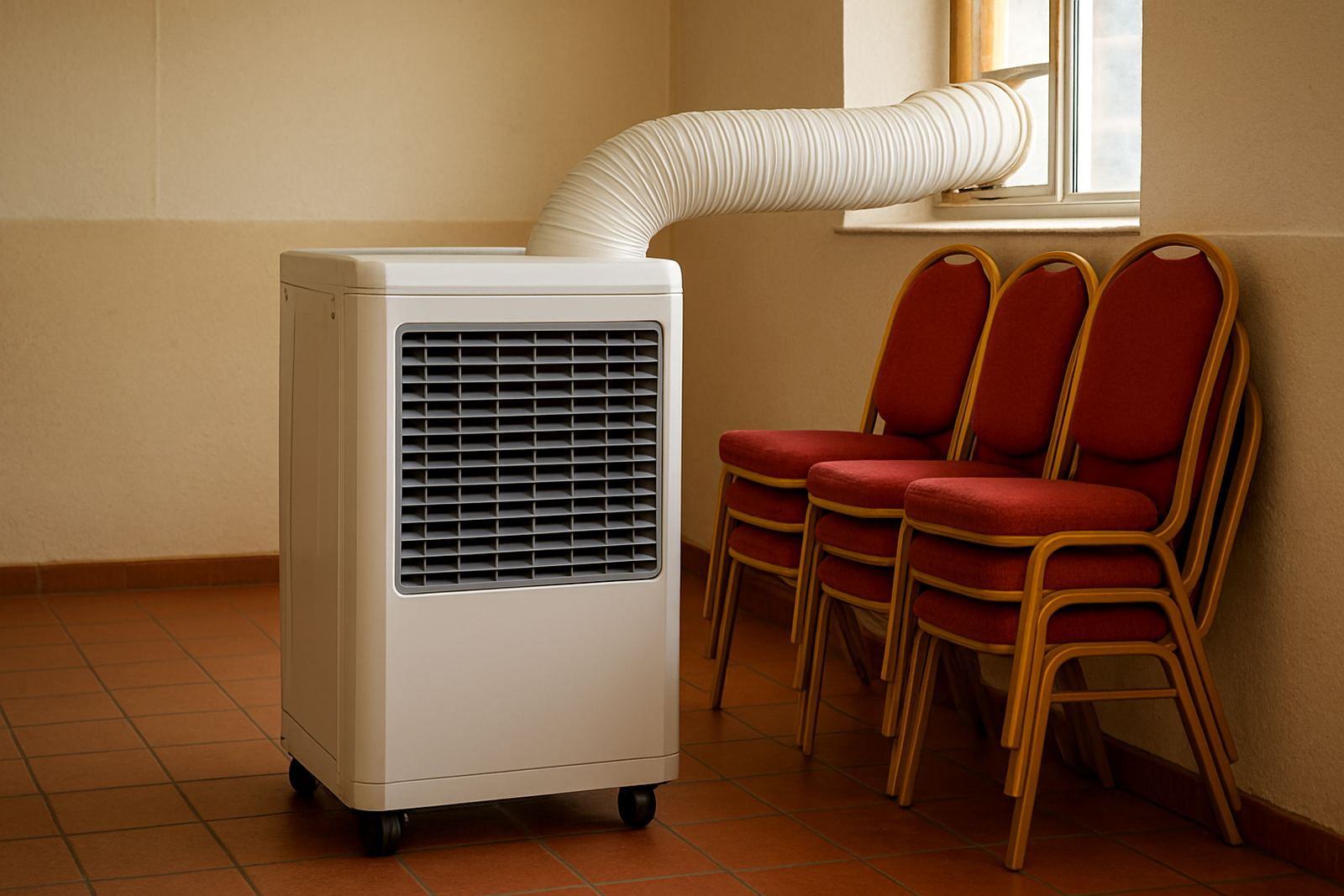
- Portable workshop coolers for spot cooling and flexible use
- Fixed wall or roof mounted units for larger bays
- Units with manual fill tanks or direct water connection
- Options with single speed or variable fan control
- Top discharge or ducted discharge depending on layout
Where a workshop cooler suits best
This product suits places where you need air movement and some cooling, but not closed room refrigeration. That includes auto workshops, fabrication spaces, warehousing, agricultural pack areas, tyre bays and light industrial rooms. It can also work in canteen areas, covered loading zones and municipal depots where the doors are open often.
It is less suited to sealed offices, boardrooms or areas with strict humidity control. If the building traps air, or if you need chilled conditions for stock, then another cooling method may be better. Thabo and the team usually check the layout first so the customer does not buy a unit that fights the building. That saves time and money.
- Auto and truck workshops
- Warehouses and dispatch bays
- Light manufacturing and assembly areas
- Farm workshops and pack sheds
- Open service yards and covered loading areas
Installation, water connection and power needs
Most workshop coolers need a solid base, good airflow and a water supply. Smaller units may run from a standard electrical point, while larger fixed models usually need a dedicated circuit and proper isolation. If the unit is roof mounted or ducted, installation should allow for service access and safe drainage. We also check the electrical load against the site, especially where other machinery already pulls a lot of power.
Water quality matters. Hard water can leave scale on the pads and tank, so some sites need more regular cleaning or a simple water treatment plan. In areas with load shedding, the lower electrical draw is a plus, but the unit still needs stable power for the fan and pump. A backup supply can be considered if the cooling must run during outages.
- Needs a water feed or regular tank filling
- Requires a level installation point and clear airflow path
- Electrical supply must suit fan and pump ratings
- Drainage should be planned for cleaning and overflow
- Works best where doors, louvres or vents can release warm air
Care, cleaning and servicing that keep airflow steady
Workshop coolers need regular care to keep the pads open and the water clean. Dust from grinding, timber, cardboard and general workshop use can collect quickly, so the pads and tank should be checked often. If the pads clog up, airflow drops and cooling performance falls away. A simple service routine helps the unit last longer and use less water too.
Our service team can handle scheduled maintenance plans for commercial sites in Sandton, Midrand, the East Rand and other Gauteng areas. That can include pad cleaning, belt checks where fitted, pump checks, fan inspection and general hygiene. If the unit is used daily in a dirty environment, a monthly visual check is wise, with a fuller service every few months.
- Clean or replace pads when dust and scale build up
- Check pump operation and water circulation
- Inspect fan, motor and wiring for wear
- Flush the tank and drain points on a set schedule
- Remove debris from intake grilles and filters
What to check before you place an order
To size the correct workshop cooler, we need a few basic details. Floor area, ceiling height and whether the building is open or enclosed make a big difference. It also helps to know how many people work there, what heat is generated by equipment, and whether the unit must be fixed or portable. If the site has dust, welding fumes or high humidity, that should be mentioned upfront.
We also ask about water access, drain points and available power. A unit that suits a Johannesburg North workshop may not suit a coastal site or a very sealed room. When the details are clear, the recommendation is more accurate and the installation is smoother. That means less back and forth and fewer surprises on site.
- Room size in square metres and ceiling height
- Type of work done and any heat producing equipment
- How open the space is during the day
- Water supply position and drain route
- Power point location and supply rating
Supply and fit across Johannesburg and Gauteng
Airconditioning Superstore supplies and fits workshop coolers for homes, businesses and industrial sites across Johannesburg North, Sandton, Randburg, Midrand, the East Rand and the West Rand. We also handle replacements, relocations and maintenance where an existing cooling arrangement needs attention. If the site has been running hot through summer, we can look at whether a workshop cooler is the right answer or whether another system would work better.
For commercial customers, site surveys help us check airflow, entry points and practical placement before any equipment is ordered. That keeps the job straight forward. If you need help with cooling a large work area, send the measurements and a short description of the space to sales@acsuperstore.co.za and we will advise on the next step.
Key facts
| Cooling type | Evaporative cooling with water pad media |
|---|---|
| Typical airflow | 3 000 to 18 000 m3/h depending on model |
| Power supply | 220V to 380V model dependent |
| Water use | Manual fill or direct water connection |
| Application | Large ventilated workshops, sheds, bays and service areas |
| Installation | Portable, wall mounted, roof mounted or ducted options |