What a small portable aircon actually does
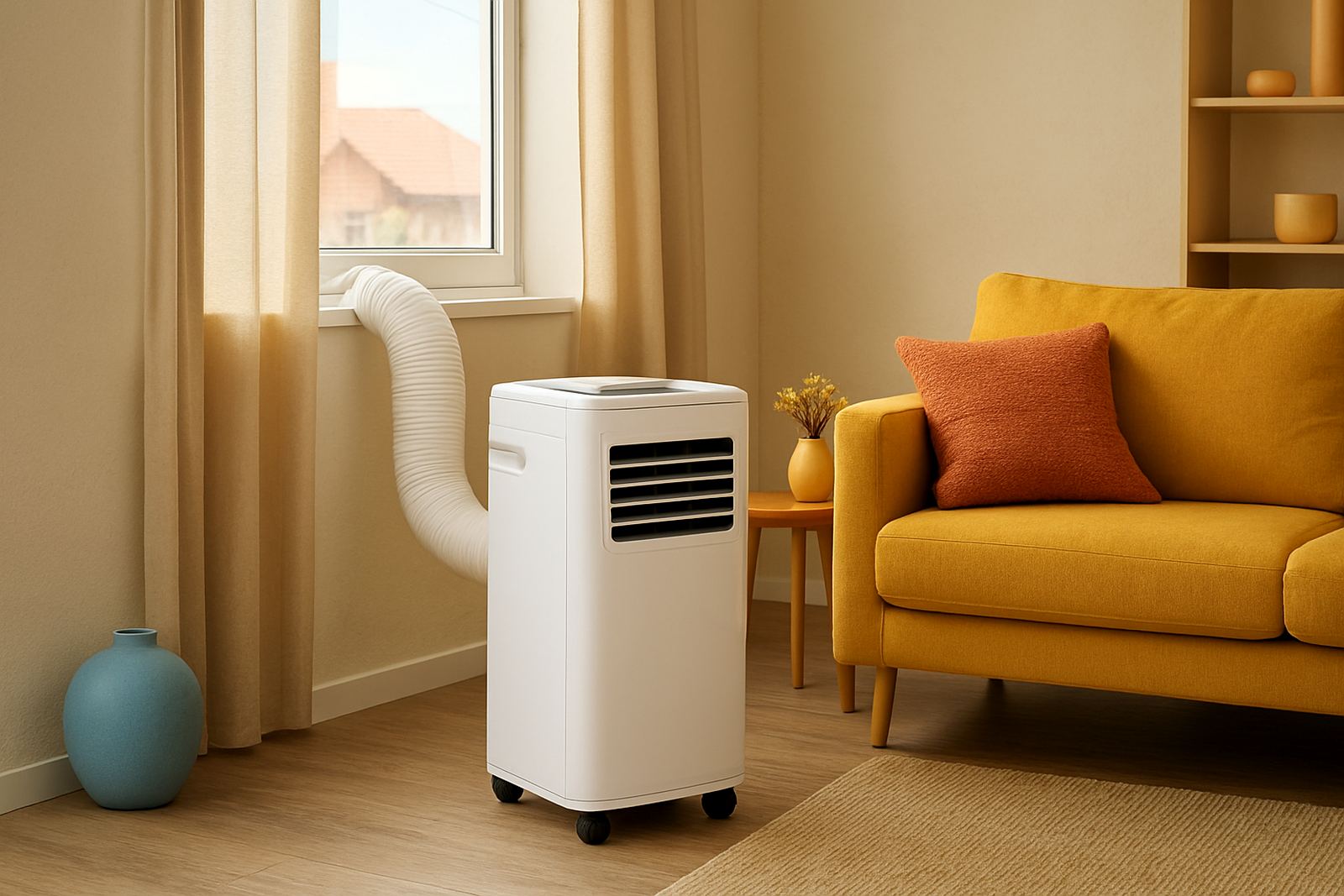
A small portable aircon is a movable cooling unit designed for temporary or light-duty use in one room at a time. It sits inside the room, removes heat from the air and sends warm air out through a hose or duct to a window, vent plate or similar opening. That makes it useful where a landlord will not allow a permanent installation, or where you need cooling for a limited period and do not want wall work.
These units are commonly chosen for bedrooms, study rooms, reception corners, guard rooms, temporary offices and server corners that do not justify a larger split system. They are not the same as a fixed split aircon, so the cooling range is smaller and the noise level is usually higher, but they are quick to place and easy to move when the room changes.
Sizes, cooling ranges and useful options
Most small portable aircons are sold in compact cooling sizes from about 5 000 BTU to 12 000 BTU, with some larger models going a bit higher. As a guide, a 5 000 BTU unit can suit a very small room, while a 9 000 BTU to 12 000 BTU model is better for a single bedroom, small office or enclosed server nook. Room size, sun on the walls, window area and people in the room all affect the final choice.
Some units are simple cooling-only models, while others include a dehumidify setting, fan-only mode and a sleep mode. If you live in humid coastal air or a room that traps moisture, a dehumidify function can help with sticky conditions, though it is not a replacement for proper ventilation. In Gauteng winter, the same unit can still help in a heatwave now and then, but it should be sized properly so it does not run flat out all day.
- Cooling-only for basic room use
- Cooling plus dehumidify for damp rooms
- Timer and sleep settings for night use
- Remote control on many models
Where it suits best in homes and small workplaces
This product suits places where flexibility matters more than permanent fitting. In a rental unit in Sandton or Randburg, for example, you may want cooling that can move with you when the lease ends. In Midrand and the East Rand it can also help in home offices, service rooms or small consulting spaces where one person sits for long periods and the room builds up heat.
It is also handy for temporary needs. A back room set up as a home office, a server corner with moderate heat, a staff change room, or a shop office that needs cooling during the hottest part of the day can all benefit. For larger open-plan areas, this is not the right choice. You will get better value from a fixed split system if the space is used all day by several people.
- Rentals and shared flats
- Single bedrooms and small studies
- Server corners and equipment nooks
- Temporary offices and site cabins
Setup, power needs and venting details
A small portable aircon still needs proper setup if you want it to work correctly. The unit must stand upright on a level floor, with enough space around the sides for airflow. The exhaust hose must be connected and routed out of the room so the hot air is not sent straight back inside. If the hose is kinked or too long, cooling drops quickly and the machine works harder than it should.
Most models run on standard household power and do not need special gas charging on site. The refrigerant is sealed inside the machine. What you do need is a suitable socket, a safe extension if required, and a venting plan that does not break rules in a complex or office park. In some buildings a window bracket or removable panel works well. If the room has poor sealing, some warm air leak-back is normal and must be allowed for.
We always suggest checking the load on the circuit before starting up, especially in older homes where other appliances may be on the same line. During load-shedding, the unit will stop and then restart when power returns, so it is best to allow a few minutes before switching it back on.
Care, cleaning and servicing to keep it usable
A portable unit needs regular cleaning to stay efficient. The air filter should be checked and washed or vacuumed as often as the room gets dusty. If the filter blocks up, the airflow drops, the unit becomes noisier and cooling falls off. On the outside, wipe down the casing and check the hose for cracks, loose clips or bends that could restrict exhaust flow.
Drainage is another point to watch. Some units collect moisture in a tray or internal tank, while others evaporate much of it during operation. If a drain is full, the machine may stop or begin to smell musty. A proper service should include a check on the fan, coil condition, seals and controls. In Johannesburg North and nearby areas we often find that office dust builds up faster than people expect, so regular attention saves trouble later.
- Clean the filter every 2 to 4 weeks in dusty use
- Check the exhaust hose for damage
- Empty or inspect any condensate tank
- Book a service if airflow becomes weak or noisy
What to check before you place an order
Before you order, check the room size, the heat load and where the hose will vent. A unit that is too small will run non-stop and still struggle. One that is too large for a tiny room can cycle poorly and feel uneven. Ask whether you need cooling only, dehumidify mode, or a model that can be moved between two rooms. If the space has no suitable window, make sure there is another safe venting option.
Also confirm the power point location, the noise level you can live with, and whether the unit must fit through a narrow passage, lift or stairwell. In offices and complexes, check whether any municipal or body corporate rules affect where discharge air can go. For server corners, it is wise to note the heat output of the equipment and leave a little spare capacity, not just the bare minimum.
If you need supply and fit in Johannesburg, Sandton, Randburg, Midrand, the East Rand or the West Rand, our team can help you match the unit to the room and the daily use pattern. That saves time and avoids buying the wrong size first time round.
Key facts
| Cooling capacity | About 5 000 BTU to 12 000 BTU depending on model |
|---|---|
| Power supply | Standard 220V household socket |
| Use type | Portable, temporary or light-duty room cooling |
| Ventilation | Exhaust hose required to remove hot air |
| Functions | Cooling, fan, dehumidify on selected models |
| Best room use | Single rooms, rentals, server corners and small offices |