What the condensate drain actually does
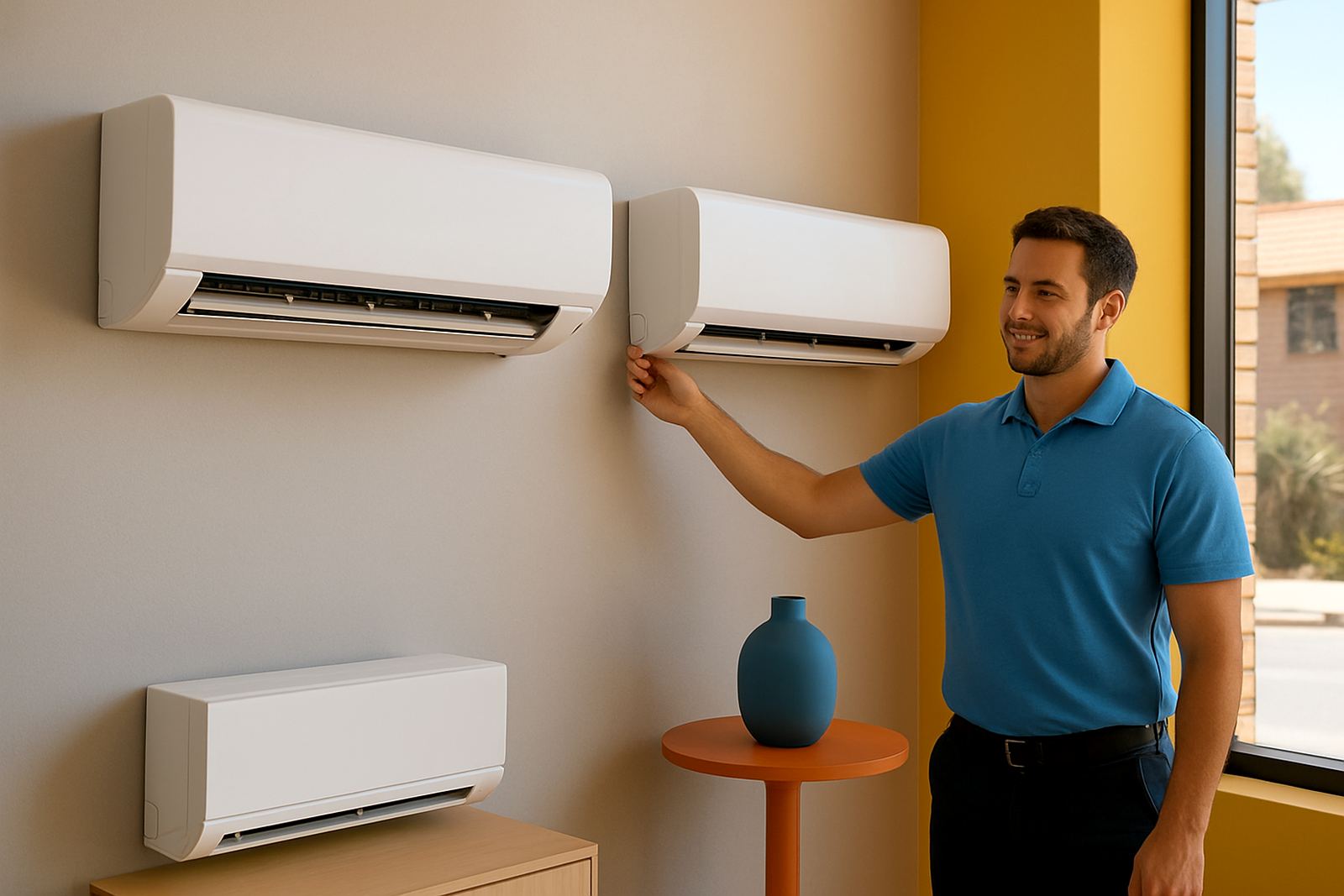
When an air-conditioner cools the air, moisture condenses on the indoor coil and turns into water. That water drips into a drain tray, then runs out through a condensate pipe. In a home or office, the drain is as important as the refrigerant circuit because it moves away the water that forms during normal operation.
If the drain works properly, you should not see dripping indoors, damp plaster or water staining around the indoor unit. In Johannesburg and Gauteng, where many homes run units for long hours in summer, the drain can carry a fair amount of water. A system can look fine on the wall but still leak if the pipe is pinched, sagging or blocked.
The basic rule is simple: water must have an easy path out. If it does not, it will pool in the tray and find a gap in the casing, the wall or ceiling below.
Why poor fall causes leaks and complaints
The drain line needs a steady downward slope so gravity can do the work. If the installer gives it too little fall, or allows a low spot in the pipe, water sits in the line and sludge starts to build. Dust, mould and fine debris from the indoor air mix with condensate and form a soft blockage over time. That is when the complaints start: dripping after the unit switches off, water on the skirting, or a wet patch that appears only on humid days.
Sometimes the problem is not a full blockage but a bad route. A drain line that rises and falls, passes through a tight ceiling space, or runs too far with no service access will give trouble later. In offices around Sandton and Midrand, this often shows up after tenants complain about ceiling tiles staining above a boardroom or reception area. The unit itself may still cool properly, yet the drainage is wrong.
Heat pumps and larger commercial systems are even more sensitive because they can produce more condensate. If the line is undersized or the trap is missing, you may hear gurgling, smell dampness, or find water backing up into the tray.
Common blockage points we see on site
Most drainage faults can be traced to a few repeat problem spots. Some are caused by poor installation, others by lack of servicing. In homes and small offices, we often find the same issues again and again:
- Dust and sludge inside the pipe after months without a clean.
- Kinked flexible pipe behind the unit or in the ceiling.
- Flat sections with no fall where water sits and starts to smell.
- Blocked drain tray outlets caused by algae or mould.
- Termite nests, insulation offcuts or building debris in the outlet path.
- Drain lines that discharge into a soakaway or gutter that has also blocked.
In older houses in Randburg and the West Rand, we often see ceiling spaces where the pipe was pushed between trusses with no proper support. It may work for a few seasons, then a small movement in the roof or settling in the building changes the pitch and the pipe starts to hold water. That is why a neat install matters just as much as the unit size.
How to spot a drain problem before the ceiling is damaged
Drain faults usually give warning signs before they turn into a real mess. If you know what to look for, you can act early and avoid damage to paint, plaster and electrical fittings. A bit of moisture around the unit is not something to ignore, even if the cooling still feels normal.
Watch for these signs:
- Water dripping from the indoor unit after switch-off.
- Brown marks on the ceiling or wall below the aircon.
- A musty smell when the unit starts up.
- Water on the floor near the internal wall.
- Gurgling or bubbling sounds from the drain line.
- The unit overflows on hot, sticky days but not on cooler days.
In coastal-style humidity, or in summer rain periods across Gauteng, the system pulls more water from the air. That extra moisture can expose a drain line that was already borderline. If the issue appears only when the weather gets sticky, the drain is still the first place to check.
Good drainage details that prevent repeat call-outs
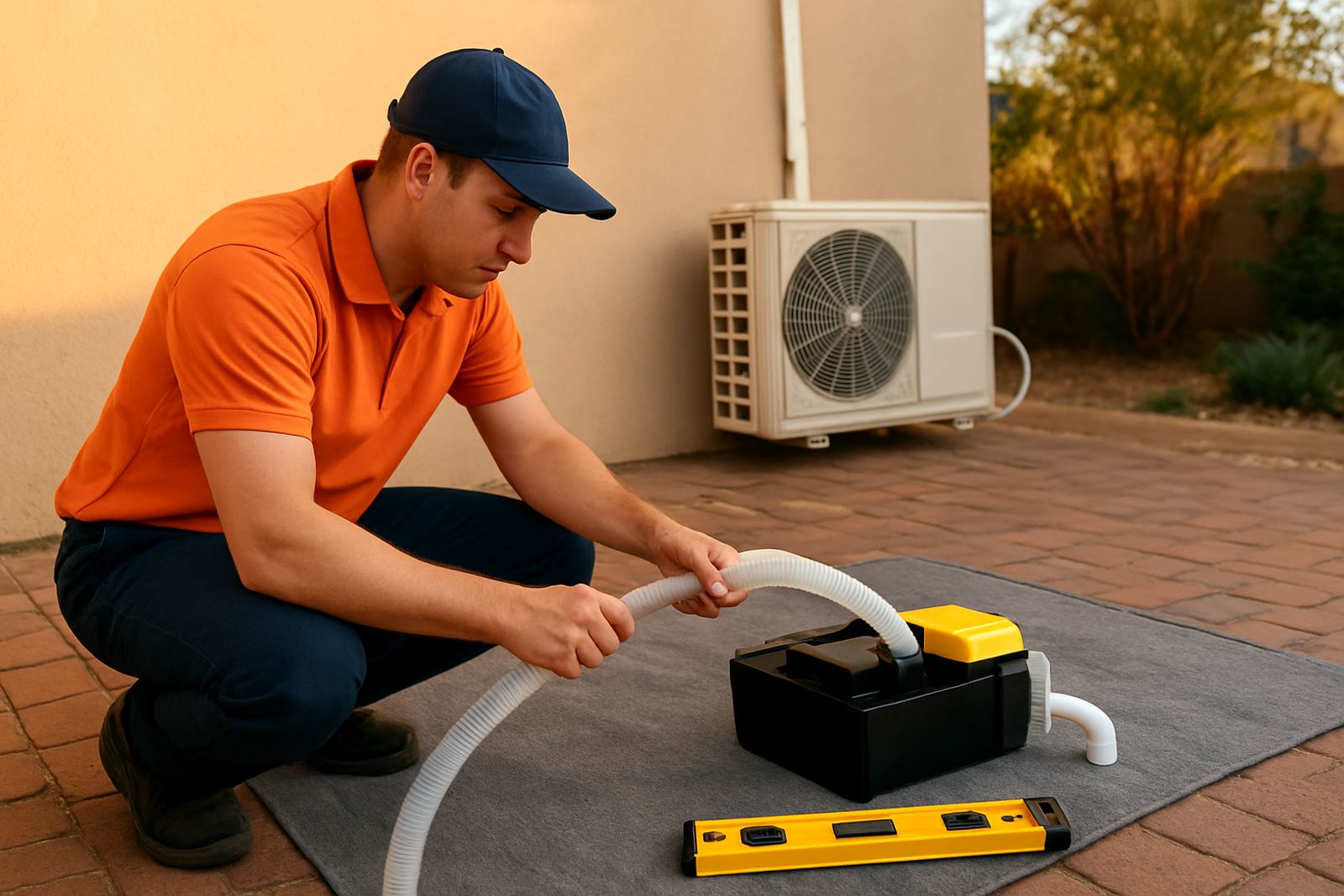
A proper drainage job is not only about running a pipe from point A to point B. The line should be supported, insulated where needed and laid with a clear fall. The outlet should discharge where it cannot drip onto paving, run back into the wall, or stain an exterior finish. On some sites a pump is needed, but only when gravity drainage is not possible and the pump has been sized correctly.
Good practice usually includes the following:
- Enough downward fall from the indoor unit to the outlet.
- Proper support so the pipe does not sag after a few months.
- A clean, accessible route for future servicing.
- Correct sealing where the pipe passes through a wall or ceiling.
- A test run with water before the job is signed off.
For supply-and-fit work in homes, a neat route through the ceiling or exterior wall can save a lot of trouble later. In offices, a planned route also helps with compliance and maintenance access, especially where ceiling voids are shared with lights, data cabling and fire services.
A Johannesburg North example that shows the point
We recently attended a home in Johannesburg North where a split unit had started dripping onto a passage ceiling. The owner thought the aircon was leaking gas, but the issue was drainage. The installer years earlier had routed the pipe over a small beam and the line formed a dip. Dust and slime collected in that low point and when the unit ran for longer periods, water backed up and overflowed the tray.
After clearing the line, correcting the fall and fixing the support points, the dripping stopped at once. The ceiling needed patching, but the wall unit itself was fine. That is the hard lesson with condensate drains: a small slope error can lead to a costly ceiling repair. It is not dramatic at first, just a few drops then suddenly a stained patch and a call on a Monday morning.
That same principle applies to heat pumps and atmospheric water systems too. If water is part of the process, the drainage path must be treated as essential equipment, not an afterthought.
When to call for service instead of waiting
If a drain line keeps blocking, or water keeps appearing after cleaning, the root cause may be hidden inside the ceiling or at the tray outlet. A service call makes sense when the unit is old, the ceiling space is hard to reach, or the outlet is discharging to a place that is not easy to inspect. It is also worth checking the drainage after any relocation, ceiling repair or tenant fit-out, since a small change in pipe position can upset the flow.
For homes, offices and retail spaces in Sandton, Randburg, Midrand and the East Rand, regular aircon servicing should include a drain test. A quick flush during maintenance can prevent leaks, damp patches and complaints from staff or family. If your unit is already dripping, switch it off and get the line checked before the water reaches wiring or the ceiling board.
Condensate drainage is a small detail, but it carries the water that your air-conditioner removes from the room. Get the fall right, keep the line clear, and the system will stay drier, cleaner and easier to live with.