Cooling for shops that stay open and busy
Retail cooling is different from home cooling. A small boutique with one entrance, big display windows and a steady trickle of customers can heat up quickly, especially on the north-facing side in Johannesburg or through a hot afternoon in Sandton and Randburg. When the unit is too small, it runs hard all day, never quite catches up, and the shop still feels stuffy. When it is too large, it short-cycles, wastes power and leaves the air uneven.
For shop floors, service counters and front-of-house areas, the aim is steady comfort. That usually means choosing an aircon that can handle door openings, lights, display fridges, point-of-sale equipment and the extra body heat from staff and shoppers. At Airconditioning Superstore, we look at the size of the room, the ceiling height, the amount of glass, whether there is a mall rule on outdoor units, and how many hours a day the space is occupied.
Typical equipment for boutiques and counters
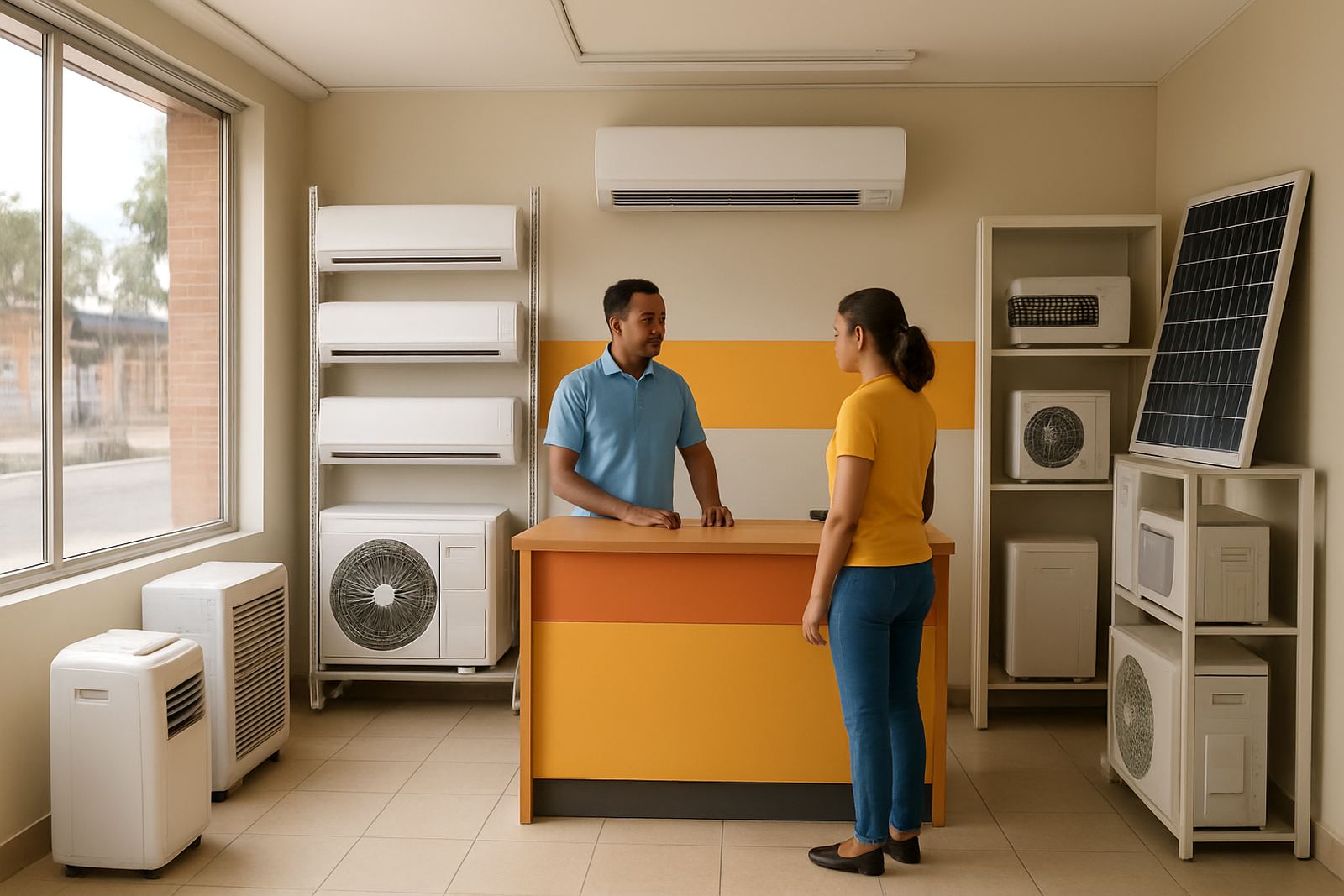
Most retail spaces use wall-mounted split units or inverter models because they are practical, quick to install and easy to service. In many shops, one well-placed unit is enough for a small sales floor or reception counter. Wider stores may need two units spaced across the room so the cold air does not blow straight onto one area while the rest stays warm. For premises with high energy use or frequent power cuts, solar-ready aircons can help reduce pressure on the supply and keep the business going through load-shedding windows.
Where the shop also needs hot water for staff or a back-of-house basin, a heat pump may be added separately. We also supply atmospheric water generators for sites that want a cleaner way to produce water on site, which can suit retail back areas, small offices above the shop, or shared premises in Johannesburg North and Midrand.
- Small boutique or kiosk: 9 000 BTU to 12 000 BTU split or inverter unit
- Medium retail floor: 18 000 BTU to 24 000 BTU, often two units for even spread
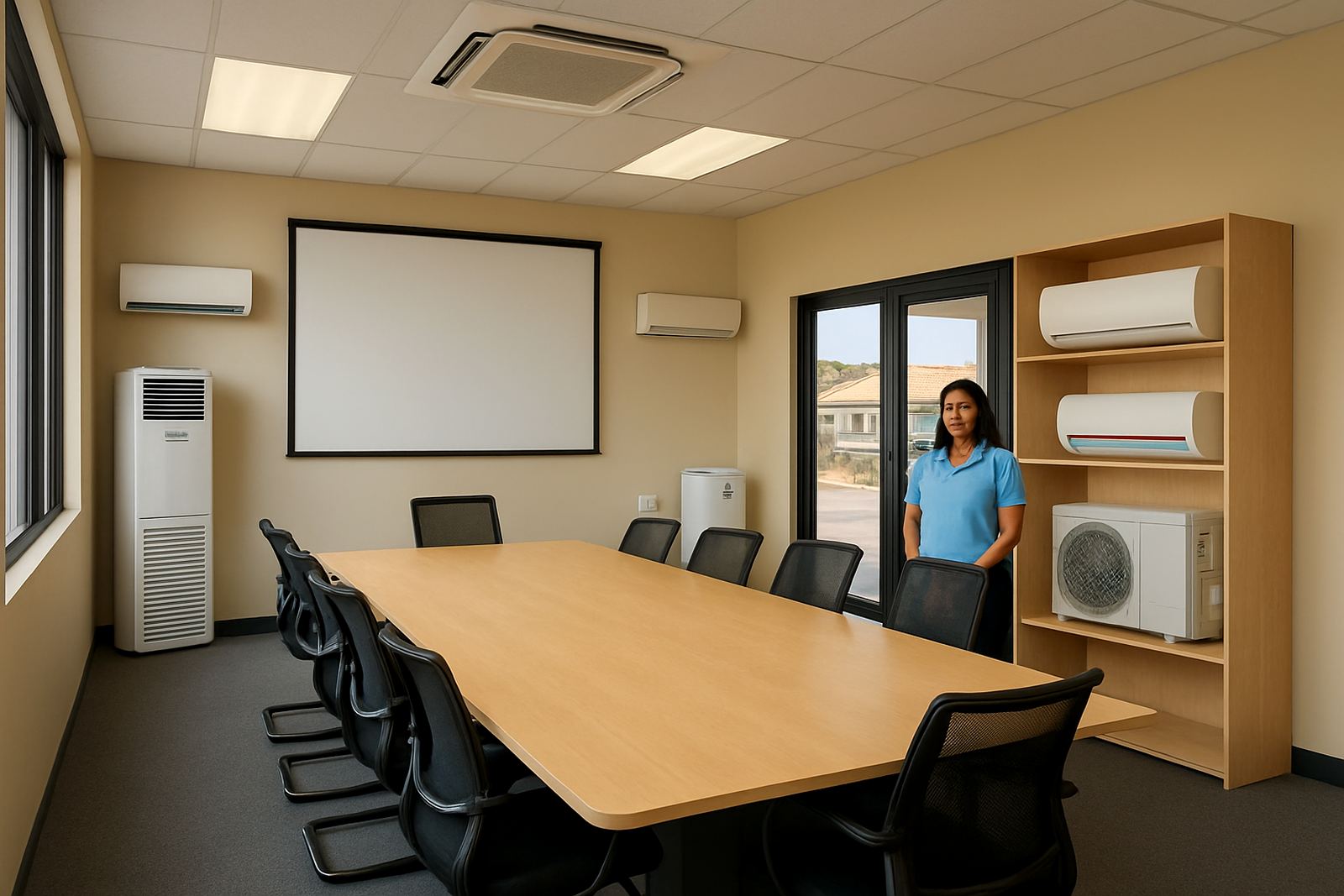
- Large showroom or open plan shop: multiple units with zoned control
- Busy counter area: one unit aimed to avoid blowing directly on staff or customers
Planning the layout before you buy
Good planning saves money later. A shop that looks simple on paper can still be awkward once the shelves, mannequins, till points and security gates are in place. We usually start with the room shape and the path people walk through it. Cold air should move along the length of the space, not crash into a wall or sit above a stock room doorway. If the shop has a glass front, blinds or solar film may be worth adding so the unit is not fighting direct heat all day.
Placement also matters for maintenance. The indoor unit should be reachable for filter cleaning, and the outdoor unit must have enough airflow, drainage and service access. In many malls and office-retail units, there are rules about where condensers can go, how noise is managed and how pipes are hidden. If the building body requires approval, we can work from those conditions and plan a neat install that keeps things within municipal and landlord requirements.
- Keep the indoor unit away from direct sunlight and open entrances where possible
- Allow free space around the outdoor unit for air movement and servicing
- Match the unit position to the till point, seating area or customer waiting space
- Plan drainage so condensate does not drip onto paving, stock or a walkway
Common mistakes that push costs up
One of the biggest mistakes is buying on room size alone and ignoring the shop’s heat load. A 25 m2 boutique with a lot of glass and a full afternoon sun can need more cooling than a 35 m2 room with shaded walls. Another mistake is placing one unit at the back and hoping it will cool the whole floor. It usually leaves the front entrance warm and the staff end up working in uneven air.
Retail owners also often forget about service access and cleaning. Filters in a shop collect dust fast, especially near busy roads in the West Rand or near construction areas in Midrand. If filters are not cleaned, airflow drops and the unit uses more power. Poor drainage is another headache. Water stains near the doorway or behind a counter can lead to slip risks and unhappy landlords. A clean install with proper pipe fall and neat trunking saves time later, and it looks better for customers too.
Budget ranges for supply and fit in Rand
For a straightforward retail aircon install in Gauteng, small systems usually start from about R9 500 to R15 000 supplied and fitted, depending on the capacity, pipe length and site access. Mid-sized inverter units for a boutique or service counter often land between R15 000 and R26 000. Larger multi-unit retail setups, or units that need extra piping, wall support or electrical work, can run from R26 000 to R55 000 plus, depending on the layout and any building rules that need to be met.
On older premises, an electrical upgrade may be needed if the board is already full or the wiring is not suited to the chosen unit. In some cases, especially in older shops around the East Rand or West Rand, a relocation or replacement is more cost-effective than trying to keep an outdated system alive. We can quote for supply only, supply and fit, or a planned replacement that happens after trading hours to limit disruption.
How our Johannesburg team handles retail installs
We are based in Johannesburg North and work across Sandton, Randburg, Midrand, the East Rand and the West Rand. For retail sites, our process is practical. We check the room, talk through the trading hours, note the number of people in the space and plan around stock, shelving and access. Thabo Mokoena leads the business, with Naledi Khumalo on sales, Pieter van Rensburg on installations, Ayesha Patel on service coordination, Sibusiso Dlamini on technical support and Lerato Molefe on heat pump work.
That mix matters when a shop needs more than one service. A boutique may want a new split unit now, servicing before summer and a later relocation when the layout changes. A service counter may need a quick replacement after a breakdown, then a maintenance plan so the unit keeps running through the busy months. We keep the advice plain, the quote specific and the install neat, because retail spaces cant afford messy downtime.
- Supply and fit for new shops, refurbishments and tenant fit-outs
- Aircon replacements when an old unit is noisy, weak or expensive to run
- Relocations for changed layouts or new counter positions
- Servicing and maintenance plans to keep filters clean and airflow steady
When a shop needs more than cooling
Some retail spaces need heating for winter mornings, especially in corner units and street-facing shops with draughts. In those cases, an inverter unit with heating mode can keep the room comfortable without adding separate heaters. If the site has high utility costs or repeated outages, a solar aircon may make sense as part of a broader plan. For small offices above retail premises, heat pumps and water generators can be added into the same supply discussion so the whole site is easier to run.
If you are fitting out a new shop or replacing an older system, it helps to think about the next few years, not just the current season. Stock changes, staff numbers shift and landlords often rework internal walls. A properly sized unit with sensible placement gives you more flexibility when the shop changes shape.