What our aircon supply and fit service includes
Our supply and fit service is a complete package for new air-conditioning systems. It starts with choosing the right unit size for the room or office space, then moves through supply, installation, commissioning and handover. We work on split units, inverter systems and solar-ready aircons, with options suited to bedrooms, lounges, boardrooms, small shops and open-plan offices.
For most homes in Johannesburg North, Sandton, Randburg, Midrand, the East Rand and the West Rand, the main choice is between a standard split unit and an inverter model. Inverter systems are often preferred where the unit runs for longer periods, since they control temperature more steadily and can reduce power spikes during load-shedding recovery. For exposed buildings, top-floor rooms and sites with high solar gain, we also look at insulation, window size and airflow before recommending a size.
- Supply of approved indoor and outdoor units
- Correct sizing based on room volume, usage and insulation
- Wall mounting, pipe work, cabling and drainage
- Vacuuming, pressure testing and gas checks
- Commissioning, operation handover and basic user training
How we size the system before installation
A good installation starts with the right capacity. A unit that is too small will run too hard and struggle on hot summer afternoons, while an oversized unit can cycle too often and leave the room feeling clammy. We measure the room, check ceiling height, look at sun exposure, and note how many people use the space. We also consider server rooms, kitchens and west-facing glass, because these push the cooling load up fast.
As a practical guide, smaller bedrooms often take a 9 000 BTU unit, medium rooms around 12 000 BTU, and larger living areas or offices may need 18 000 BTU or more. Exact sizing depends on the building and use. In some cases a 24 000 BTU unit is the right call for a larger open-plan area or a light industrial office. We do not guess at this step, because getting it wrong costs more later.
- Room dimensions and ceiling height
- Number of windows and sun exposure
- Occupancy and equipment heat load
- Power supply and breaker capacity
- Outdoor unit placement and noise concerns
Installation standards for homes, offices and small business sites
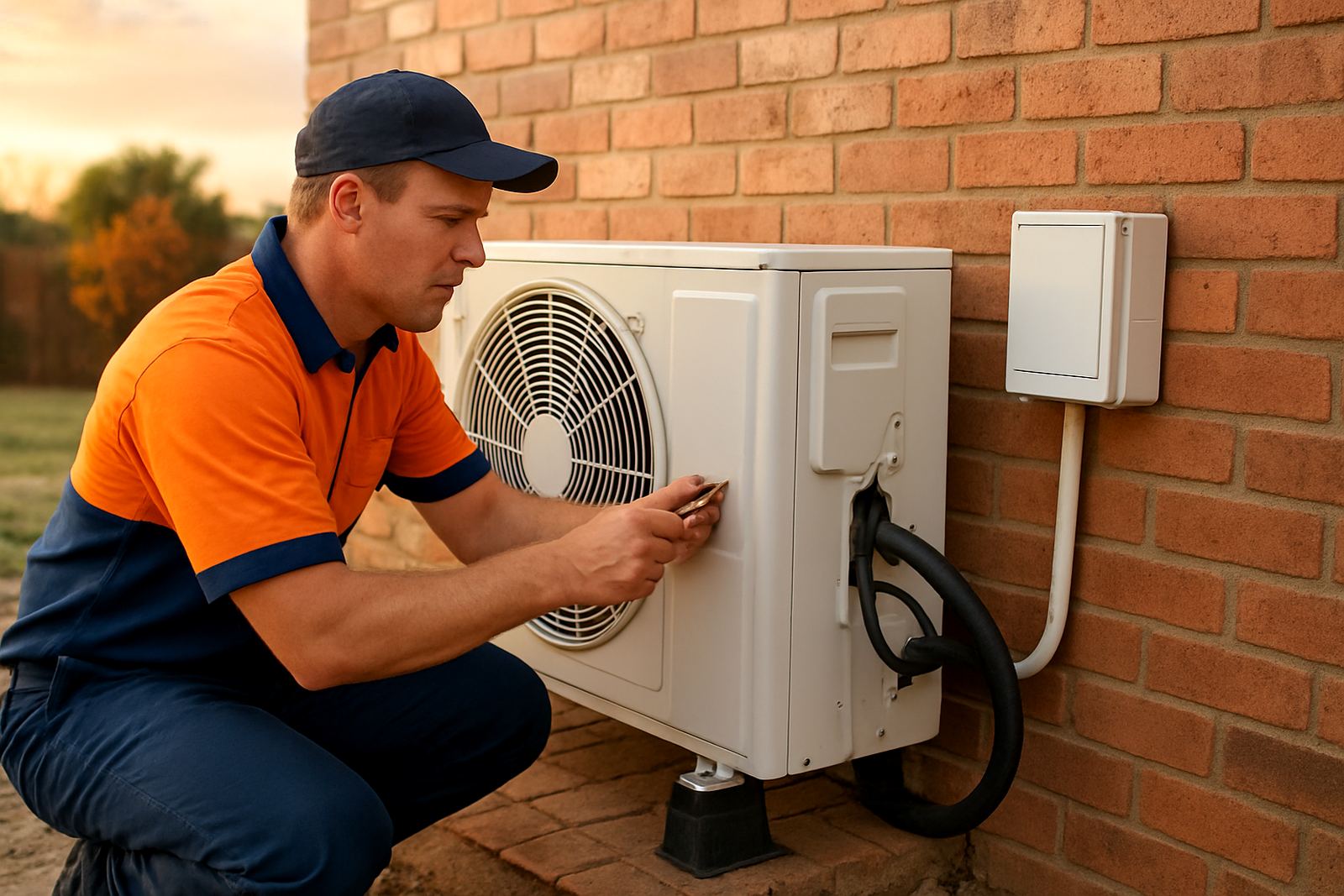
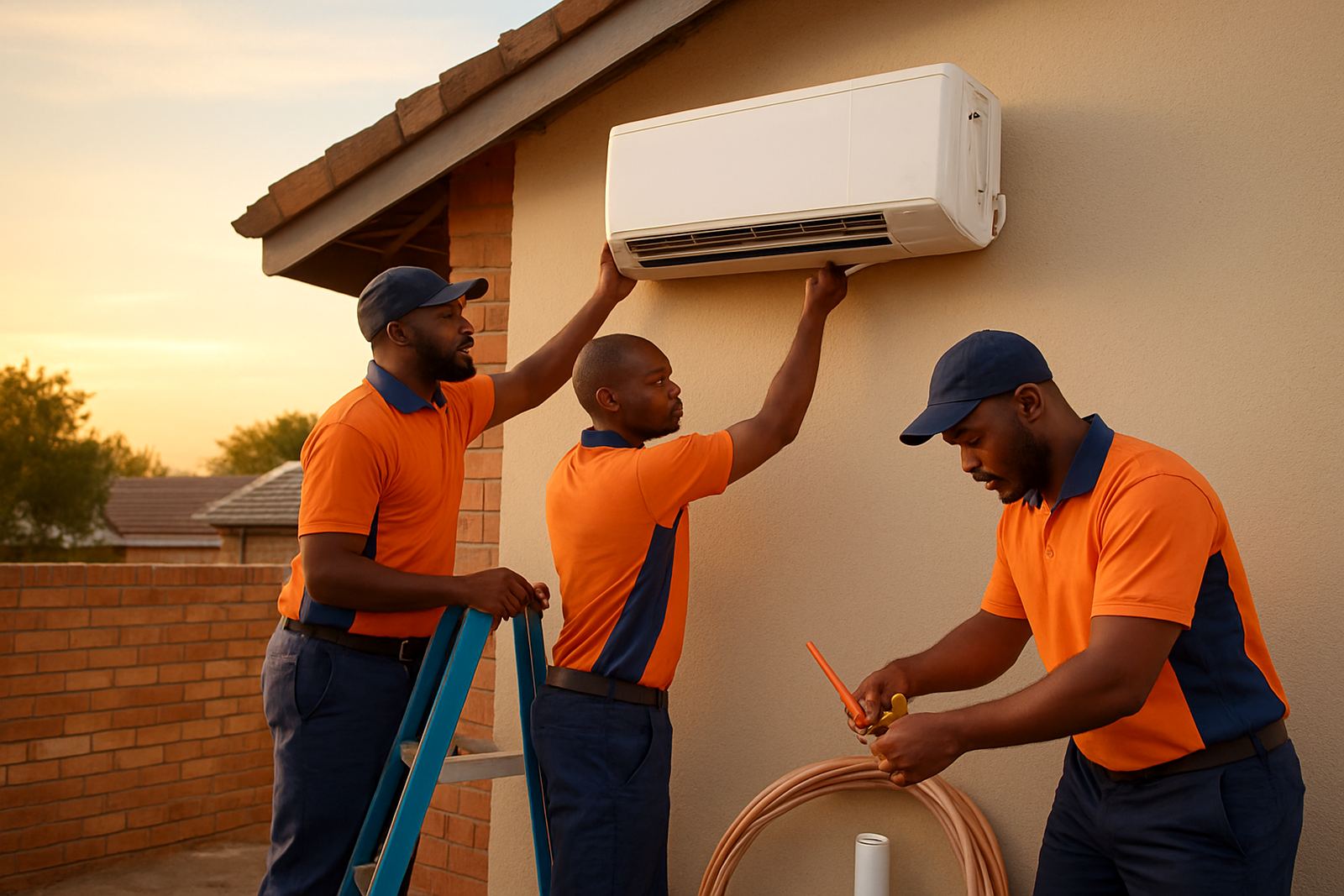
Our installation team works cleanly and to the right spacing and clearances for the unit type. Indoor units are fixed level, outdoor units are mounted on brackets or a slab, and pipe runs are kept as short and neat as possible. Drain lines are laid to fall correctly so water does not back up or drip into ceilings. We also make sure electrical connections are safe and suitable for the load. If the site needs extra trunking, longer piping or a new isolator, we quote that clearly before work starts.
For offices and commercial spaces, we plan around trading hours and access control. Where needed, we do early morning or after-hours work to reduce disruption. In complexes and body corporate buildings, we can advise on mounting positions and drainage points so the install complies with site rules and avoids problems with neighbours. Coastal humidity is less of an issue in Gauteng, but dust, vibration and poor airflow still matter and must be managed properly.
- Indoor unit mounting and levelling
- Outdoor unit bracket or base installation
- Refrigerant piping and insulated line set
- Electrical connection and isolator fitment
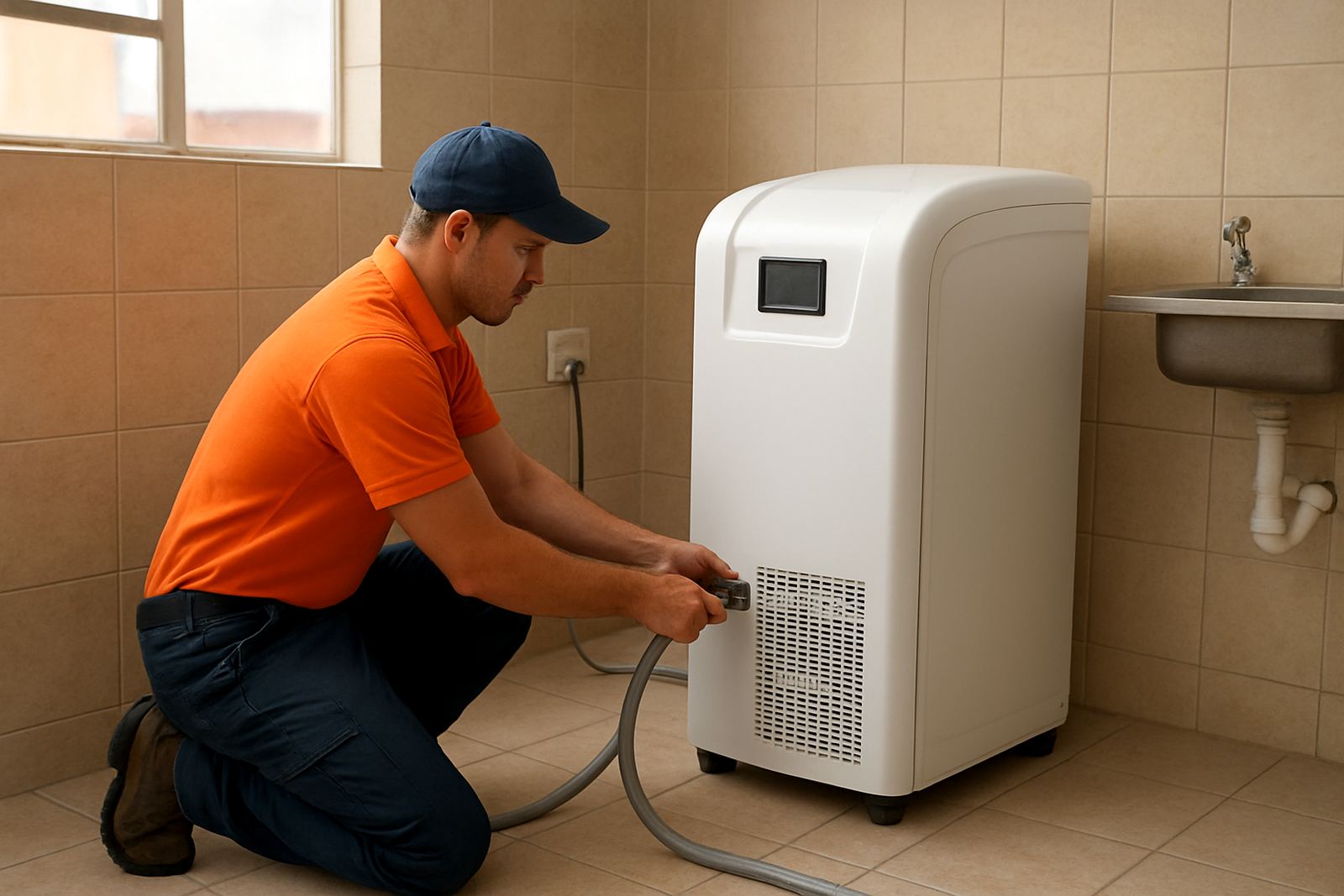
- Condensate drainage and leak test
Commissioning and handover after fitment
Once the unit is installed, we commission the system before handover. That means pressure testing, vacuuming the lines, checking for leaks, confirming correct refrigerant operation and running the unit through cooling and fan modes. We check airflow at the indoor unit and verify that the outdoor unit is working within normal operating range. If any setting needs adjustment, we sort it then and there.
Handover includes showing the customer how to use the remote or controller, how to set temperature properly and when to use dry, cool or fan mode. We also explain what to expect during the first few days of operation. Some dust or slight odour can appear on first start-up in a new room, especially where building work was recently done, so we advise clients what is normal and what is not.
Before we leave, the site should be clean and the unit ready for daily use. That includes final testing, removing installation waste and making sure the customer understands the basics. A proper handover saves call-backs later and helps the system run as it should from day one.
Turnaround times and pricing approach
Turnaround depends on stock availability, the type of unit and how complex the site is. Standard domestic installations can often be completed within a short lead time once the unit is confirmed and the site is ready. Larger homes, multiple-room installs and office fit-outs may need a site visit first so we can plan mounting, power and drainage properly.
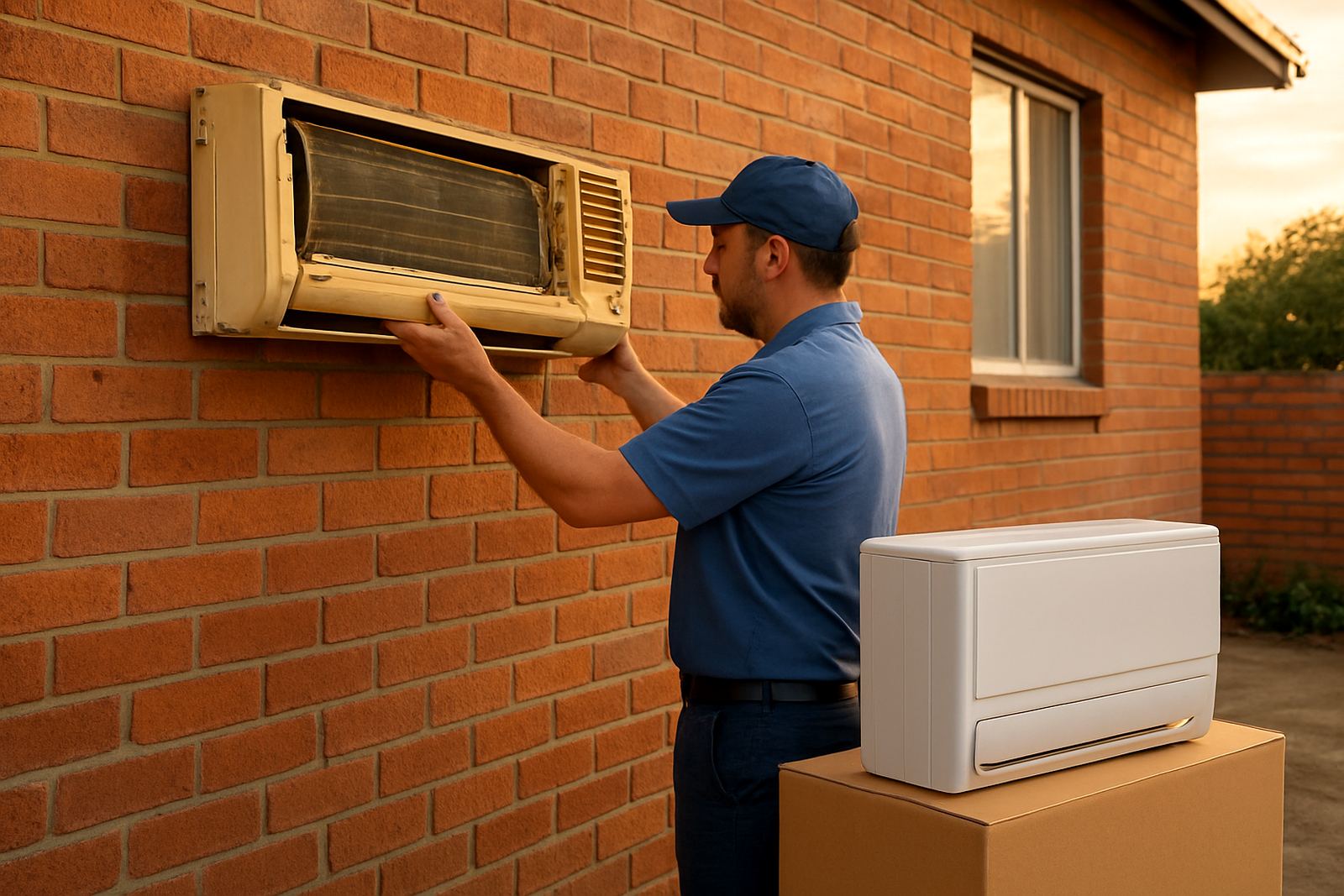
Our pricing is based on a clear scope. You pay for the unit, installation labour and any extras such as longer pipe runs, trunking, roof work, isolators or electrical upgrades. We keep quotes practical and itemised, so you can see where the cost comes from. If you are replacing an old system, we can also advise on safe removal and relocation of existing units where that is more economical.
- Home single-room installs
- Multi-room or office projects
- Replacement of older aircons
- Special access, height or roof work
- Extra materials if the site needs them
Maintenance intervals that protect performance
New systems still need regular attention if you want steady cooling and lower running costs. For homes, we normally recommend a service every 12 months, or sooner if the unit is used heavily during summer. For offices, consulting rooms and retail spaces, six monthly checks are better because filters clog faster and the systems run longer hours. If the site is dusty, has open windows or runs through load-shedding cycles often, more frequent attention helps keep the unit healthy.
Maintenance usually includes cleaning filters, checking the drain line, testing electrical connections, inspecting the fan, and looking at refrigerant pressures and general operation. Small issues caught early cost less than failed compressors or water damage. If you already have one of our installation records on file, future service visits are quicker because we know the system type and location.
We also advise customers on simple owner care, like keeping filters clean and not setting the temperature too low. A comfortable setting of around 22 to 24 degrees is often enough in Gauteng and keeps the unit from working too hard.
Key facts
| Typical sizes | 9 000 BTU, 12 000 BTU, 18 000 BTU, 24 000 BTU and larger |
|---|---|
| System types | Split units, inverter aircons, solar-ready aircons |
| Service area | Johannesburg North, Sandton, Randburg, Midrand, East Rand, West Rand |
| Installation scope | Supply, fitment, commissioning and handover |
| Maintenance interval | 12 months for homes, 6 months for offices and high-use sites |
| Contact | sales@acsuperstore.co.za |