How a commercial heat pump heats water
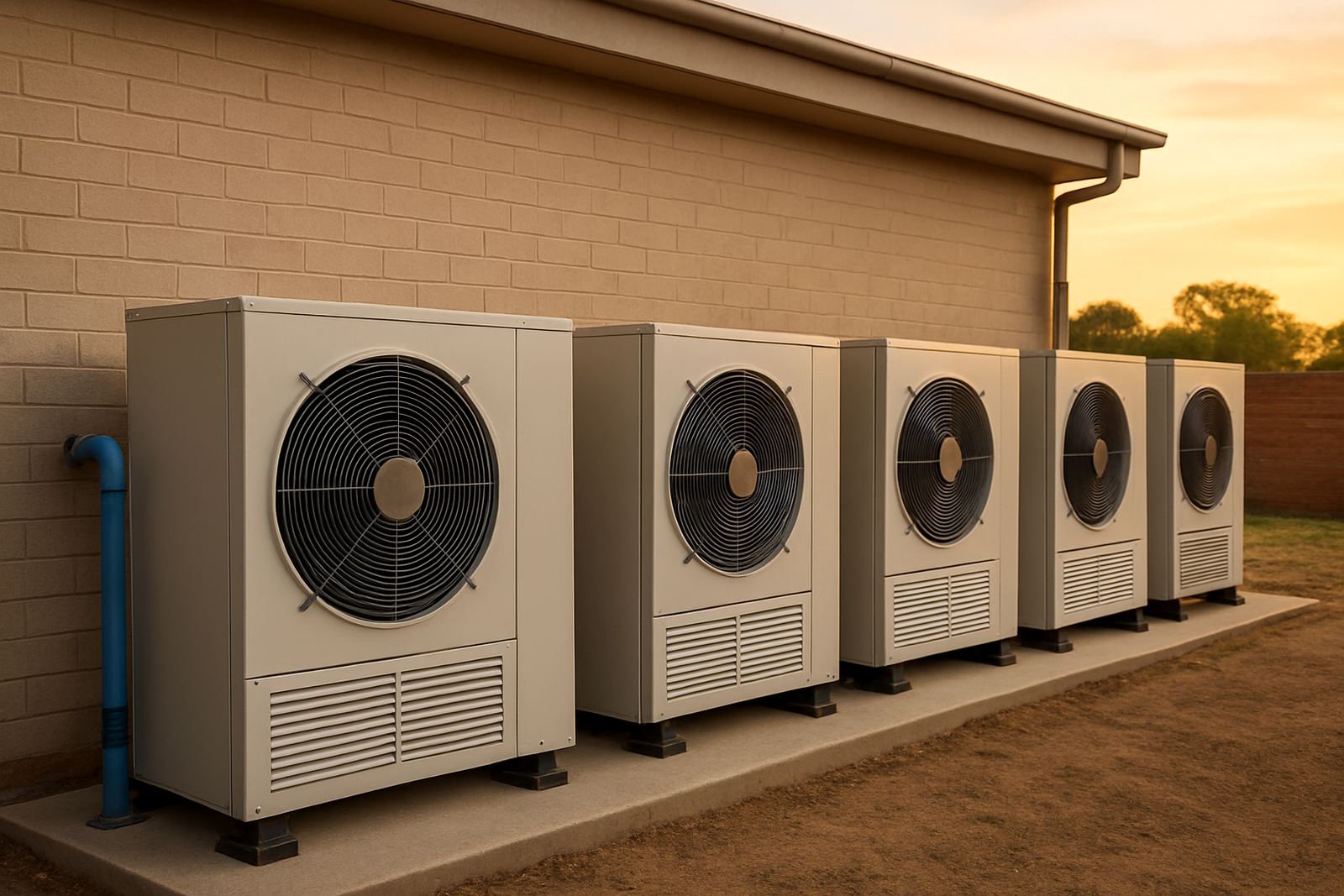
A heat pump moves heat from the surrounding air into a hot water tank. Instead of making heat directly with an element, it uses a compressor and refrigerant circuit to transfer thermal energy into the water. That is why it uses far less electricity than a standard electric geyser when sized correctly.
For commercial use, the system is normally installed with a storage tank, controls, safety valves and circulation fittings. Depending on the site, it can serve a single large tank or a bank of tanks. This suits buildings where hot water is used through the day, like staff ablutions, guest rooms, laundry points and shower blocks. In Johannesburg and Gauteng, where mornings are cold and power costs keep climbing, that difference shows up quickly on the monthly account.
Sizes, tank options and output ranges
Commercial units are selected by hot water demand, not only by the number of people on site. A small office might need one compact system for basins and tea kitchens, while a gym or lodge may need a larger unit feeding a 500 L to 1 500 L storage arrangement. We match the unit to peak usage, recovery time and available space, so the water does not run short during busy periods.
- Small commercial: 100 L to 200 L systems for light office use or small shared facilities
- Medium commercial: 300 L to 500 L systems for salons, guesthouses and small gyms
- Large commercial: 800 L to 1 500 L or linked tanks for lodges, clubs and high-use sites
- Output range: sized by litre capacity and hourly recovery, depending on inlet water temperature and draw-off pattern
We also look at where the tank will sit, because a plant room with low ceilings, tight access or rooftop exposure needs a different setup to a ground-floor utility area. On coastal or humid sites the casing and pipework details matter too, even though our main area is Gauteng.
Where commercial heat pumps work best
This type of system works well anywhere there is regular hot water demand and enough airflow around the unit. It is commonly used in offices, lodges, schools, apartment blocks, clinics, gyms and workshop wash areas. If the building uses borehole water, municipal water, or a treated storage feed, we can advise on filtration and scaling risk before installation.
It suits sites where a standard electric geyser is costing too much or where load-shedding is putting strain on hot water availability. Many clients move to heat pump hot water because they want a more predictable setup that does not drag the same heavy current as direct electric heating. For buildings with solar PV, a heat pump can be a sensible partner because it shifts more of the hot water load away from element heating.
- Office blocks with kitchens and staff showers
- Lodges, guesthouses and hospitality buildings
- Gyms, change rooms and sports facilities
- Apartment common areas and shared wash stations
- Light industrial and workshop ablution blocks
Installation, electrical supply and site checks
Commercial heat pump installation starts with a site survey. We check hot water demand, tank position, pipe lengths, drainage, electrical capacity and access for service work. Most systems need a dedicated electrical supply and proper isolator protection, plus correct pipe sizing so the unit can move water at the right flow rate. In some cases a booster arrangement is added where peak demand is high or tap points are far from the tank.
These units can usually be integrated into existing hot water systems, but the condition of the current tank and pipework must be checked first. If the tank is old, scaled or undersized, replacing it often makes better sense than trying to work around poor hardware. We also check for safe condensate drainage, sound mounting and enough airflow around the unit. On site, that can be the difference between a unit that runs well and one that gives trouble after a few months.
Power needs are generally much lower than direct electric heating, but the exact supply still depends on the model and size selected. For a commercial job, the electrician should confirm breaker capacity, cable size and earthing before switch-on. Gas is not required for a standard heat pump system.
Running costs, care and service intervals
A heat pump needs less electricity than an electric geyser, but it still needs care. Filters, coils and drain points can collect dust, lint and scale, especially in busy commercial buildings. If the unit is left unserviced, airflow drops and the system works harder than it should. That can push up power use and shorten component life.
We normally recommend scheduled servicing every 6 to 12 months, depending on the building and water quality. Areas with hard water may need closer attention to scaling and valve condition. A service check should include temperature control, refrigerant performance, fan operation, pipe insulation and tank safety fittings. If the site has a maintenance plan already, we can tie the heat pump into the same visit cycle.
- Clean the air intake and keep the area clear
- Check for leaks, pressure issues and unusual noise
- Inspect valves, drains and temperature settings
- Descale the tank where water hardness is an issue
- Confirm the electrical supply and isolator are in good order
For lodges and gyms, preventative care is worth more than waiting for a breakdown. Hot water complaints move fast through a business, and downtime is costly.
What to confirm before placing an order
Before ordering, make sure the supplier has the right information. Commercial heat pump systems are not one-size-fits-all, and the wrong tank or recovery rate can leave the building short of hot water. We ask clients for daily occupancy, peak shower times, number of basins or taps, existing tank size, and whether the system is replacing another unit or being installed from scratch.
It also helps to know where the unit will sit, whether the space is indoors or outdoors, and if there are noise restrictions from neighbours or body corporate rules. For some sites in Sandton, Randburg or Midrand, the access route matters as much as the equipment selection, because lifting a tank up stairs or around tight plant rooms takes planning. If the site is in an office park or shared building, approval for drainage and external mounting may be needed before work starts.
When you send through the order details, include the site suburb, available power supply, preferred installation date and photos if possible. That lets us quote accurately and avoid surprises once the truck arrives on site.
Key facts
| Type | Commercial hot water heat pump system |
|---|---|
| Typical use | Offices, lodges, gyms, shared facilities and ablution blocks |
| Tank sizes | 100 L to 1 500 L and linked tank options |
| Power need | Dedicated electrical supply, sized to the selected unit |
| Installation | Supply-and-fit with site survey, piping and commissioning |
| Service interval | Every 6 to 12 months depending on use and water quality |