Why Gauteng afternoons put aircons under pressure
In Johannesburg North, Sandton, Randburg and Midrand, the biggest cooling complaints usually start after lunch. The sun loads up west facing rooms, shopfronts heat through glass, and open-plan offices keep receiving warm air every time a door opens. By 2pm, a unit that felt fine in the morning can suddenly seem under-sized.
The first step is to treat the building, not only the appliance. A well sized split unit can still struggle if the room has poor insulation, thin curtains, no shade, or a server corner sitting next to a meeting room. In a home, a main bedroom above a garage often needs different treatment to the lounge. In an office, the boardroom and reception may need separate zones.
For summer cooling in Gauteng, capacity matters, but so does placement. A unit that blows straight onto a couch, printer or workstation creates complaints about draughts while the back of the room stays warm. During site surveys we often find that a small shift in the indoor unit position saves a lot of back-and-forth later.
- Check if the room gets direct afternoon sun
- Note how many people occupy the space at peak time
- Look for heat sources like fridges, copiers or backup batteries
- Measure the room properly before replacing an old unit
Storm season means planning for moisture and voltage swings
Gauteng thunderstorms bring a different set of problems. Humid air makes rooms feel sticky, then a storm rolls through and the temperature drops fast. Aircons need to handle that change without short cycling or leaving the room clammy. If the drain line is not clear, the unit can drip inside just when the weather outside is already messy.
Power dips and surges are another summer reality. Many homes and offices in the East Rand, West Rand and Midrand run on a mix of municipal supply, inverters and generators. That means the cooling system must be chosen with the rest of the electrical setup in mind. A unit with inverter technology often handles voltage changes better and uses less power over the day, but it still needs correct installation and proper cabling.
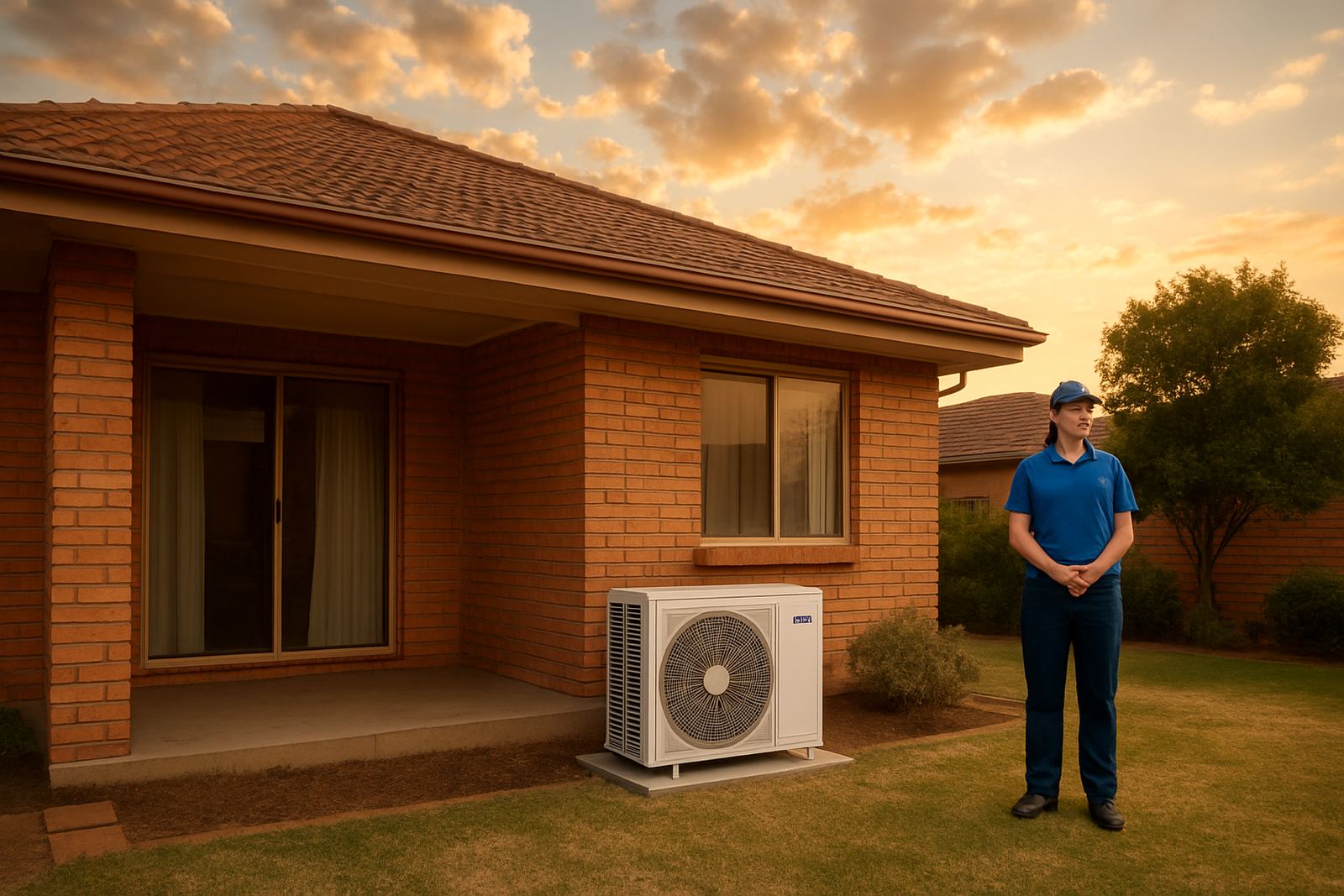
Before storm season gets going, it helps to test the system while the weather is still warm. Listen for rattles, check for slow cooling and make sure the outdoor unit has space around it. If leaves, dust or hail debris block the coil, airflow drops quick and the compressor works harder than it should.
- Keep the outdoor unit clear of pots, dust and loose material
- Make sure the condensate drain runs freely
- Ask about surge protection where power quality is uneven
- Book servicing before the first real heat wave
Mixed indoor loads need more than one cooling answer
One of the biggest mistakes in summer is assuming one aircon can solve everything. A home office, reception, small boardroom or family room each has different heat loads. The same is true in a light commercial space where people come and go, doors stay open, and equipment runs all day.
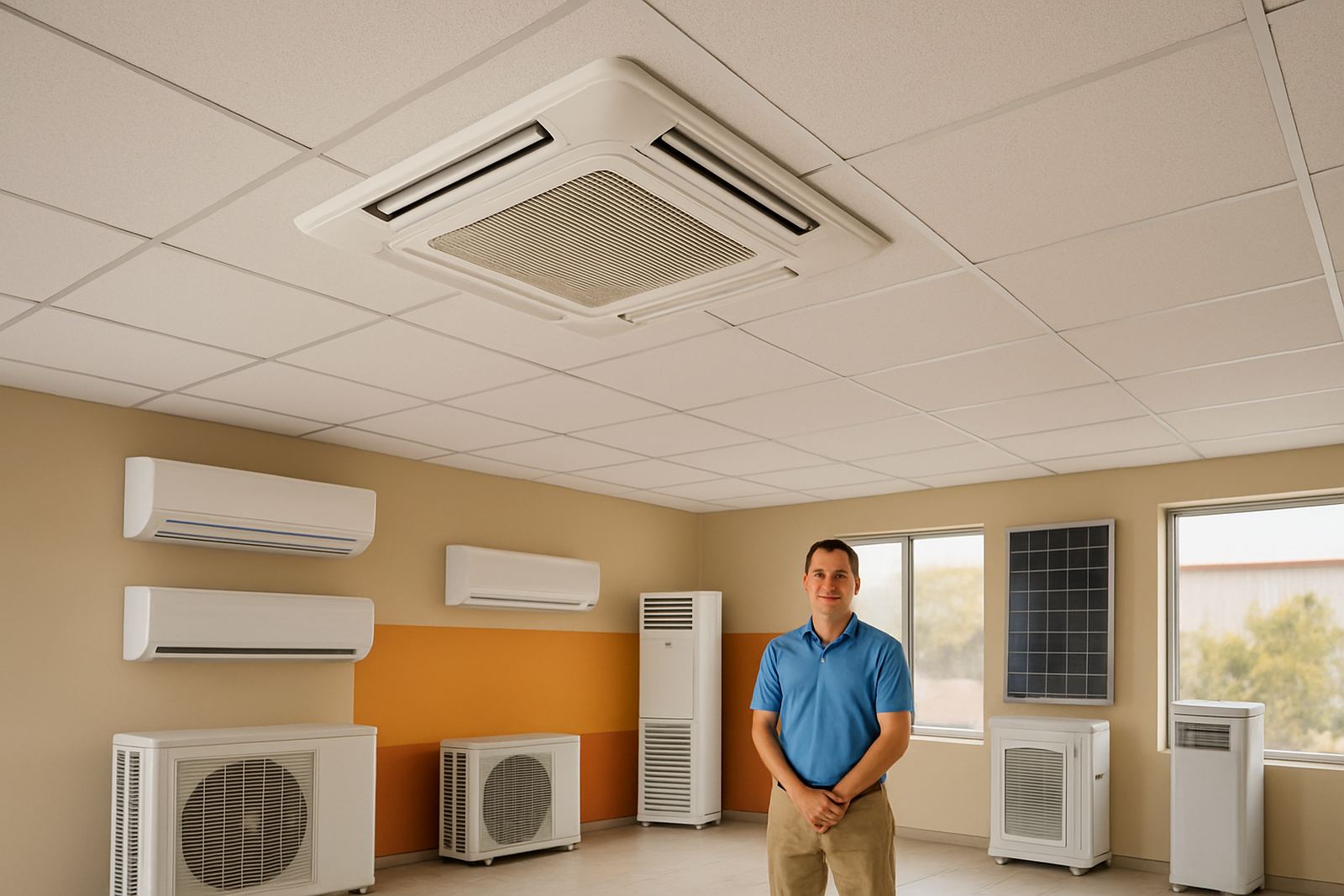
For mixed loads, a split system may suit one room, while an inverter unit or more than one indoor unit may be better for a larger open area. In some offices, it makes sense to cool the working zones first and let corridors or storage areas sit a bit warmer. That saves electricity and keeps the people who are actually working comfortable.
Heat pumps also come into the conversation in Gauteng because many properties want year-round temperature control. A heat pump can support hot water needs, while the aircon handles room cooling. Where solar is part of the plan, the system has to be matched properly so the batteries are not drained too fast during the hottest part of the day.
If you are replacing an older unit, compare the new load with the old installation rather than copying it by eye. Rooms change use over time. A spare bedroom becomes a study, the study becomes a call room, or a retail office adds more staff and printers. That is usually where undersizing starts.
- Separate the busiest rooms from low-use areas
- Match unit type to the way the space is used
- Consider solar support where daytime cooling is constant
- Allow for future changes, not only today’s layout
Simple habits that keep cooling costs under control
Good summer cooling is not only about buying more power. Small habits make a real difference to comfort and the electricity bill. Closing blinds in the late afternoon, keeping doors shut and setting a steady temperature all help. A room held at a sensible level feels better than one pushed to ice cold and then switched off again.
In homes, filter cleaning is worth doing on a regular basis. In offices, more frequent checks are needed because dust, paper fibres and general foot traffic build up faster. If the filters are blocked the air feels weak and the unit starts running longer. That is when people blame the aircon, even though the problem is often basic maintenance.
For people in coastal humidity travelling inland, the difference can be noticeable. Johannesburg air can be dry on some days and muggy on others, especially after rain. Setting expectations matters. Cooling should make a room comfortable and dry enough to work or sleep, not turn it into a cold box. That approach also keeps wear on components down.
A practical servicing routine usually pays for itself over a long summer, because a clean system cools faster and cycles better. It also gives an early warning if gas levels are low, if the drain is blocked or if the fan motor is beginning to struggle.
When to replace, relocate or upgrade an existing unit
A system only works well in summer when the service, sizing and controls all suit the space. In Gauteng that usually means planning for hot afternoons, sudden storms and a building that may be cooling people, computers and equipment all at once.
For homes and offices in Johannesburg North, Sandton, Randburg, Midrand, the East Rand and West Rand, a practical approach saves time and money. Start with the room, check the load, then choose the unit that fits the way the space is used.
- Supply and fit for homes and offices
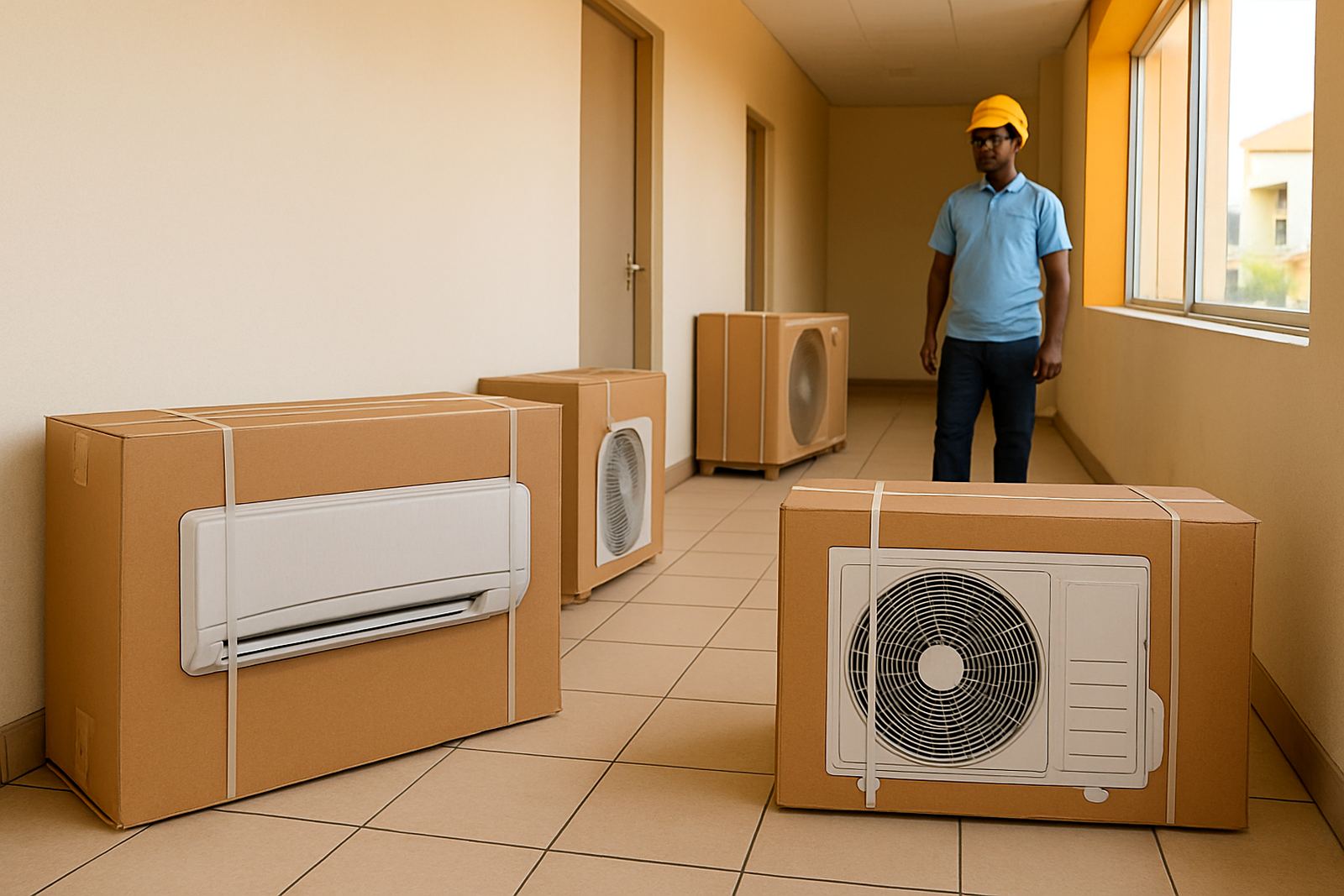
- Aircon replacements and relocations
- Aircon servicing and repairs
- Heat pump installation and service
A Johannesburg North example: one office, three cooling needs
A recent Gauteng-style setup would be a small office in Johannesburg North with reception, two work rooms and a meeting room that faces west. The reception gets traffic all day, the work rooms hold staff and computers, and the meeting room gets packed for short bursts. If one aircon is asked to handle all three, somebody will be cold while another person sweats.
The better answer is usually a combination of units and controls. Keep the reception comfortable through the afternoon, give the work rooms steady cooling and use a separate unit for the meeting room so it can recover quickly after a full booking. That way the system works with the usage pattern instead of fighting it.
Thabo Mokoena and the team often see the same issue in homes too. A lounge used for family time needs different cooling from a study or upstairs bedroom, and one size rarely suits the whole property. The fix is not complicated, but it does need an honest look at the space.
That is where supply and fit, relocation, maintenance and repair support all connect. If the equipment is right and the installation is neat, summer becomes manageable even when load-shedding, humidity and stormy weather all arrive in the same week.