Before the team arrives: what to clear and check
A good installation starts before the van pulls in. For a home in Sandton or a small office in Midrand, the main thing is to give the installers clear access to the indoor and outdoor positions, the electrical board, and the route between them. Move furniture, wall art, plants and anything fragile out of the way. If the unit is going above a passage or in a boardroom, make sure the area below is clear too.
We always work with the site conditions, but a bit of prep saves time and keeps the day smooth. If you have pets, keep them in another room. If staff are on site, let them know there will be drilling, lifting and short power interruptions. For complexes and office parks, any access code, gate control or parking rules should be ready before the crew arrives. That avoids delays at security and helps the team start on time.
- Clear the wall where the indoor unit will go
- Make space outside for the condenser or heat pump
- Check that the electrical board is accessible
- Tell the team about keys, access cards or security steps
- Keep breakables and papers away from the work area
What the installers will do first
Once on site, the supervisor will confirm the planned positions, pipe route and drain direction with you before any holes are drilled. This is important in both homes and offices because a unit that is slightly off-centre or too close to a ceiling beam can create problems later. If there is a change needed on the day, it is best handled at this stage.
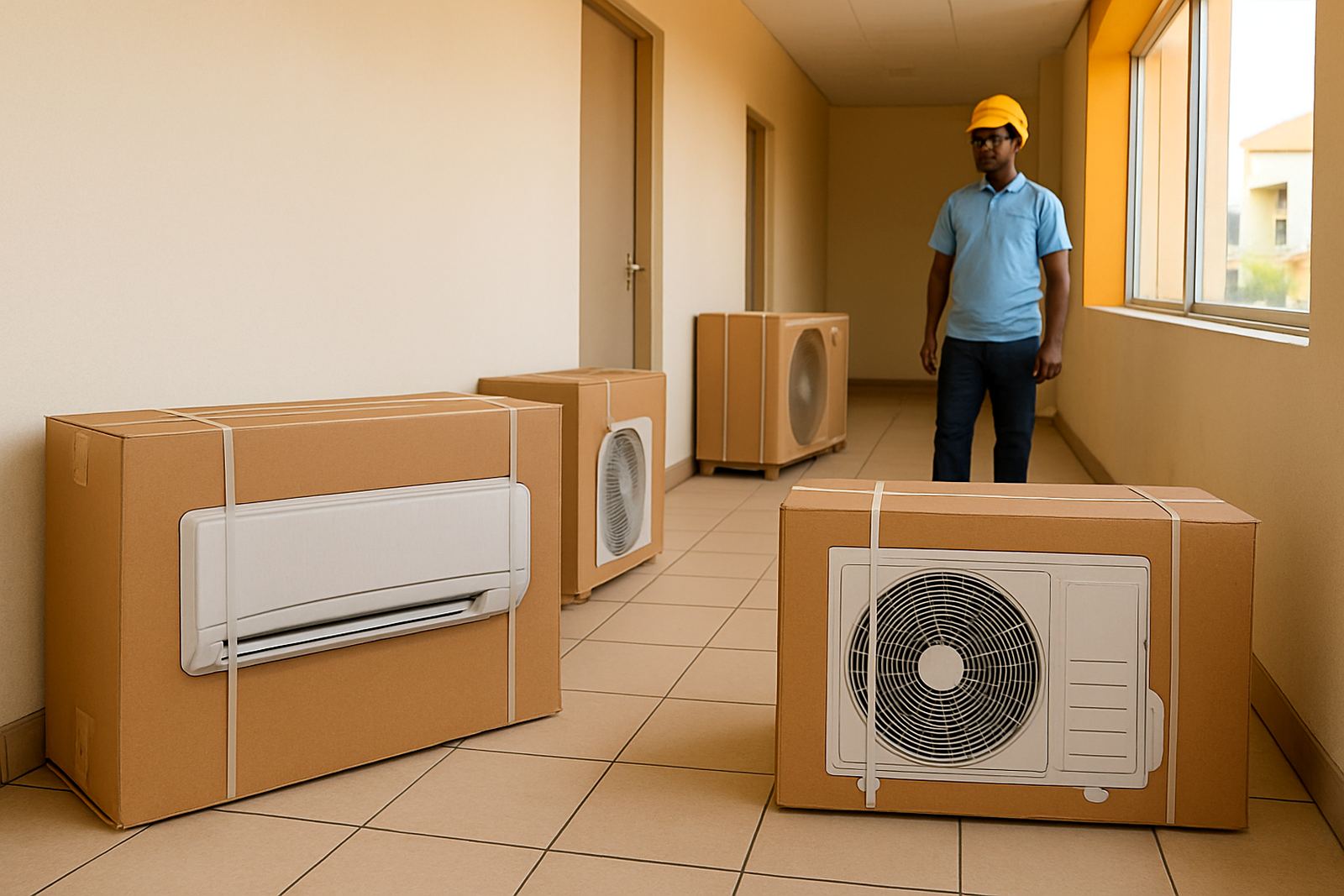
The team will then unpack the equipment, check the model details, and inspect the wall or roof space for strength and service access. In older houses around Randburg or West Rand offices with mixed building materials, this step matters. The installer also checks for existing pipe chases, power supply points and outdoor ventilation. On some sites the outdoor position may need a small stand, brackets or vibration pads, especially where there is paving, a wall or uneven ground.
Expect a quick walk-through before work starts. It helps everyone stay on the same page, and it gives you a chance to ask about timer settings, filters or maintenance plans.
During the installation: noise, drilling and neat finishes
Most installations involve some drilling and a fair amount of movement in and out of the property. That is normal. The indoor unit is mounted first, then the pipe work, cabling and drainage are run to the outside unit. Our team aims to keep the work tidy and the cuts neat, but there will be a bit of dust and noise while the wall opening is made. In an office, that is one reason we often plan installations after hours or over a quieter period.
For homeowners in Johannesburg North or East Rand, the outside unit is usually positioned where it has enough air flow and where service access will still be possible later. We do not place units where they will be boxed in by a wall or blocked by foliage. If the property is near the coast or if humidity is high in a plant room, extra care may be needed with corrosion protection and drainage to avoid future issues.
At this stage the installers will also pressure test and vacuum the lines where required, then check the electrical connections before starting up the system. That is not a step to rush. A careful start-up helps avoid leaks, poor cooling and nuisance faults later on.
- Drilling and wall mounting will happen early in the job
- Pipe work and drainage are routed with access in mind
- The outdoor unit must have open air flow
- Electrical checks and testing are done before handover
- Some dust and noise is normal, even on a clean site
If the power goes off or the load-shedding kicks in
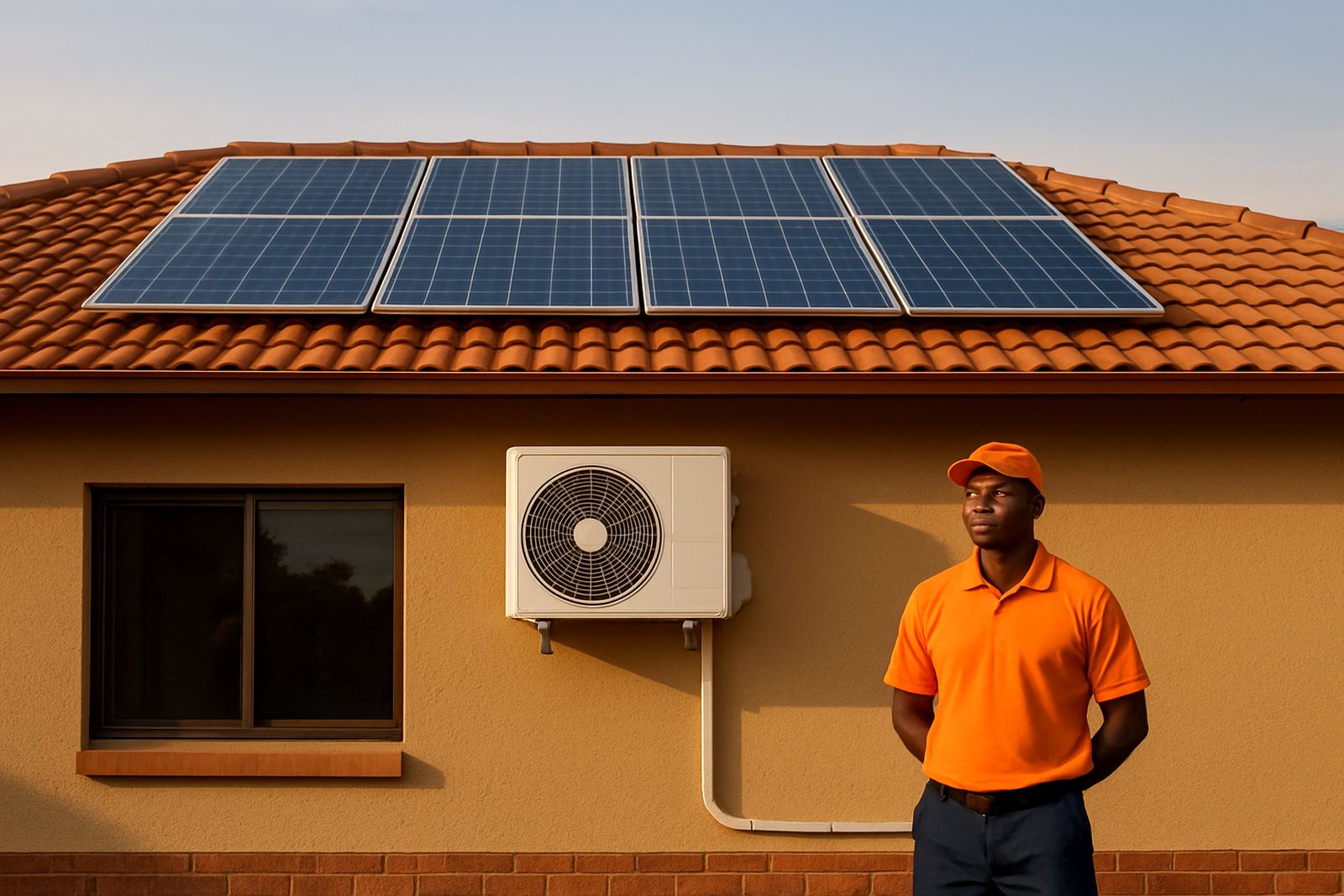
In Gauteng, power interruptions are part of daily life, so the installation plan must account for them. If load-shedding starts during the job, the team will pause safely and continue when power is back, if the site and schedule allow. On inverter systems or solar aircons, the installer may also need to check battery or panel connections, which should only be done under proper conditions.
Office managers should keep in mind that some tests can only be completed when supply power is stable. If the building has a generator, changeover switch or backup supply, tell the team in advance. This is especially useful in larger Sandton and Midrand premises where different circuits may serve different areas. A clear note on the building’s power setup saves time and helps avoid confusion later.
For homeowners, it helps to know which plug points, isolators or breakers control the new system. If there is a trip after start-up, the installers can track it faster if the electrical board labels are clear. A neat board with proper labelling is worth its weight in gold.
What offices should expect that homes usually dont
Office installations often involve more planning than a single-room home fit. There may be more than one indoor unit, a longer pipe run, ceiling access work, or coordination with other trades. Site managers should be ready to approve positions, noise windows and any drilling through external walls or roofs. If the premises has tenants, security staff or shared common areas, those people should be notified before the crew arrives.
For businesses in Randburg, Sandton or the East Rand, the biggest issue is often keeping the work area safe and out of the way. We may need to isolate a section of the office, place warning signs, or leave equipment in a locked area between visits. If the installation includes a heat pump for staff bathrooms or a water generator in a commercial setting, space for service access is just as important as the original fit.
- Confirm who has authority to sign off the final position
- Keep access to ceilings, plant rooms and risers open
- Plan for short periods of reduced noise or limited access
- Warn staff about drilling, moving ladders and cable runs
- Make sure keys and security access are handed over on time
The handover: testing, questions and the first few days
Before leaving, the team should run the system, check cooling or heating performance, confirm airflow and show you the basics. This includes the remote settings, any timer functions, filter cleaning and what to watch for in the first day or two. If it is a heat pump or atmospheric water generator, the handover also covers water line checks, drainage and any operating notes that are specific to the unit.
This is the best time to ask about servicing intervals, maintenance plans and warranty paperwork. Keep the invoice, manuals and contact details in one place. If the installation was done in a busy office, nominate one person to keep the records and report any follow-up issues. For a home, make a note of the breaker label and the indoor unit location, because that can save time later when you need a service or replacement part.
In the first few days, listen for unusual noises and check that the room reaches temperature without short cycling. A little condensation at the drain during warm, humid weather is normal. Water dripping where it should not, or a unit that keeps cutting out, should be reported straight away.