Why condenser position matters more than most people think
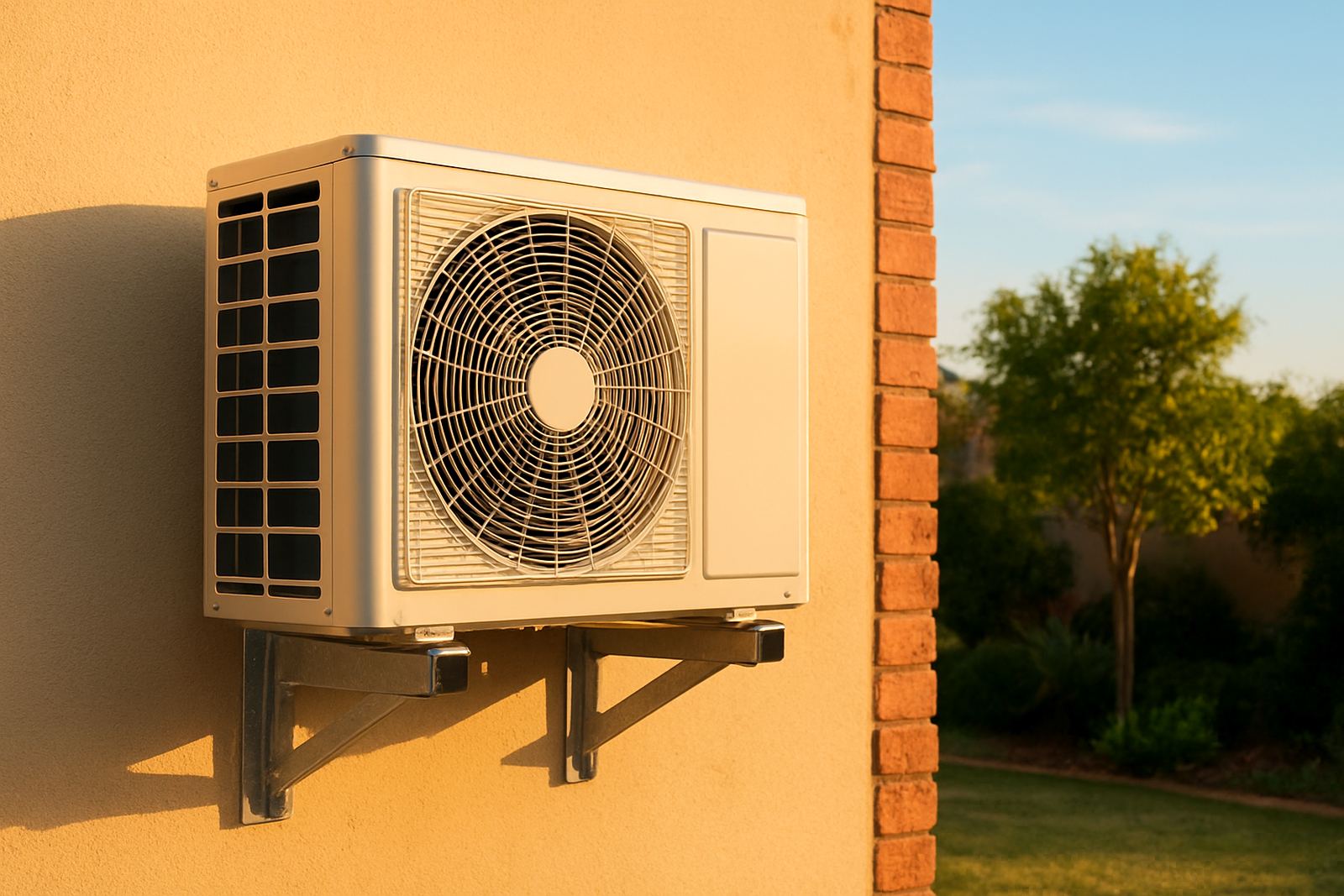
The outdoor unit, often called the condenser, has one job that sounds simple but is very sensitive to its surroundings. It must move heat away from the building without fighting back pressure, trapped air or constant dirt build-up. If it is boxed in too tightly, the system works harder, uses more power and wears out faster.
In Gauteng, where summer afternoons can be hot and dry and then a thunderstorm blows dust and leaves around the next day, a poor position shows up quickly. We see units installed in corners, under low roof edges, or behind security walls with barely enough breathing room. They may still cool the room, but they do it with more strain. That extra strain is what shortens lifespan.
Good placement is not only about performance. It also makes future servicing quicker and safer. When a technician can reach the unit properly, they can clean coils, check electrical connections and test pressures without fighting a cramped space. That saves time and keeps the service more thorough.
Airflow clearances that keep the system breathing
The first rule is simple: the outdoor unit needs open air around it. Hot air discharged from the coil must move away cleanly, otherwise it gets pulled back into the unit and the system starts recycling warm air. That is common on small patios, narrow side passages and enclosed courtyards.
A practical layout should allow space on all sides, with extra room where the fan pushes air out. The exact clearance depends on the unit size and model, but the principle stays the same: do not trap the airflow. If there is a louvred screen or decorative enclosure, it must be sized carefully and should never choke the coil.
- Keep the front discharge area open and clear of walls, bins and plants.
- Avoid placing the unit directly under a low roof, stair landing or tight overhang.
- Leave enough side access so the casing can be opened for cleaning and repair.
- Do not let shrubbery grow into the intake or outlet area, it blocks the coil faster than people expect.
When we do supply-and-fit work in places like Sandton and Midrand, we often have to balance airflow with appearance. That is fine, but airflow comes first every time. A good-looking position that starves the unit is still a bad position.
Noise control without choking the unit
Outdoor units make some noise, especially during hot afternoons when the compressor runs harder. The goal is not to hide the sound completely, but to place the unit where it will not disturb sleeping areas, neighbours or boardrooms. A common mistake is to put the condenser right under a bedroom window, or against a boundary wall that reflects sound back into the yard.
If the property is in a townhouse complex or close to a boundary line, think about where the sound will travel at night. In many Johannesburg suburbs there are by-laws and body corporate rules that expect reasonable noise control, so it is worth planning ahead rather than moving the unit later.
- Use a stable base that reduces vibration, such as a proper wall bracket or concrete plinth.
- Keep the unit off loose paving stones that can rattle.
- Do not mount it where the fan blows directly into a passage used daily by staff or family.
- Allow enough distance from bedrooms, neighbour windows and quiet work areas.
A unit that is installed level and secured properly is usually quieter than one that shakes against an uneven support. Sometimes a customer thinks the aircon is noisy when the real issue is vibration from poor mounting.
Easy access for servicing, repairs and replacements
Outdoor unit placement should always leave room for the day it needs attention. Filters are inside, but the outdoor coil, fan motor, electrical components and pipework all need servicing too. If the unit is packed into a narrow gap behind a wall, maintenance becomes slower and more expensive. In some cases the technician cannot work safely at all without moving a fence panel or removing another obstruction.
We recommend thinking about access from the start, not only for the installer but for the person who will service the system in two or three years time. That means space to remove the fan cover, access the isolation switch and inspect the drainage and pipe route. It also matters for aircon relocations, where the old position may have been acceptable once but not ideal after a renovation or boundary change.
For offices and commercial sites, access becomes even more important because downtime costs money. A condenser on a flat roof or in a locked service yard should still be reachable for planned maintenance. If not, service gets delayed and small faults become bigger ones.
Heat, dust, rain and coastal air all change the choice
Gauteng dust can block coils quickly, especially when a unit sits close to a driveway or road edge. Johannesburg North and Randburg properties with trees can also have pollen and fine leaf litter drawn into the fins. In these areas, a slightly raised position and regular cleaning make a big difference.
On the other hand, if the unit is exposed to strong afternoon sun and no shade at all, it has to work harder during peak heat. A bit of shade is useful, but never at the cost of blocked airflow. A tree canopy can help if it is high enough and not shedding debris all year. A solid roof cover is only useful if it leaves proper ventilation around the sides and top.
For coastal humidity, the issue changes again. Salt air and moisture increase corrosion risk, so the unit should be mounted away from direct sea spray where possible and checked more often. That is why position and service plan both matter, especially on homes and offices that need steady cooling through summer.
A practical Johannesburg example from a real install
We recently worked on a small office in Johannesburg North where the outdoor unit had been installed in a narrow courtyard between a high wall and a refuse area. The system cooled, but not well. The fan noise was bouncing off the wall, the coil was dirty within weeks and the service access was awkward. The office staff had started switching the unit off in the afternoon because they thought it was faulty.
After checking the pipe route, available wall space and power position, we relocated the condenser to a better ventilated spot with proper clearance and easier access. The difference was immediate. The room cooled more evenly, the noise dropped and the next service took less time. It also made sense for the cleaner to keep the area clear, because there was no bin traffic right beside the unit anymore.
That is the point of good placement. It is not only about the installer making life easier on the day. It is about making the system easier to live with for years after the job is done.
What to ask before the installation starts
Before any supply-and-fit job, it helps to walk the property and ask a few practical questions. Where will the airflow go? Where will the sound go? Can a technician reach the unit without ladders, moving vehicles or opening a locked storeroom? If there is a future heat pump installation or solar aircon upgrade planned, does the position still make sense later?
- Choose a spot with clear airflow and proper drainage.
- Keep the unit accessible for servicing and repairs.
- Avoid placing it beside bedrooms or directly against boundary walls.
- Factor in dust, sun, rain and local by-law limits before fixing the bracket.
At Airconditioning Superstore, we plan outdoor unit placement around the real conditions on site, not just the brochure layout. That is the difference between an installation that simply runs and one that stays practical through Gauteng heat, load-shedding and years of maintenance.