Home in Randburg, Upgrade Needed for Daily Comfort
The client was a private homeowner in Randburg, working from home part of the week and needing better comfort in three bedrooms plus an open-plan family living area. The old setup was a mix of ageing units that were noisy, slow to cool and expensive to run, which is a common issue in older suburbs where rooms have been added to over time.
The brief was practical: replace the weakest units, improve cooling in the shared living space, and keep the system simple enough for the family to use without calling for help every week. The owner also wanted a cleaner finish on the wall piping and a plan that would still make sense during load-shedding and hot late-afternoon conditions in summer.
Site Constraints and What We Had to Work Around
Randburg homes often bring a few familiar constraints. Ceiling heights can vary, some walls are brick and others are light partition, and the outdoor positions are not always ideal for airflow or service access. In this case, the family wanted to keep the house usable while we worked, so we scheduled the installation in phases and kept disruption to a minimum.
- One outdoor position had limited clearance, so we adjusted the bracket layout for better airflow and future servicing.
- The main living area was open-plan and picked up afternoon sun, so the indoor unit had to be correctly sized rather than simply going for the biggest option.
- The bedrooms needed quieter operation at night, especially for the children’s rooms.
- Cable routes had to be tidy and short, with proper protection against weather and vibration.
Equipment Supplied for the Bedrooms and Living Area
We supplied inverter split air conditioners for the bedrooms and the open-plan family area, chosen for efficient part-load operation and stable temperature control. In a home like this, inverter technology makes a real difference because the units do not keep starting and stopping as often, which helps with power use and comfort.
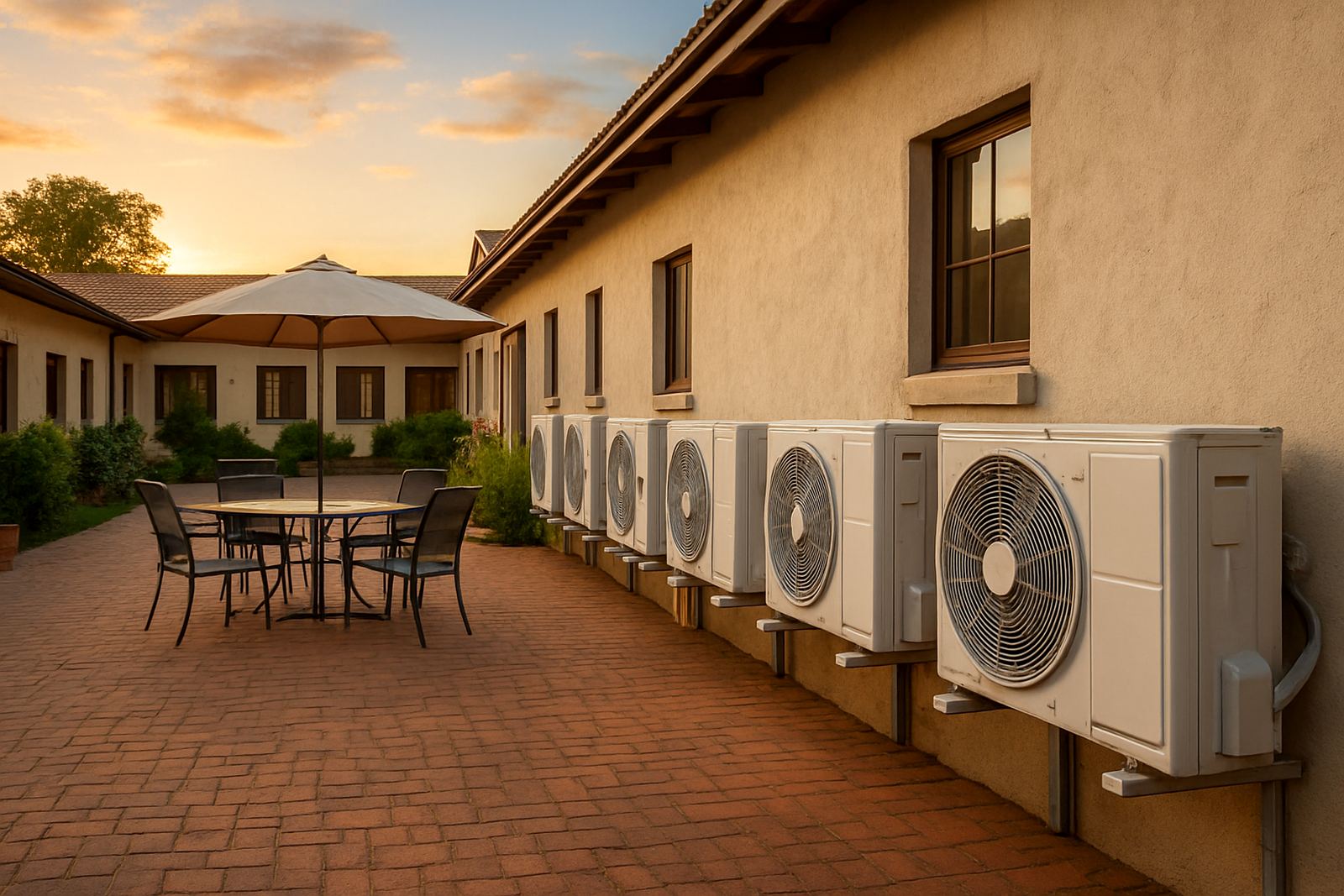
The selected indoor units were wall-mounted models with low-noise night operation, while the outdoor units were placed to allow proper service access and airflow. We also included all standard installation materials, mounting brackets, insulated piping, electrical connection work within scope, and commissioning on completion. Where needed, we added condensate drainage improvements so the system would not drip onto paving or splash back onto walls.
- Inverter split units for bedrooms and family living area
- Wall-mounted indoor units with quiet night setting
- Outdoor units positioned for airflow and access
- Refrigerant piping, cabling and drainage installed neatly
Supply-and-Fit Work Completed Over Two Weeks
The project ran over two weeks from survey to handover. Week one was site assessment, final sizing and confirming routes for piping and electrics. Week two covered installation, testing and final user guidance. That pace suited the household because it let us complete the work properly without rushing the finish.
Our installation team, led by Pieter van Rensburg, handled the fitting, while Ayesha Patel coordinated the scheduling and handover. Sibusiso Dlamini checked the technical setup and start-up readings, and Naledi Khumalo kept the client updated on supply timing and delivery. The homeowner wanted the rooms operational before a family gathering, and we met that deadline without cutting corners.
What Changed After Commissioning
Once commissioned, the bedrooms cooled faster and held temperature better through the night. In the family area, the air movement improved noticeably and the unit cycled far less often than the old one had. The owner also noticed that the house felt less stuffy in the late afternoon, which is important in Randburg where heat builds up after lunch and the open-plan areas keep that warmth for longer.
The quieter operation was one of the clearest improvements. The family could run the system during homework, TV time and sleep without the constant hum they had before. The new layout also gave them better control over where and when to cool, so they do not need to overrun the whole house just to make one room comfortable.
- Faster pull-down in bedrooms
- Better temperature stability in the living area
- Lower noise at night
- Cleaner wall and exterior finish
Why This Approach Works for Gauteng Homes
We would repeat this approach for similar homes in Randburg, Sandton, Bryanston and the wider Johannesburg North area. The key is proper sizing, neat installation and a practical understanding of how Gauteng houses heat up. Too many systems are fitted on guesswork and then struggle once the first heatwave or power interruption arrives.
For homeowners, the best outcome is a system that is easy to live with, affordable to run and straightforward to service. If a room is used mostly at night, we size and set it up for quiet operation. If an open-plan area gets strong sun, we plan for that extra load instead of pretending it is not there. That is the difference between a temporary fix and a proper upgrade.
We would also do the same again on drain routing and outdoor unit placement, because a neat finish matters in a residential street. It helps with appearance, service access and long-term reliability, especially in areas with dust, summer rain and the odd municipal restriction on where equipment may be fixed.
Key facts
| Project type | Residential inverter aircon upgrade |
|---|---|
| Location | Randburg, Johannesburg North |
| Rooms covered | Bedrooms and open-plan family living area |
| Timeline | 2 weeks from survey to handover |
| Scope | Supply, installation, commissioning and user handover |
| Business | Airconditioning Superstore, Johannesburg, Gauteng |