Client brief for a busy Soweto household
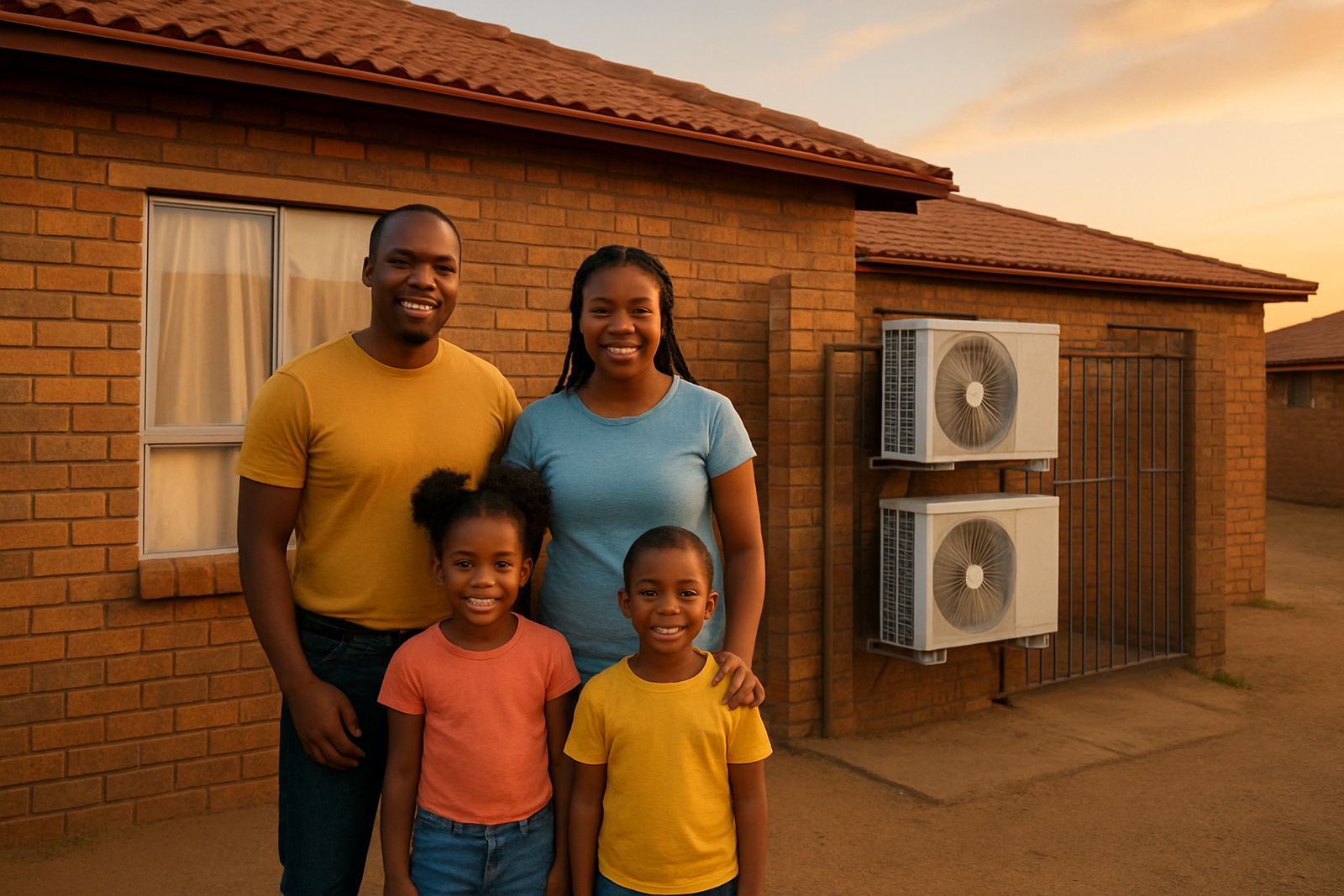
The owners wanted a straightforward solution for a lived-in family home in Soweto, with a cool lounge for the main gathering space and quiet bedrooms for night-time rest. The brief was practical from the start: keep the equipment affordable, avoid oversized units that waste power, and get the work done with as little disruption as possible.
The home had typical residential constraints we see often in Johannesburg townships and suburbs. There was limited outdoor wall space, the electrical supply needed to be checked before installation, and the family did not want long pipe runs cutting across the house. We also had to work around school hours and the daily routine, so planning mattered just as much as the actual fitting.
- Town: Soweto, Gauteng
- Property type: family home
- Areas cooled: lounge plus two bedrooms
- Main aim: budget-conscious comfort for everyday use
- Installation type: supply and fit
What we recommended and why
For this job we recommended three wall-mounted split air-conditioners with inverter operation, rather than fixed-speed units. In a home where the system may run for several hours at a time, inverter equipment helps the compressor adjust to demand instead of switching hard on and off. That gives better comfort and usually better electricity use over time.
The lounge needed the largest unit because it is the biggest room and gets the most traffic. The two bedrooms were sized smaller for night use, keeping the running cost under control while still giving proper cooling in summer and reverse-cycle heating in winter. We also made sure the selected units matched the room sizes, ceiling height, sun exposure and door usage, because an under-sized unit will struggle and an over-sized one tends to short-cycle.
- Lounge unit: sized for the main living area and family use
- Bedroom units: selected for quiet operation and overnight comfort
- Type: inverter split systems
- Function: cooling and heating
- Priority: value for money and sensible running cost
Installation work on site
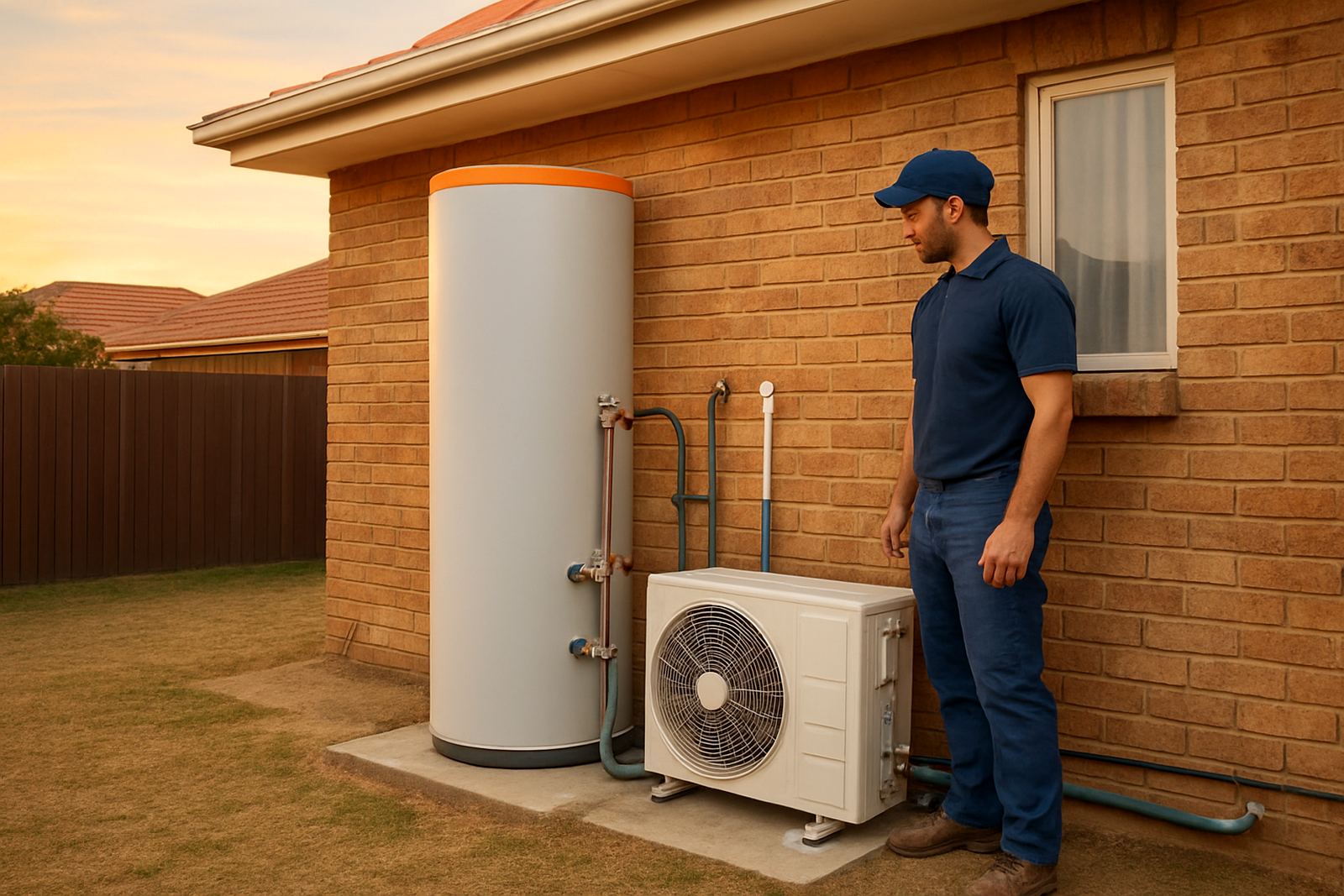
Pieter and the installation team started with a site walk-through and a final position check for each indoor unit. We marked the wall brackets, confirmed the drain fall, and checked where the outdoor units could be mounted safely without causing noise or access problems. Because the house needed a neat finish, pipe routes were kept as short and tidy as possible.
We supplied the full installation package, including mounting, copper pipework, insulated lines, drainage, electrical interconnection and commissioning. The outdoor units were secured on suitable brackets with allowance for airflow and maintenance access. Inside, the teams sealed the wall penetrations properly so that dust, insects and damp air would not creep in later.
- Indoor unit mounting and levelling
- Outdoor unit placement with service access in mind
- Copper pipe run, insulated and pressure tested
- Condensate drainage set with proper fall
- System vacuumed, charged and tested before handover
Timeline, coordination and householder interruptions
The full job ran over one week from confirmation to handover. Day one was the survey and final sizing. Materials were prepared after that, and installation took place over the next two working days with the final testing and user handover completed by the end of the week. The family wanted the job done quickly, but not rushed, and that is exactly how we handled it.
Because this was a home and not a commercial site, the team worked with the family around meal times and quieter parts of the day. That kept disruption down and avoided unnecessary dust inside the house. Where drilling and wall work was needed, the team used careful masking and cleaned up thoroughly afterwards. Small detail, but it matters when the house is still being lived in.
- Week 1: site visit, sizing and quotation
- Week 1: material preparation and scheduling
- Week 1: installation and commissioning
- Week 1: user handover and operating guidance
Results for the family after handover
Once the system was commissioned, the family had quick relief in the lounge and more consistent sleeping temperatures in the bedrooms. The inverter units brought the rooms down to temperature without harsh cycling, and the heating mode gave useful winter support during cold Gauteng mornings. Noise levels were kept low enough for evening use, which was important in the bedrooms.
The owners were also pleased that the solution did not feel over-engineered. It was a practical package for the home as it stands now, with enough capacity to be comfortable but not so much that they were paying for unused output. That balance is often the difference between a good installation and one that looks impressive but costs too much to run.
We also discussed routine servicing with the family. In Johannesburg, dust and winter use can build up on filters faster than many people expect, and a basic clean every few months helps the units keep their airflow and efficiency. Coastal humidity is not a factor in Soweto, but dust, daily use and power interruptions still make regular maintenance worthwhile.
What we would do again on a similar Soweto home
We would take the same approach again for a similar family home. Start with the room sizes, not with a generic unit list. Keep the pipework neat and short where possible. Use inverter units where the family needs both comfort and sensible power use. And always leave enough access around the outdoor units for future service work, because a good installation should still be easy to maintain five years later.
For homes across Soweto, Dobsonville, Protea Glen and the wider Johannesburg area, this is the kind of project that works well when the budget is respected and the technical basics are done properly. It is not about putting in the biggest machine available. It is about getting the right machine into the right room, then fitting it so it lasts.
- Better to size from actual room use than guesswork
- Allow for load-shedding recovery and restart behaviour
- Keep outdoor access clear for servicing and cleaning
- Use proper drainage so there is no water drip near walkways
Key facts
| Project type | Residential aircon supply and fit |
|---|---|
| Location | Soweto, Gauteng |
| Rooms served | 1 lounge and 2 bedrooms |
| System type | Wall-mounted inverter split units |
| Main functions | Cooling and reverse-cycle heating |
| Timeline | 1 week from survey to handover |