Why a home office needs its own aircon
Working from a spare room, studio, study or converted flatlet is very different from cooling a lounge. A home office often has a computer, monitor, printer, charger plugs and people on video calls, all adding heat through the day. In Johannesburg and the surrounding suburbs, afternoon sun can push a small room from pleasant to stuffy very quickly, and then concentration drops. If the room shares cooling with the rest of the house, you end up paying to cool empty passages and bedrooms as well.
A dedicated aircon gives you control over one space, which is usually the most practical choice for focused work. It helps reduce the stop start feeling of running fans, keeps humidity in check during summer storms, and makes a better environment for client meetings from home. For many clients, the goal is not freezing the room, just holding a stable temperature from morning to late afternoon without noise becoming a distraction.
Typical equipment for a home office setup
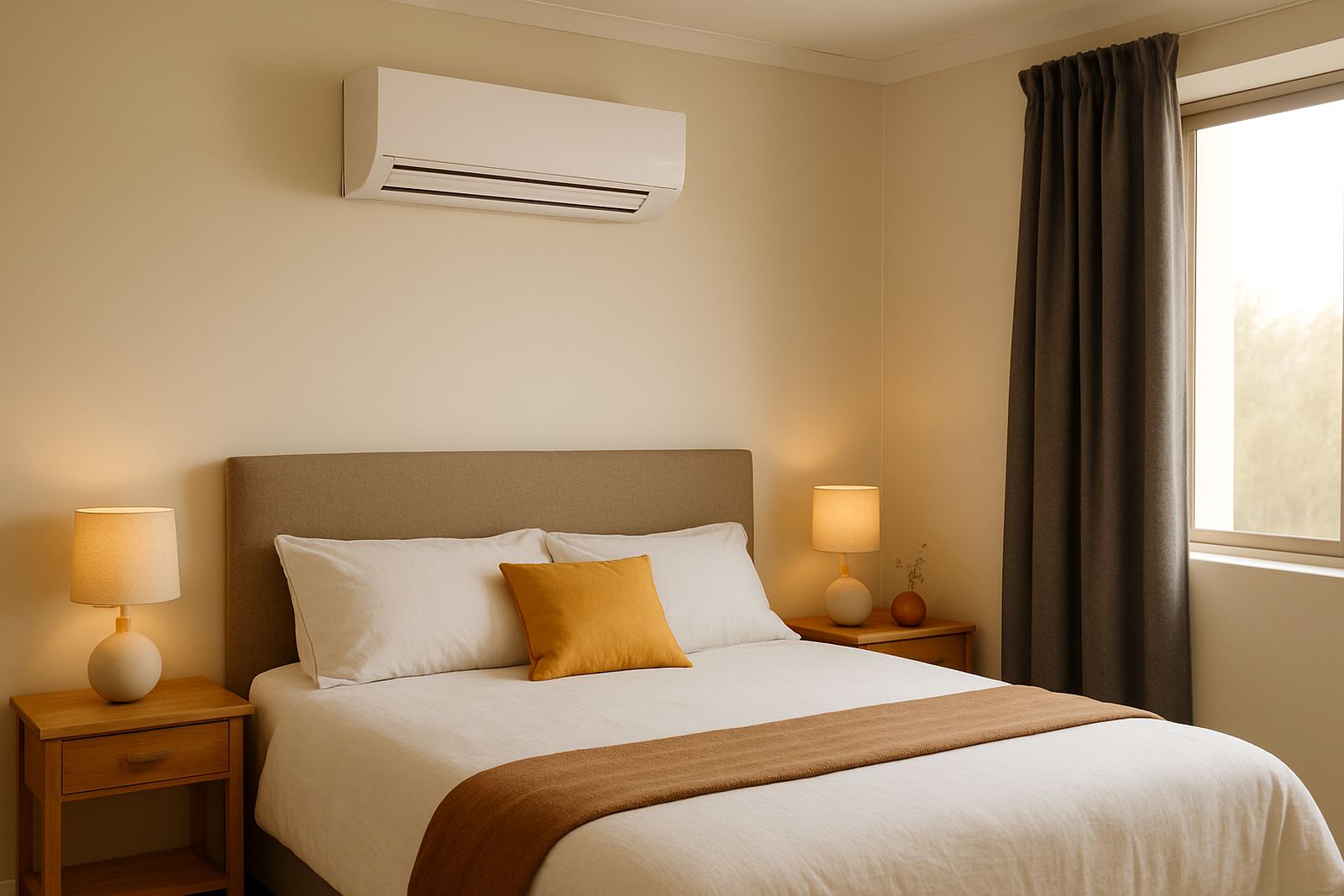
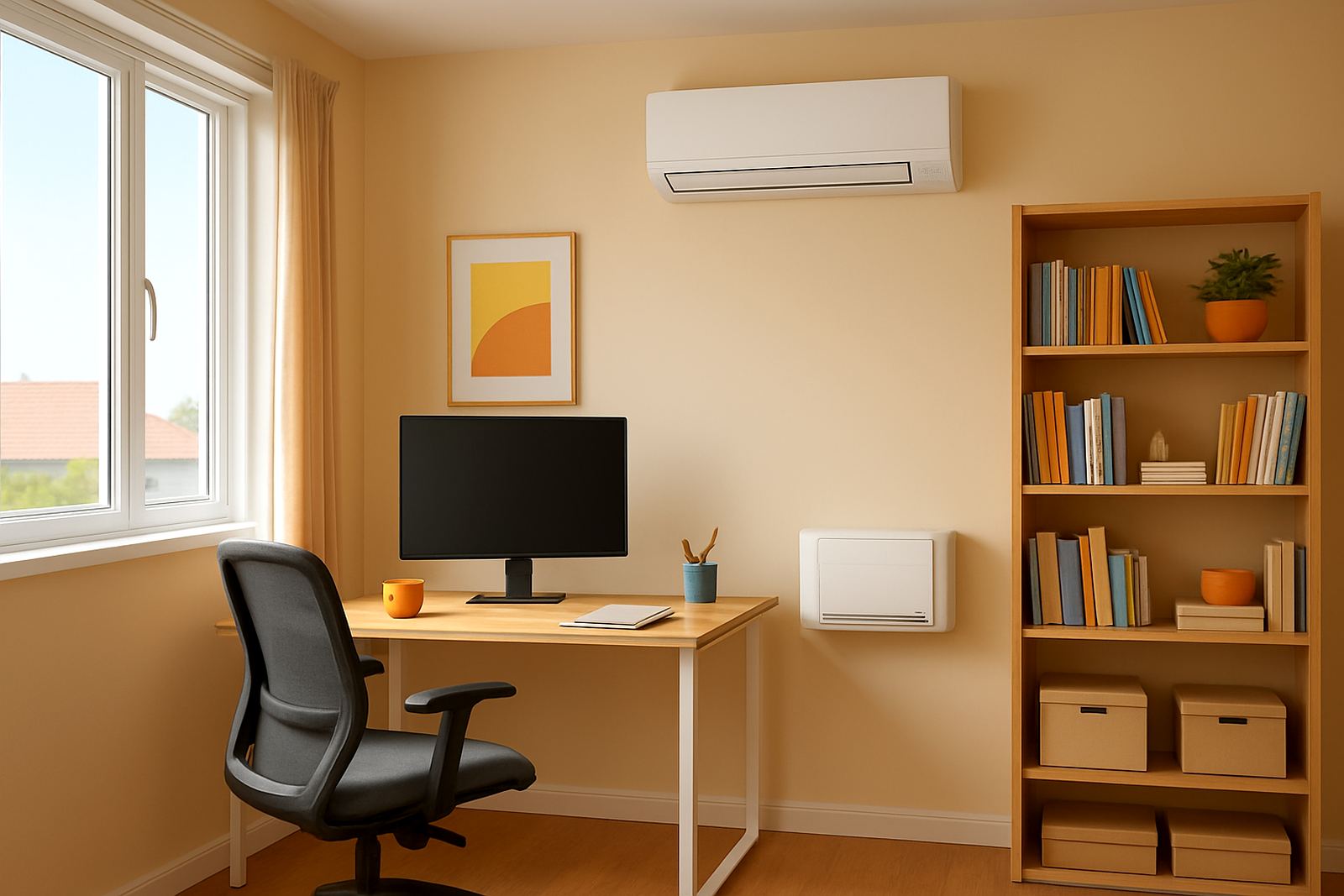
For most home offices, a wall mounted split unit is the common choice. It is neat, quiet and suited to rooms where the air should move evenly without blowing directly onto a chair or screen. In many Johannesburg North and Sandton homes, a 9 000 BTU or 12 000 BTU unit is enough for a single study. If the room gets strong west sun, has a lot of glass, or doubles as a guest room, a 12 000 BTU or 18 000 BTU unit may be better.
Inverter models are often preferred for work areas because they modulate output instead of switching hard on and off. That helps with noise and electricity use. Solar-assisted options can also make sense where daytime usage is high and the property already has backup power. For offices in Midrand, Randburg and the East Rand, we also see interest in heat pump combinations where the client wants comfort in one room and lower hot water running costs at the same time.
- Small study or single workstation: 9 000 BTU split unit
- Medium home office or room with afternoon sun: 12 000 BTU inverter
- Larger room, two people, or connected meeting space: 18 000 BTU unit
- Homes with daytime work and load-shedding concerns: inverter or solar-ready option
Planning the layout so the room stays comfortable
Good planning matters as much as the machine. The indoor unit should not blow directly onto the counter chair, printer paper, or a microphone area for calls. If the room has a long shape, the placement must allow air to move across the full space, not just at the door side. We also look at the outside wall, pipe run, drainage, and where the outdoor unit can sit without creating a noise problem for neighbours or a passage below.
For home offices in attached garages, garden rooms or upstairs studies, the route for the pipework can affect cost and performance. Shorter pipe runs are normally neater and cheaper. In coastal humidity areas people think only about cooling, but in Gauteng we still pay attention to drainage, dust and the way sun hits the room. A little planning upfront saves a lot of frustration later, and yes it is worth measuring the room properly before ordering anything.
- Check the room size in square metres, not just the furniture count
- Note the number of people in the room during working hours
- Look at window direction and direct sun from 11:00 to 16:00
- Confirm where the outdoor unit can be mounted or stood safely
- Allow for cable routing, drainage and future servicing access
Common mistakes in home office cooling
One common mistake is buying by price only. A unit that is too small will run hard all day and still leave the room warm, while an oversized unit can cycle too often and create uneven temperatures. Another mistake is ignoring the office use pattern. A room used for one hour in the morning has different needs from a room occupied from 08:00 to 17:00. There is also the issue of noise, which gets missed until the first video call starts and the compressor hum takes over the conversation.
We also see poor installation choices. Thin pipework, bad drainage fall, and badly placed outdoor units can lead to water leaks or unnecessary vibration. On some jobs, people try to cool a whole open plan flat with one small unit placed in a corner and then wonder why the far side still feels warm. For a proper result, the equipment must match the room, the insulation, and the real working routine.
Budget ranges for a home office aircon
Budgets in Rand vary according to room size, the type of unit, pipe length and whether electrical work is needed. For a basic single-room supply and fit in Johannesburg North, a small split unit for a modest study often starts in the lower range. A better inverter model for daily work usually sits higher because of the quieter operation and improved running cost. If the room needs longer pipe runs, extra cabling, a bracket or a more complex layout, the price moves up accordingly.
As a practical guide, many home office jobs fall into these broad ranges: a small installation may be around R8 500 to R13 000, a mid-range inverter setup around R12 500 to R20 000, and a larger or more involved fitment can be R18 000 and above. Solar-linked or multi-room projects can go well beyond that, depending on the existing electrical setup. We always prefer to quote on the room and the use-case, not just the model number.
How we handle supply and fit in Gauteng
Airconditioning Superstore works from Johannesburg North and supports homes and offices across Sandton, Randburg, Midrand, the East Rand and the West Rand. Thabo Mokoena and the team handle the practical side from first enquiry to installation and aftercare. Naledi Khumalo can help with product selection, Pieter van Rensburg oversees installation work, Ayesha Patel manages service bookings, Sibusiso Dlamini assists with technical questions, and Lerato Molefe handles heat pump related queries.
For home offices, we normally start with the room size, the sun exposure and the hours of use. Then we look at the best unit type, where the outdoor component can sit, and whether any maintenance plan makes sense for regular use. If the room is used every weekday, a serviced and correctly sized unit will usually pay you back in fewer breakdowns and less irritation during summer. That matters when you are trying to finish work before the next call starts.