Why salon temperature control matters in busy trading hours
In a salon, the aircon has to do more than make the room feel cool. Colour processing, blow drying, facial treatments and waiting clients all add heat and moisture, and that builds up fast in a small shop or in a long narrow unit. If the room swings between too warm and too cold, staff spend the day adjusting settings and clients notice it straight away.
Hair and beauty spaces also carry odours from products, warm towels and steam from washing areas. A well chosen system helps keep the room fresh, but only if the capacity matches the floor area and the layout. For salons in Johannesburg North, Sandton or Midrand where trading hours are long and foot traffic is steady, the right cooling setup makes the room more pleasant and the team can work better through the day.
Typical equipment set for salons and beauty rooms
Most salons do well with split systems or inverter units, often split across treatment zones rather than trying to cool the whole premises from one point. In a small salon, one wall mounted unit may handle the reception and styling area. Larger spaces often need two or more indoor units, especially where there are separate rooms for nails, waxing, skin treatments or private consultations.
- Wall mounted split units for styling floors and reception areas
- Inverter aircons for lower running cost and steadier temperature
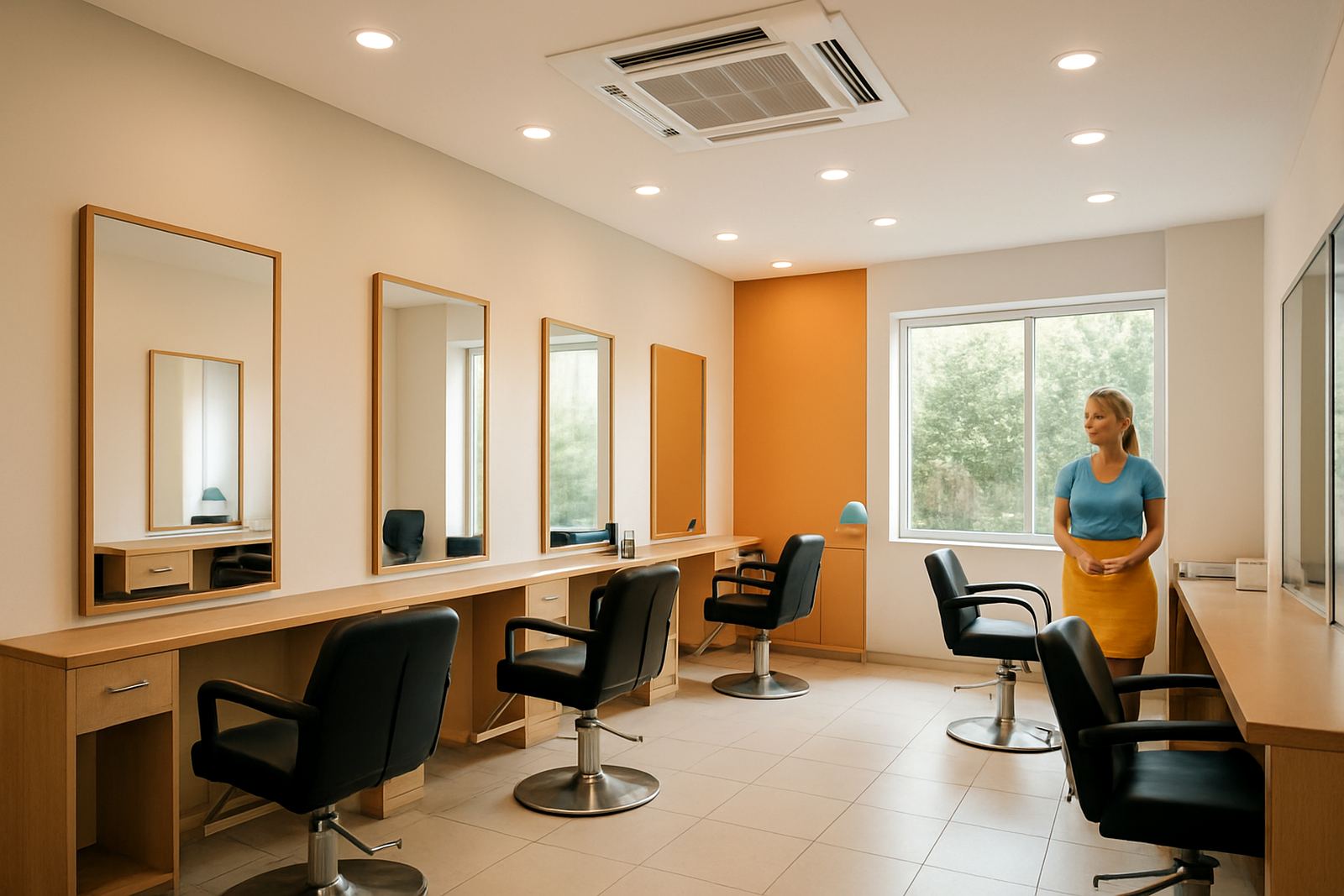
- Ceiling or cassette units for open plan salons with long work counters
- Drainage planning for wash basins and condensate discharge
- Back up power planning where load-shedding interrupts trading
If the salon has a treatment room that must stay quiet, a correctly sized inverter unit is usually the better choice. In some premises, especially on upper floors or where windows face west, the indoor unit position matters as much as the size. A poor position can leave one chair cold and another warm, which is a common complaint in busy salons.
Planning the layout around mirrors, chairs and wash basins
Before fitting starts, it is worth walking the space and marking where each chair, mirror, basin and product station will sit. Airflow should move across the room without blowing directly on clients while colour is being applied or hair is being cut. The same applies to treatment beds and manicure tables, where a draft can be uncomfortable and affect the service feel.
We often recommend separating the salon into zones. The front area may need more cooling because of the door opening, while the back room may only need a smaller unit. In compact units in Randburg or the East Rand, a single oversized aircon can cycle on and off too often. That uses more power and doesnt control humidity as well. Better to size the system properly from the start.
- Keep the indoor unit away from direct mirror reflections where possible
- Do not place the discharge above a client waiting bench
- Allow access for cleaning filters and servicing panels
- Check for safe routing of drainage pipes and copper lines
- Plan for municipality or landlord rules before drilling external walls
Common mistakes we see in hair and beauty shops
One mistake is buying for price only and ending up with a unit that is too small for the room. Another is using one system for a salon that has very different heat loads in each area. A nail bar with lamps and dryers does not cool the same way as a quiet facial room. If the equipment is mismatched, staff end up opening doors or running fans, and the room never feels settled.
Another issue is poor maintenance. Salons pull in a lot of fine hair, dust and product residue, so filters can clog quicker than in a normal office. That reduces airflow and makes the unit work harder. In coastal humidity or in dusty retail centres, it is even more important to stay on top of cleaning. A blocked drain can also cause water dripping onto floors, which is a safety problem near electrical equipment and retail stock.
It is also common to ignore power cuts. During load-shedding, some salons try to keep every unit running from backup power without checking the load. That can trip the supply or drain batteries too quickly. A better approach is to protect the most important zones first and keep the system simple.
Budget ranges for salon aircons in Rand
Costs depend on room size, ceiling height, pipe runs, brand of unit, and whether you need one room or several zones covered. For a small salon in Johannesburg North or Midrand, a single split system supply and fit can start in the lower tens of thousands of Rand, especially where the electrical point and wall position are straightforward. Larger salons with multiple chairs and treatment rooms can move into a higher range once extra units, longer pipe runs and trunking are included.
As a practical guide:
- Small salon or treatment room: around R10 000 to R18 000
- Medium salon with one open styling area: around R18 000 to R35 000
- Larger salon with several zones: around R35 000 to R70 000 and up
Servicing and filter cleaning are a smaller ongoing cost, but they should be planned into the budget. A salon that trades six days a week may need more frequent maintenance than a home office or occasional-use room.
What Airconditioning Superstore supplies and fits for salon use
Airconditioning Superstore works with salons, barbers, nail bars and beauty rooms across Sandton, Randburg, Midrand, the East Rand and West Rand. We handle supply and fit, replacements, relocations, servicing and repairs, so if you are fitting out a new space or changing an old unit, the job can be managed from start to finish.
Our team includes Thabo Mokoena, Naledi Khumalo, Pieter van Rensburg, Ayesha Patel, Sibusiso Dlamini and Lerato Molefe, and we know the practical side of working in active trade spaces. That includes access after trading hours, neat pipe runs, safe drainage and keeping disruption low. For salons in shared centres or office parks, we can also look at site access and landlord approvals before work starts. For a quote, contact sales@acsuperstore.co.za.
Keeping the aircon working through long trading weeks
Once the system is installed, a simple service routine keeps trouble down. Clean filters, check drainage, listen for unusual noise and book servicing before peak summer. In a salon, it is better to catch a weak fan motor or dirty coil early than deal with a breakdown on a Friday afternoon when the chairs are full.
Good cooling supports the client experience, protects comfort for staff and helps the room feel ready for work from the first appointment to the last. In a trade where appearance and timing matter, that counts more than people think.