Start with the room size, not the unit name
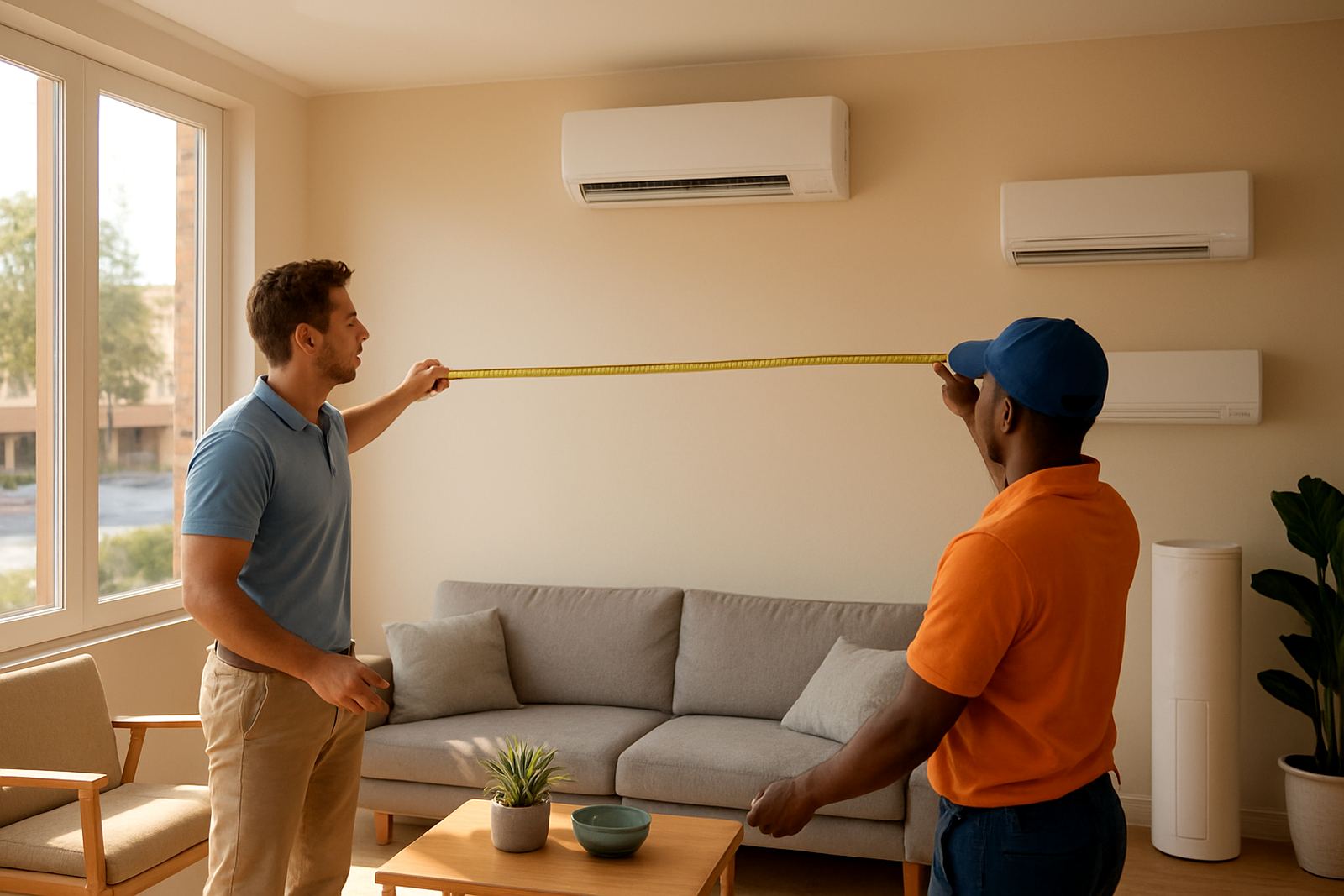
The first step is to measure the lounge properly. Take the length and width in metres, then check the ceiling height too, because a room with 3 m ceilings needs more cooling than a standard 2.4 m room. If the space is open plan, include the connected dining area or passage if the air can move freely between them.
A small closed lounge in a Johannesburg North townhouse may only need a modest split unit, while a large family room in Sandton with high ceilings and sliding doors can need a much stronger system. Do not size by guesswork. Two rooms that look similar from the doorway can perform very differently once the afternoon sun, appliances and people are added in.
Check the heat load in the lounge
Heat load is simply everything that adds warmth to the room. In a lounge, the biggest factors are sunlight, windows, ceiling height, how many people sit there, and whether the space joins a kitchen. A north facing family room in Randburg will often run hotter than a shaded room in a Midrand cluster home. If the curtains are thin or the windows are large, the aircon works harder.
- South or west facing windows can raise cooling demand in the afternoon.
- Big TVs, gaming consoles and media cabinets add extra heat.
- Open doors to a patio, kitchen or passage can pull warm air into the room.
- Rooms with poor insulation lose cool air faster.
Coastal humidity can make a lounge feel sticky too, even when the temperature is not very high. In Gauteng the humidity swings less, but summer thunderstorms and closed windows during load-shedding can still push the room out of comfort quickly.
Choose the right capacity for daily use
For lounge sizing, capacity needs to match how the room is used. A TV room used by two people in the evening has a lighter load than a family lounge packed with guests on weekends. If the unit is too small, it will run flat out and still struggle. If it is too large, it may cool too fast without removing enough moisture, and that can leave the room clammy.
A proper site check should look at room size, insulation, glazing, sun direction and whether the lounge is closed off or open plan. In many homes around the East Rand and West Rand, a single split system works well when the doors stay closed. In larger living areas, a higher capacity unit or more than one indoor unit may be better.
- Small closed lounge: usually one compact split unit.
- Medium family room: often needs a mid range unit with good airflow.
- Large open plan lounge: may need a stronger system or split coverage.
Use a quick sizing checklist before you buy
If you want a quick first pass, work through the room step by step. This helps before a technician visits for a final recommendation. It is especially useful when comparing a replacement against an older unit that no longer keeps up.
- Measure length, width and ceiling height in metres.
- Note how many windows and sliding doors the room has.
- Check which side of the house gets afternoon sun.
- Count the normal number of people in the room.
- List heat sources such as TVs, lighting and nearby appliances.
- Confirm whether the lounge is closed or connected to other spaces.
Once you have these details, the right capacity becomes easier to narrow down. It also helps the installer plan drain lines, wall position and where the outdoor unit can sit without causing noise or council issues with neighbours.
Why installation position changes performance
Even the correct size can underperform if it is installed badly. In a lounge, the indoor unit should not blow directly onto the main seating area for long periods. The aim is to circulate air evenly across the room. Poor placement near a curtain, tall cabinet or corner can trap cool air in one area and leave the rest of the room warm.
The outdoor unit also matters. It needs clear airflow, a solid bracket or stand, and space for service access. In Johannesburg North and Sandton, many homes have boundary walls or tight side passages, so the fitter has to plan carefully. Good installation helps the system use less power and cope better during load-shedding recovery when the unit starts up again.
Know when to ask for a site survey
A site survey is the safest way to size a lounge properly, especially if the room is large, open plan or has been renovated. It is also worth doing when replacing an old unit that was never comfortable, because the original size may have been wrong from the start. A survey gives the installer a chance to check wiring, breaker capacity, drain fall and the best route for pipework.
For homes and offices across Johannesburg, Randburg, Midrand and the East Rand, a proper survey can save a lot of call-backs. It also helps with aircon supply and fit planning, so the right unit, accessories and installation schedule are all sorted in one go.
- Good for lounges with high ceilings or large glass areas.
- Useful when converting a family room into a work and TV space.
- Recommended before replacing an older aircon unit.
If you want accurate lounge sizing, a practical measure is better than an estimate. Our team can assess the room and recommend the right solution for home use, family living areas or light office spaces.