When to report a fault
Use this page when an air-conditioner, heat pump or water generator is no longer working as it should. Common faults include weak cooling, warm air from the indoor unit, water dripping indoors, strange rattling, power trips, error lights, bad smells, or a unit that starts and stops on its own.
If the issue started after a power cut or load-shedding event, mention that in your report. In Gauteng, voltage dips and repeated restarts can affect compressors, control boards and outdoor fan motors, so the more detail you give us the quicker we can narrow it down.
- Non-cooling or poor cooling
- Water leaking inside or outside
- Noise, vibration or a burning smell
- Power failure, tripping or error codes
- Remote not responding or settings not saving
What to check before you log the call
Before you send in a fault report, do a few safe checks. Make sure the unit is set to cool, the temperature is set lower than the room temperature, and the filters are not packed with dust. Check that the isolator is on and that the breaker has not tripped. If the system uses a remote, replace the batteries if the display is faint or unresponsive.
Please do not open sealed covers or touch wiring. If water is dripping, switch the unit off and place a container under the leak if it is safe to do so. If you smell burning, hear loud buzzing, or see smoke, switch off at the mains and report it straight away. Coastal humidity in places like parts of the East Rand and northern suburbs can also cause extra condensation, so tell us if the problem happens only on very wet days.
- Confirm the mode, temperature and fan setting
- Clean or inspect the filters if they are visible and easy to remove
- Check the breaker and isolator
- Note any error lights or beeps
- Switch off if there is smoke, burning smell or repeated tripping
Details that help the technician
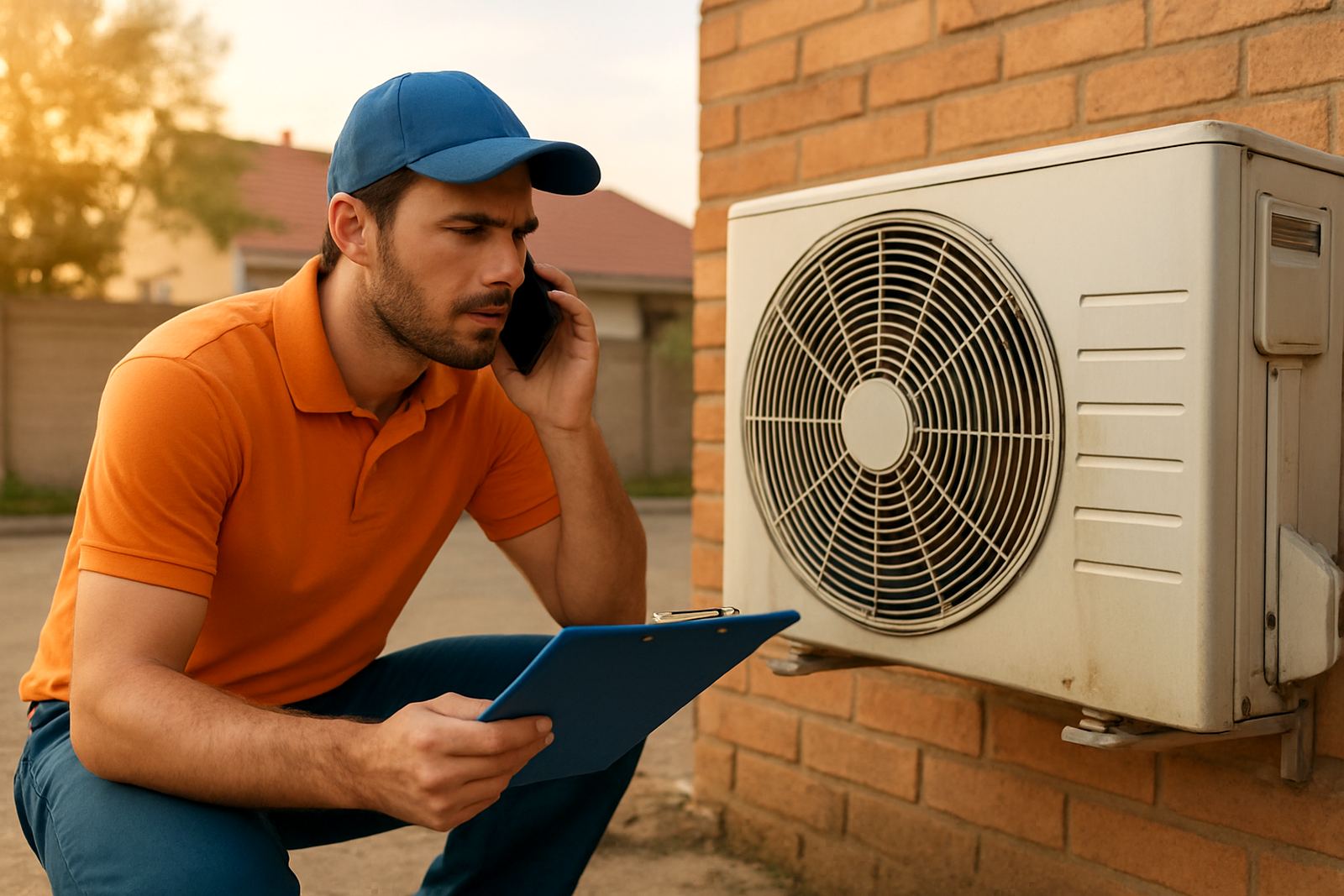
The best fault reports include the unit type, where it is installed and exactly what it is doing. A clear description saves time, especially for offices with several units or homes with more than one room unit. If the system was recently serviced, relocated or had a gas top-up, add that as well. That helps us understand whether the issue may be electrical, airflow related or linked to installation.
When you send the report, include your suburb and a contact number that is answered during working hours. If the property has access rules, security procedures or municipal parking limits, please mention them. It avoids delays for technicians travelling into Sandton, Midrand, Randburg and the wider Johannesburg North area.
- Suburb and full address
- Unit size if known, for example 9 000 BTU or 18 000 BTU
- Fault description and when it started
- Any recent power failure, cleaning or repairs
- Best time for us to call or visit
What happens after you submit the fault
Once we receive your report, the support team reviews the symptoms and checks whether the problem can be handled with advice, a service visit or a replacement part. For clear electrical or drainage faults, we may ask a few follow-up questions before booking a callout. If the unit is under maintenance plan, we will match the report to the right record and handle it accordingly.
For homes, we usually look at cooling performance, drain blockage, airflow and electrical protection first. For offices and commercial sites, we also consider run hours, usage patterns and whether multiple units are showing the same fault. If the issue points to a bigger fault, we will explain the next step before work starts so you know what to expect.
Faults that need urgent attention
Some issues should not wait for the next routine visit. If the unit is smoking, tripping power repeatedly, leaking onto sockets or ceiling boards, or making a loud grinding noise, turn it off and report it as urgent. The same applies if an outdoor unit has been damaged by storm water, theft, tampering or a recent building repair.
In offices and shops, a failed unit can affect staff, stock and customers very quickly, especially in summer. If the fault affects a server room, boardroom, medical room or any space where temperature control matters, tell us that in the report so we can treat it with the right priority.
- Smoke, smell of burning or visible sparking
- Repeated tripping or blown protection devices
- Water near plugs, lights or ceiling fittings
- Grinding, knocking or fan blades striking anything
- Loss of cooling in a sensitive room or office
How to keep the system safe until we arrive
Keep the faulty unit switched off if there is any risk of damage. If the problem is only poor cooling and the system is still running, avoid setting the temperature very low or running the fan on high for hours, as this can make a drainage or icing issue worse. Keep doors and windows closed and do not spray chemicals into the vents.
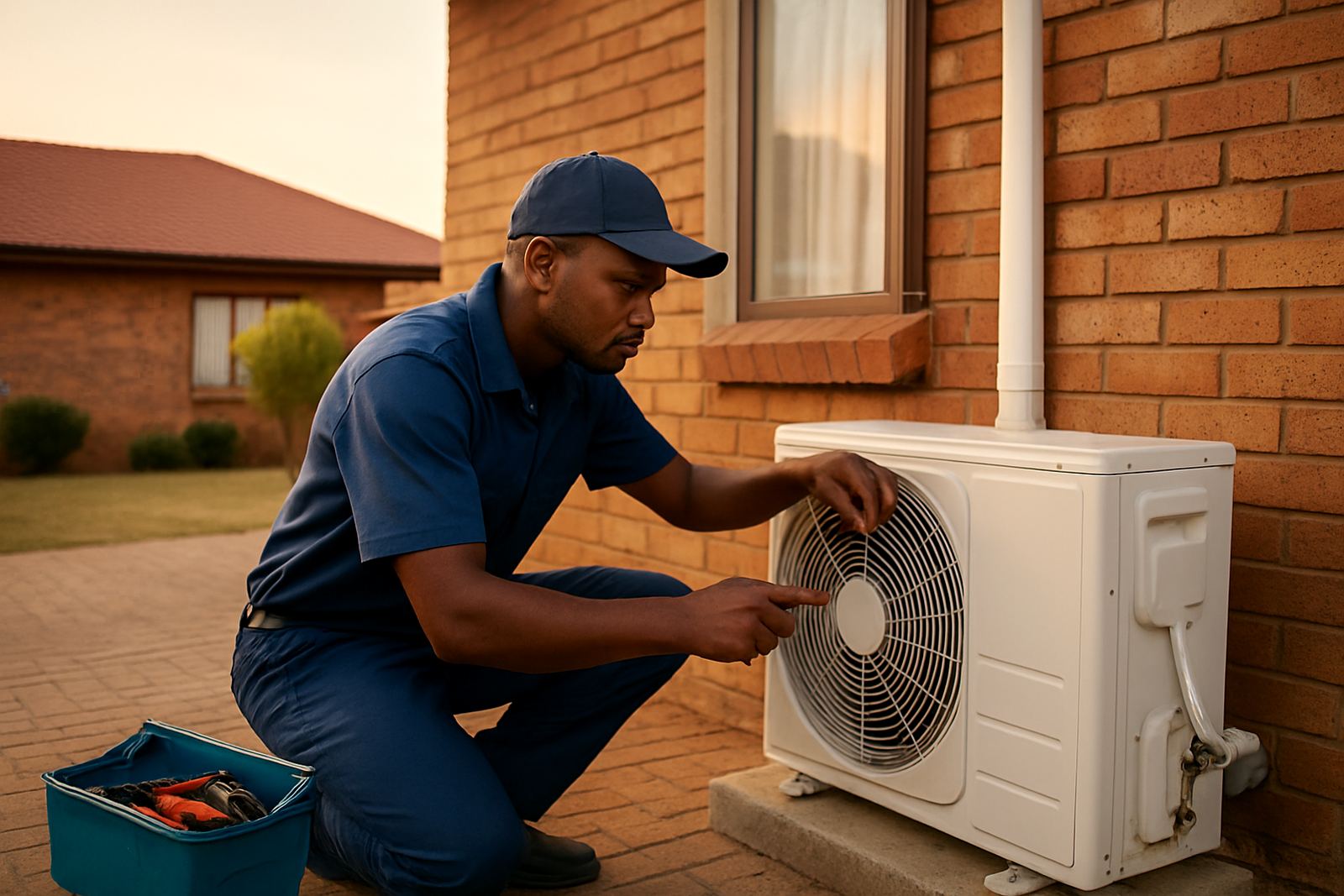
If the outdoor unit is in a dusty yard, under a leaking gutter or against overgrown bushes, clear the area only if it is safe to do so. Good airflow matters, and blocked coils can turn a small problem into a bigger one. For heat pumps and water generators, keep the unit area dry and accessible for the technician. A clear path, working gate access and the fault details ready on arrival make the visit smoother.