Why filter cleaning matters in Gauteng homes
Indoor filters catch dust, pet hair, pollen and fine grit before that air moves through the unit. In Johannesburg North, Randburg and Midrand, where busy roads and dry winter air can load a room with dust fast, a clogged filter can make a unit work harder than it should. You may notice weaker airflow, a musty smell, or rooms taking longer to cool.
A clean filter does not replace a proper service, but it does help the system keep moving air through the room at a steadier rate. That matters during hot afternoons, when people switch units on and off around load-shedding and power returns. A unit that can breathe better usually needs less strain to reach the set temperature.
- Better airflow through the room
- Less dust blown back into the space
- Lower strain on the indoor fan
- More stable cooling and heating
Before you start, switch off the power fully
Always switch the air-conditioner off at the wall isolator or breaker before opening the front panel. Do not rely only on the remote. The unit must be dead before your hands go near the filters. If the room is high up or the unit is awkward to reach, rather leave it alone and call for help.
Keep a soft cloth, a dry brush and a basin of lukewarm water ready. Avoid strong chemicals, thinners or rough scouring pads. These can damage the mesh and leave residue that catches more dust later. If the indoor unit sits above a bed, sofa or office partition, lay down a towel so dust does not fall everywhere.
- Switch off power at the wall or breaker
- Open windows for better dust control if needed
- Use lukewarm water, not hot water
- Keep screws, clips and covers in one small container
How to remove the indoor filters without forcing anything
Most split units have a front cover that lifts up. Under it you will usually see one or two mesh filters sitting in tracks or clips. Open the cover slowly and look for how the filter edges sit before pulling anything loose. If it feels stuck, stop and check the sides. Forcing it can crack the frame or bend the guide rails.
Slide each filter out with both hands, keeping it level so trapped dust does not drop back into the unit. If the filter is very dirty, carry it outside before tapping it lightly to remove loose dust. In homes near the N1, busy construction areas or schools with lots of foot traffic, filters can clog quicker than people expect. A quick look once a month is often enough to catch the build-up early.
- Lift the front panel slowly
- Note the direction of each filter before removing it
- Pull straight out, do not twist
- Take them outside before tapping off loose dust
The safest way to wash and dry the mesh
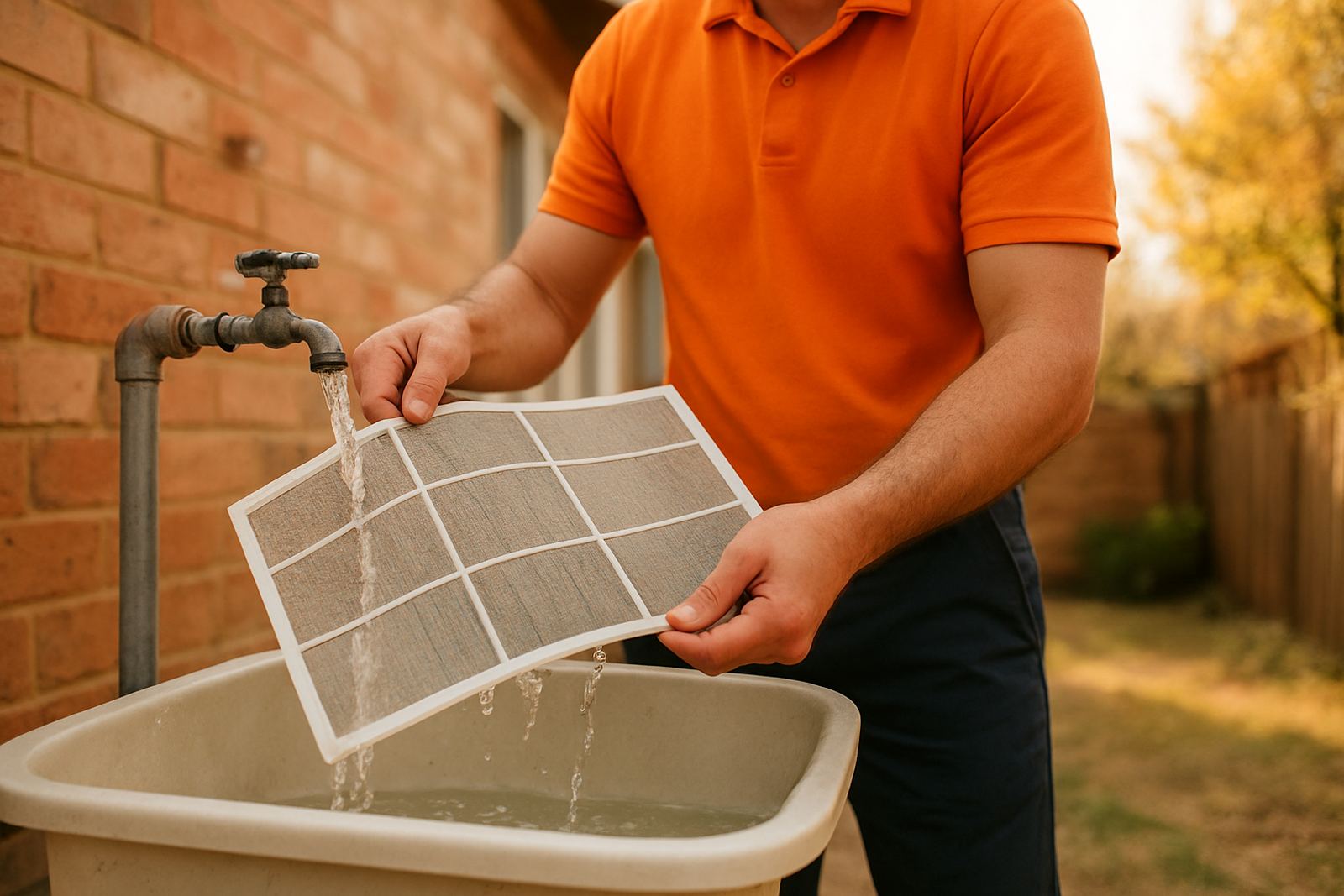
Once the loose dust is removed, rinse the filters under low-pressure running water. If there is sticky dirt, use a soft brush or cloth with a little mild soap. Clean both sides gently. Do not use a pressure hose, since that can damage the mesh and stretch the frame.
After washing, shake off excess water and let the filters dry fully in the shade. Do not put them back while wet, because moisture can create a smell and encourage mould inside the unit. In coastal humidity near Durban this is often a bigger problem, but Johannesburg homes can still get it in bathrooms, kitchens and enclosed offices. Make sure the mesh feels dry all the way through before refitting it.
- Rinse under low pressure only
- Use mild soap if needed
- Dry in shade, not in direct heat
- Never refit a damp filter
What not to clean yourself inside the unit
Homeowners can safely handle the removable mesh filters, but that is where the job should stop. Do not spray water into the indoor coil, fan drum or electrical section. Do not poke the fins with a knife, screwdriver or vacuum nozzle. Small damage there can affect cooling and may lead to leaks or noisy operation.
If you see black spots, heavy grime on the coil, water dripping indoors, or a filter that keeps blocking within days, there may be a deeper issue in the system. That can point to poor installation, a blocked drain line or a room that draws in too much dust from outside. At that stage the unit needs a proper check by a technician, not a quick home clean.
- Do not spray water inside the casing
- Do not bend the aluminium fins
- Do not clean electrical parts yourself
- Call for help if grime returns quickly
How often Johannesburg homeowners should check filters
For most homes in Johannesburg North, Sandton, Randburg and Midrand, checking the filters once a month is a sensible habit. If the unit runs every day, or if you have pets, renovation dust or nearby traffic, check them every two weeks. A family in Sunninghill with two cats, for example, may find the filters need attention far sooner than a spare room in a quiet complex.
Offices and consulting rooms often need more frequent checks because people, printers and open doors all add fine dust to the air. If the unit struggles during peak summer or after a power cut, it can help to make filter cleaning part of the routine before the first hot spell. Small attention now can prevent a callout later when the room is full and the temperature is climbing.
- Monthly for average homes
- Every two weeks for dusty or high-use rooms
- More often where pets or renovations are present
- Book a service if airflow stays weak after cleaning