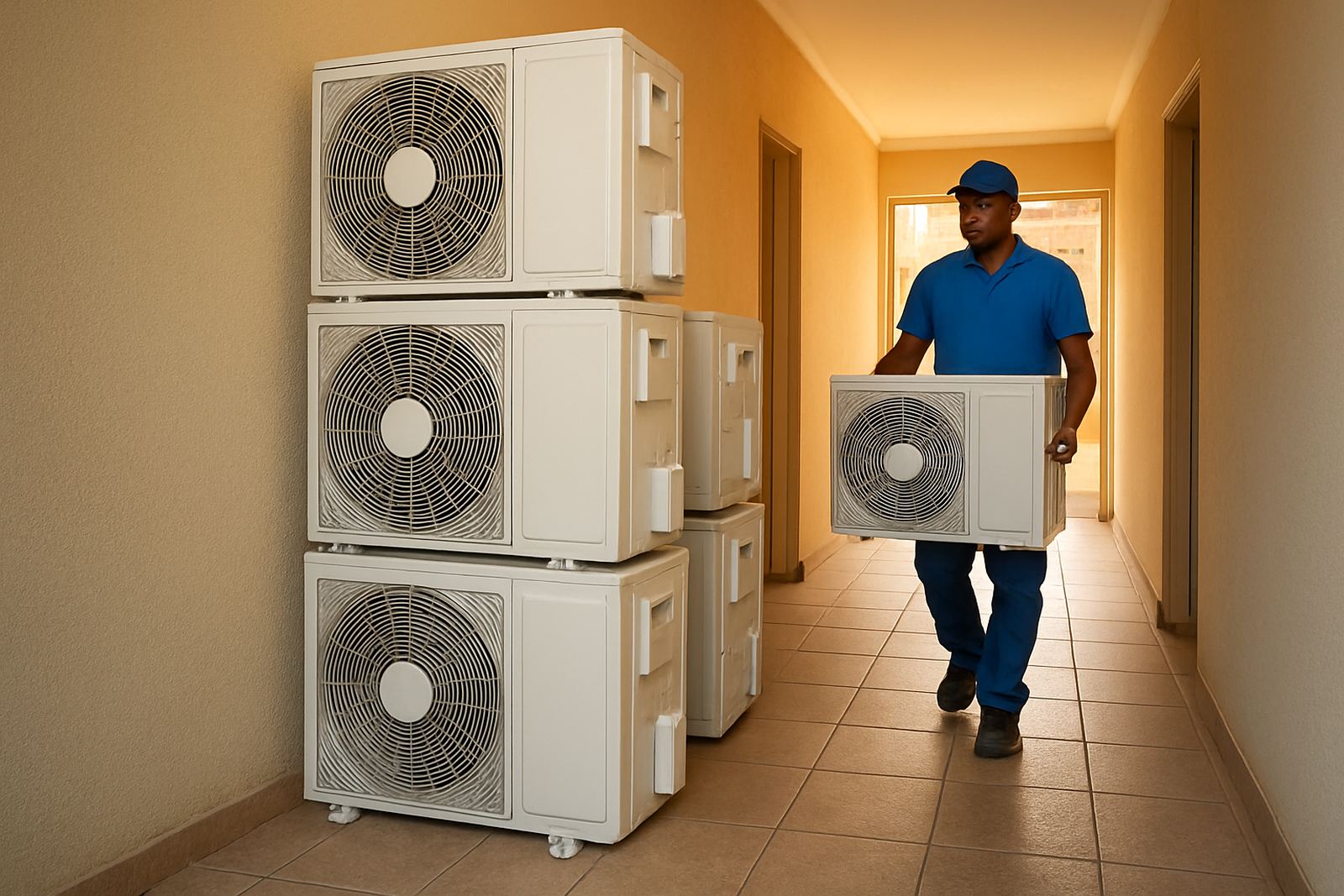
What a portable aircon can and cannot do
A portable aircon is best understood as a temporary cooling tool, not a full replacement for a fixed split unit. It can take the edge off a small room, a rental unit, or a back-up office space, but it will not cool a big open plan area properly, especially if the sun hits the windows for most of the day.
The main limit is capacity. Many buyers look at the box and expect the unit to perform like a wall-mounted air conditioner. It does not. A portable unit has to pull warm air from the room, remove heat, then send that heat out through a hose and window kit. That extra step means more noise, more effort and less cooling output for the same electricity use.
In Johannesburg North and Sandton, we often see people buying one for a study, then trying to use it in a lounge with sliding doors and high ceilings. That is where disappointment starts. If you need proper temperature control for a bedroom at night or a small office, it can do the job. If you want whole-room comfort in a larger space, you need to compare it carefully with a fixed system.
The vent hose is the part people underestimate
The vent hose is where many portable aircon problems start. The unit must expel hot air outside, and if that hose is long, kinked or badly sealed, performance drops quickly. A hot hose also warms the room if it is left exposed in a small space. That means the machine works harder and still struggles to bring the temperature down.
You also need a proper place to vent the air. Most homes use a window kit, but not every window is convenient. Some flats in Randburg and Midrand have awkward openings, while some offices have no window close to the room you want to cool. If the hot air cannot be directed out properly, you are better off with another solution.
It is worth checking whether the unit uses a single hose or twin hose arrangement. The difference affects how quickly warm air is removed and how much outside air gets pulled into the room. In local summer conditions, that matters more than many buyers realise.
Why portable units can feel noisy and tiring
A portable aircon sits in the room with you, so the compressor and fan noise are much more noticeable than with a split system. In a bedroom, that can affect sleep. In a small office, it can make calls and meetings harder, especially if the unit runs flat out through a hot afternoon.
Noise is only part of it. Because the unit sits on the floor, it also takes up usable space and can become a small obstacle. People move it around, then forget to route the hose properly, or leave it in a corner where airflow is restricted. Then they wonder why the room still feels sticky.
If you are cooling during load-shedding recovery periods or after power returns, a portable unit may seem handy because you can wheel it between rooms. That convenience is real, but it comes with trade-offs. You get flexibility, not quiet operation or strong whole-room cooling.
Electricity use and the load-shedding question
Portable aircons often use a fair amount of electricity for the cooling they provide. That is not a problem if you are using it for a short spell in one small room, but it becomes important if you plan to run it for long hours. In South Africa, where tariffs are not getting cheaper and load-shedding still shapes daily routines, running cost matters.
If you have an inverter, solar backup or generator arrangement, the unit must still fit within the power limits of the system. Some portable models start up hard, and that can trip smaller backup systems. It is smart to check the electrical rating before you buy, rather than finding out on the first hot evening when the power comes back on and the breaker goes.
For many Gauteng homes, the better value question is not whether a portable unit is cheaper to buy. It is whether it will actually lower the room temperature enough to justify its running cost. Sometimes the answer is yes for a guest room or temporary office. Sometimes a properly sized split unit is the more practical long-term answer.
When a portable aircon makes sense in Gauteng homes and offices
There are real situations where a portable aircon is the right call. Rental properties are a common example, especially where tenants are not allowed to alter the building. Temporary offices, converted rooms and short-term business spaces also suit this type of unit, provided the room size is modest and the heat load is manageable.
We also see them used as a stop-gap while waiting for a fixed installation, or in spaces that are only occupied for part of the day. A home office in Sandton that only needs cooling during working hours, or a small retail back room in the East Rand, can benefit from a portable unit if the expectations are realistic.
Still, the room itself matters. A north-facing room with large glass areas, poor insulation and frequent door opening will always be harder to cool. If the building is already struggling with heat, the portable unit may only provide partial relief, not proper comfort.
A practical example from Johannesburg North
A client in Johannesburg North recently asked about a portable unit for a small upstairs room used as a home office. The room was about 14 square metres, had one window, and got afternoon sun. The owner wanted quick relief without a permanent installation because the room might be repurposed later.
In that case, a portable unit could work, but only with the right conditions. The window kit had to be sealed properly, the hose kept short, and the door left mostly closed during the hottest hours. Even then, the cooling would be modest compared with a fixed inverter split unit. That was the honest trade-off: convenience now, limited performance later.
This is why buying for the room, not just the machine, matters so much. The same unit that copes in a shaded bedroom can struggle badly in a sunny upstairs study. A proper site assessment is still the best way to avoid overspending on the wrong solution.
How to decide before you spend the money
If you are weighing up a portable aircon, start with the basics. Measure the room, think about insulation, ask where the hot air will go and decide how often the unit will need to move. Then compare that with the sound level, power use and cooling expectation. That simple check prevents a lot of regret later.
For many homes and offices in Gauteng, the best answer is not always the cheapest machine. Sometimes it is a fixed aircon, sometimes a heat pump for hot water support, and sometimes a portable unit as a short-term fix. The right choice depends on the building, the people using it and how often the cooling is needed.
If you want portable cooling to do a proper job, keep the expectation practical. It is useful for temporary relief, but it has limits that cannot be ignored. When those limits are clear from the start, you can buy with confidence instead of frustration.