Start With The Right Settings For Gauteng Weather
Johannesburg weather can change quickly, with cold mornings, hot afternoons and the odd summer storm. For split and inverter aircons, a steady setting is usually better than switching the unit on and off every hour. In most homes, 22 to 24 degrees is a practical range for cooling. In winter, use heat mode early rather than waiting until the room is already very cold.
If you are running the unit in Sandton, Randburg or Midrand offices, keep doors and windows closed where possible and let the unit do one job at a time. A fan setting that is too high can make the room feel draughty without cooling it faster. For inverter models, leaving the unit on a stable temperature often uses less power than repeated restarts, especially during load shedding recovery when the power comes back and the room heats up again.
- Keep the set temperature steady instead of changing it every few minutes.
- Use dry mode on humid days only if the room feels sticky, not as a daily default.
- Close blinds during afternoon sun on west-facing rooms.
Clean Filters Before Dust Becomes A Problem
Dust build-up is one of the main reasons a unit starts blowing less air or using more power. In Johannesburg North, and in busier areas such as the East Rand or West Rand, filters can clog faster than people expect. If you have pets, road dust or a building site nearby, check the filters more often.
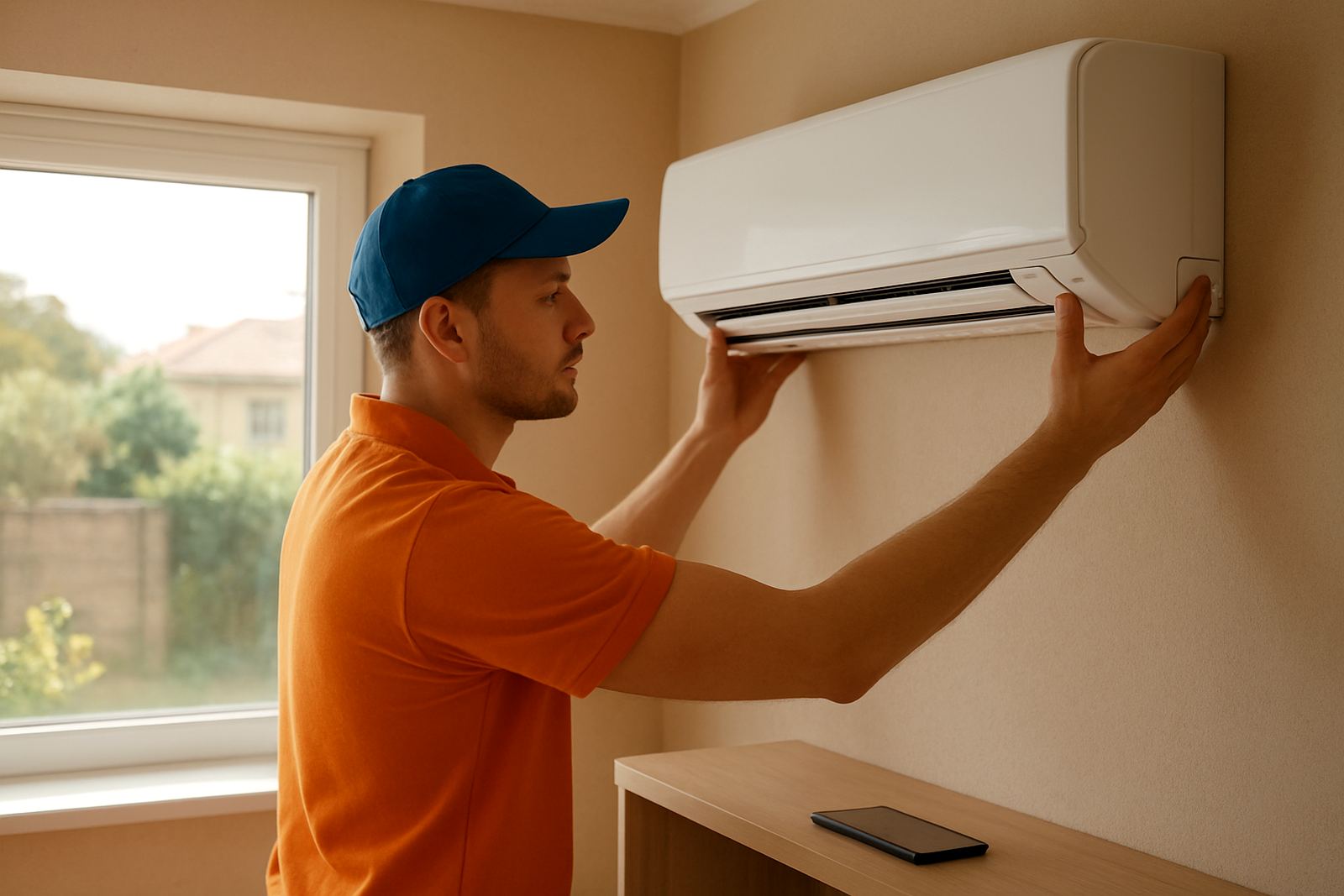
Most washable filters can be removed, rinsed gently and dried fully before going back in. Do not put them back while wet. That can cause a smell and put extra strain on the system. If the front grille is dusty, wipe it with a soft dry cloth. Avoid harsh cleaners, and do not bend the fins inside the unit.
- Check filters every 2 to 4 weeks in dusty rooms.
- Rinse only with clean water unless the manual says otherwise.
- Make sure filters are fully dry before refitting them.
Give Outdoor Units Space To Breathe
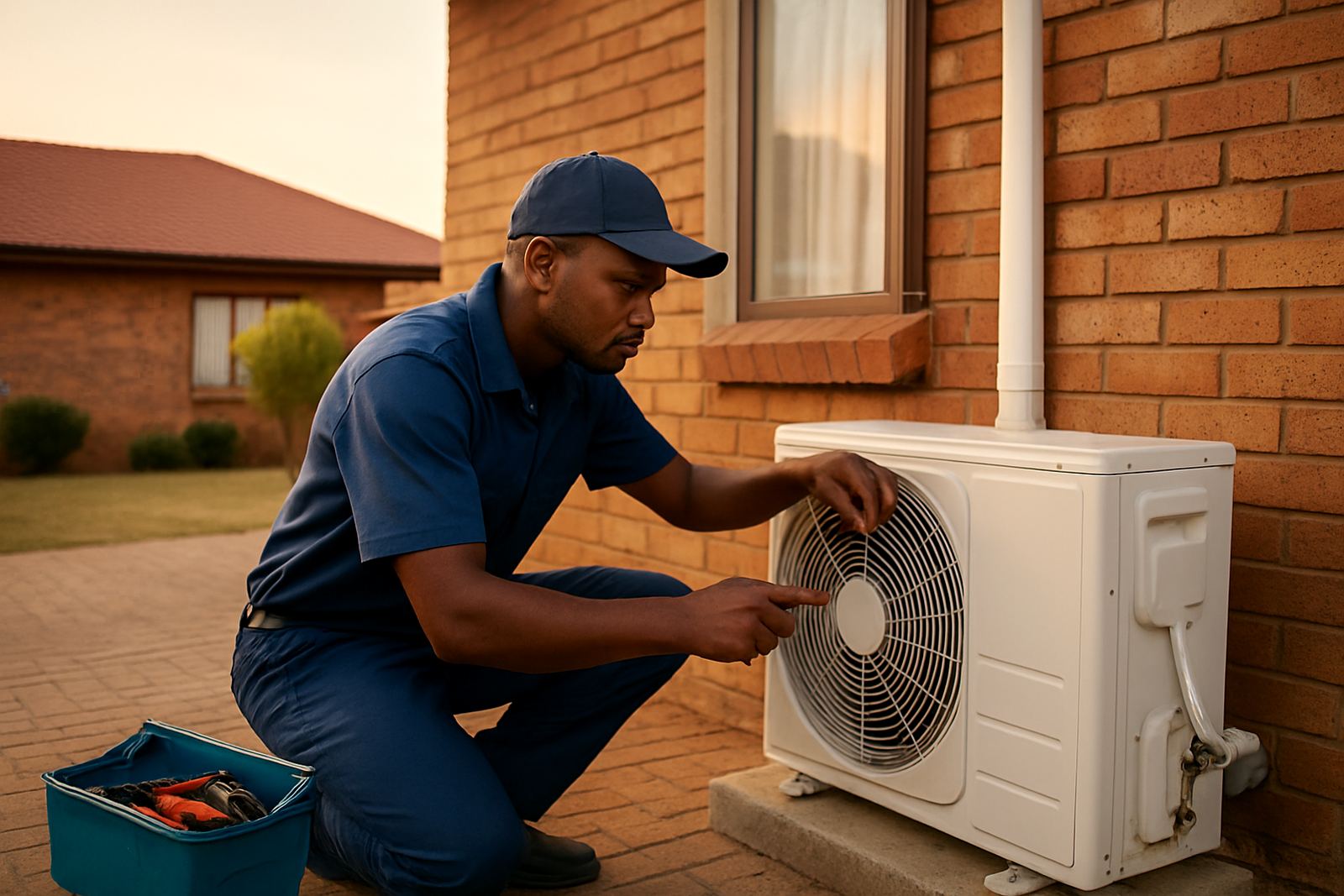
The outdoor unit works hardest when airflow is blocked. Keep the area around it clear of leaves, cardboard, rubble and garden growth. On townhouse walls, balconies and tight service yards, it is worth checking that no washing lines, bins or plant pots are crowding the unit. Good airflow helps with cooling performance and reduces wear on the compressor.
In coastal humidity the outdoor unit needs a bit more attention, but in Gauteng the main issue is often dust, sun exposure and blocked drainage. If water drips onto the slab after cooling, that is usually normal. If the water is backing up or running into the wall, it needs a service check. Never hose the electrics directly.
- Keep at least enough space around the unit for air to move freely.
- Trim back plants and remove loose dirt from the area.
- Check that the drain line is not blocked after heavy storms.
Use Aircon Sensibly During Load Shedding And Power Restores
When power returns after load shedding, give the unit a minute or two before switching it back on if it was turned off at the isolator. Quick repeated starts can be hard on the system. If your home or office uses backup power, make sure the inverter or generator supply is suitable for the aircon load before running it for long periods. A unit that trips repeatedly is telling you the supply is not right.
For offices in Midrand or Sandton with multiple rooms, stagger the start-up of several units instead of turning everything on at once. That reduces the starting load and helps avoid nuisance trips. If the unit loses settings every time the power fails, check the remote batteries and ask for a settings review.
Heat Pump And Water Generator Care Between Services
Heat pumps and atmospheric water generators also need simple aftercare. A heat pump works best when the water flow stays steady and the area around the unit stays clean. For water generators, the intake area and drainage must stay clear so the system can do its job properly. If the water tastes different, the output drops or the unit starts cycling oddly, do not ignore it.
Commercial sites and larger homes often forget about these units until there is a problem. A monthly visual check helps. Look for leaks, unusual noise, warning lights and blocked vents. If the unit is installed in a utility room, keep chemicals, paint and stored boxes away from it.
- Check for drips, noise changes and warning lights once a month.
- Keep the surrounding area dry and uncluttered.
- Arrange a service early if output drops or the unit runs longer than usual.
When To Call For A Service Visit
Some issues are easy to spot early. If the aircon smells musty, cools weakly, freezes up or trips the breaker, it needs attention. The same applies if the outdoor unit is noisy, the drain is leaking indoors, or the remote is working but the unit is not responding. Do not keep resetting a faulty system and hoping it will sort itself out.
For homes in Johannesburg North, and for offices across Gauteng, regular servicing helps keep the system ready for summer. A proper service can catch low gas, dirty coils, blocked drains and worn electrical parts before they turn into bigger repairs. If you have more than one unit, it is usually best to service them before the hot season starts, not when the first heatwave arrives.
If you need help with aircon servicing, repairs, relocations or a maintenance plan, contact Airconditioning Superstore at sales@acsuperstore.co.za.