
One outdoor unit, several cool rooms
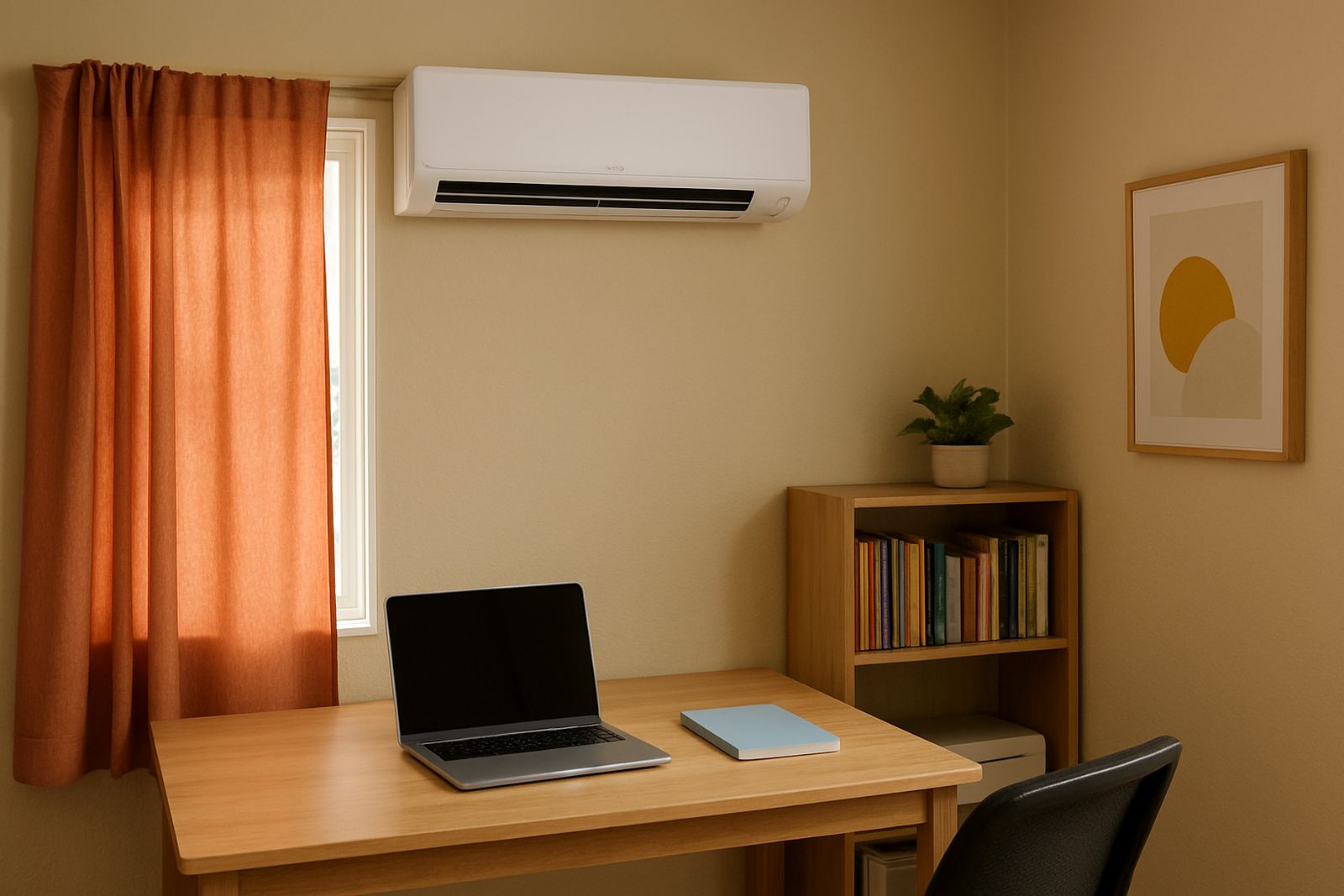
A multi-split aircon works like a normal split system, except the outdoor unit has more than one set of connections. Each indoor unit gets its own pair of insulated copper lines, a communication cable and a drain, all running back to the same outdoor unit. The rooms switch on and off independently, so the main bedroom can sit at 22 °C while the study is off and the lounge is on fan.
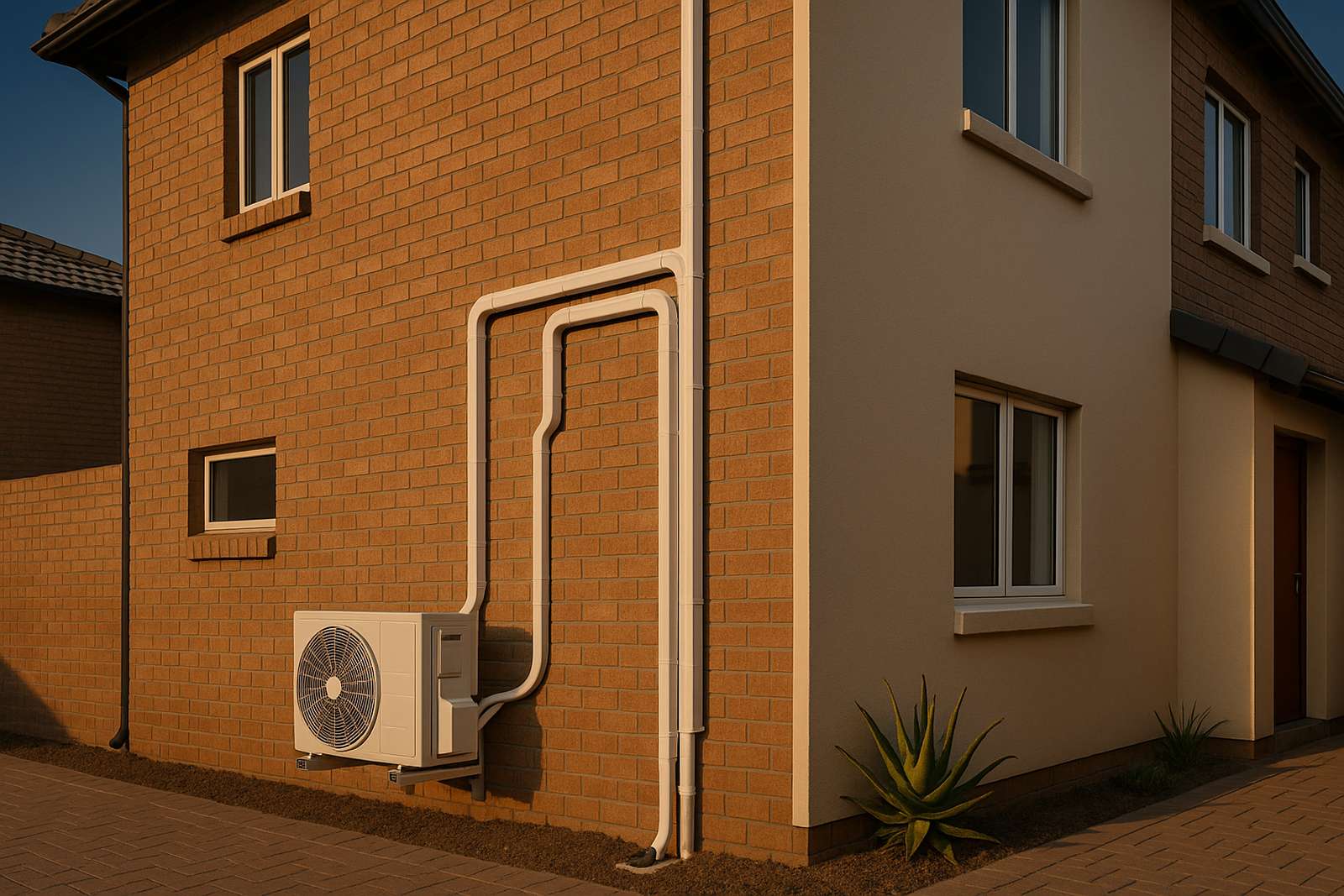
Most of our multi-split enquiries come from estates and sectional title complexes. Body corporate rules often allow one condenser per unit, or only in one spot behind the garage, and a flat with one small balcony simply has no room for three outdoor units in a row. A multi-split puts one tidy box on the wall instead of three, with one trunking run to plan.
Because the outdoor unit is inverter driven, it slows down when only one room is calling and speeds up when the whole house comes home on a hot January afternoon.
Combinations we supply most often
Indoor units are usually wall-mounted heads in 9000, 12000 or 18000 BTU sizes, matched to each room. The outdoor unit is chosen for the rooms that run together, not for every room flat out at once. These are the setups we quote most:
Connected heads can add up to a little more than the outdoor rating, because rooms rarely all peak together. If you know every room will run hard at the same time, for example four offices on a west-facing floor, we size the outdoor unit up rather than let each room fall short at 3 pm.
When a multi-split makes sense, and when it does not
It suits homes and small workplaces with two to four separate rooms close together: a townhouse with bedrooms upstairs and a lounge below, a two-bedroom flat, a guest house wing, or a practice with a few treatment rooms. It is also the cleaner option where the outside wall is face brick on a street front and the owner wants as little equipment showing as possible.
It is not always the right call. All the rooms share one compressor, so if the outdoor unit goes down, every room on it is warm until it is fixed. A server cupboard or a room that cannot go without cooling should have its own split. Pipe lengths also have limits, usually around 20 to 25 m to any one head and 50 to 70 m in total depending on the model, with a cap on height difference. Rooms at opposite ends of a long single-storey house can work out better on two separate systems. And for one big open-plan space, a single larger 24000 BTU inverter or a ceiling cassette costs less than several heads.
- Townhouses and cluster homes in estates
- Two- and three-bedroom flats with one balcony
- Home office plus bedrooms on the same floor
- Guest house wings and small practices
Installation, pipe runs and the electrical side
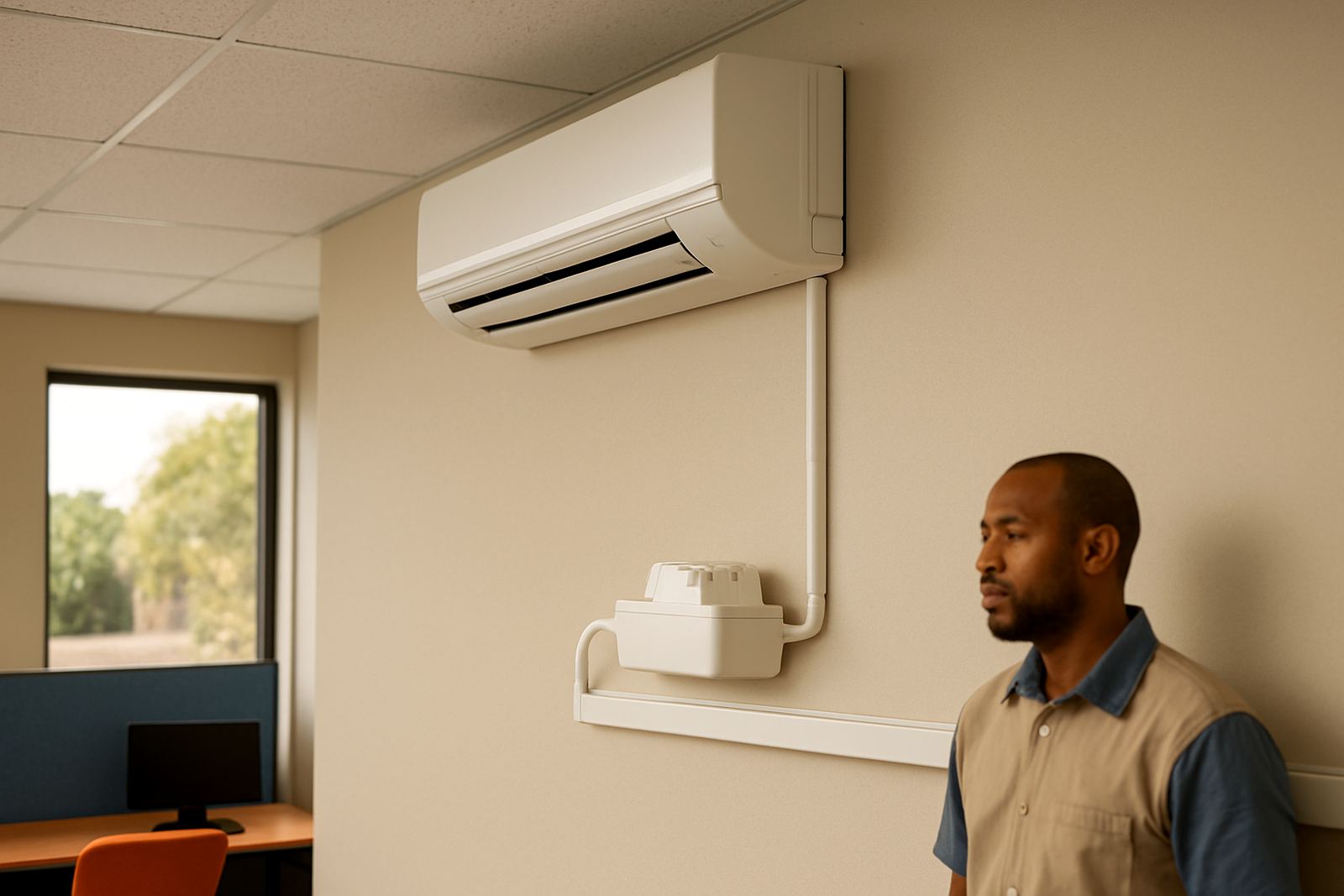
The work is mostly in planning the routes. We decide where the outdoor unit may go, then map each line set to its room, keeping bends gentle and runs as short as practical. On face brick we usually run white trunking along mortar lines; on plastered walls we can chase where the owner and body corporate allow it. Every head needs a drain with proper fall, and where that is not possible a condensate pump kit goes in.
The outdoor unit needs its own circuit with the correct breaker and an isolator next to it; the indoor heads take their power through the system. During the site visit we check the distribution board, the earth and the supply quality, and we look at your backup setup if you want some rooms to keep running in power cuts.
As a guide, a two-room system is usually a one-day job once the site is ready and the equipment is confirmed. Three or four rooms take one to two days, depending on pipe routes, ladder access and how many walls we go through.
Servicing a multi-split
Each indoor unit has its own filter that should be rinsed every few weeks in summer, more often with pets or building dust. A professional service covers all the heads and the outdoor unit in one visit, which keeps the cost per room down. A fault on one indoor unit, such as a blocked drain, usually leaves the other rooms running; an outdoor unit fault affects them all, which is one more reason to keep the system on a maintenance plan.
What to send us for a quote
Multi-split systems are priced on request, because the price depends on the heads, the pipe lengths and the wall work. A short email with these details lets us reply with a sensible proposal, or book a site visit:
- Each room and its rough size in square metres, and which floor it is on
- Where an outdoor unit is allowed, and any body corporate or estate rules
- Photos of the outside wall and of each wall where a head could go
- Where the distribution board is, and any backup inverter or solar on site
Not sure whether to go multi-split or separate units? Our quote preparation guide and the note on multi-room install costs are a good start, or ask the Johannesburg North team directly.
Key facts
| System type | Inverter multi-split, one outdoor unit with 2 to 4 indoor units |
|---|---|
| Indoor units | Wall-mounted heads, usually 9000, 12000 or 18000 BTU |
| Outdoor sizes | About 14000 to 36000 BTU, matched to the rooms that run together |
| Control | Separate remote and set temperature in every room |
| Pipe runs | Typically up to 20 to 25 m per head, 50 to 70 m total (model dependent) |
| Install time | About 1 day for 2 rooms, 1 to 2 days for 3 or 4 rooms |
| Pricing | Priced on request after photos or a site visit |
| Service area | Johannesburg and Gauteng, including Sandton, Randburg and Midrand |